How to Grow Lilies? Five Propagation Techniques Taught to You
Lilies are elegant and beautiful, and many people like to place a few stems of lilies at home. Lilies are fresh and graceful, and many people also use them in bouquets to give as gifts. In addition, lilies carry a good meaning, symbolizing a harmonious union lasting a hundred years and good fortune. Therefore, growing lilies at home is a good choice. Now let the editor introduce the propagation techniques for lilies.
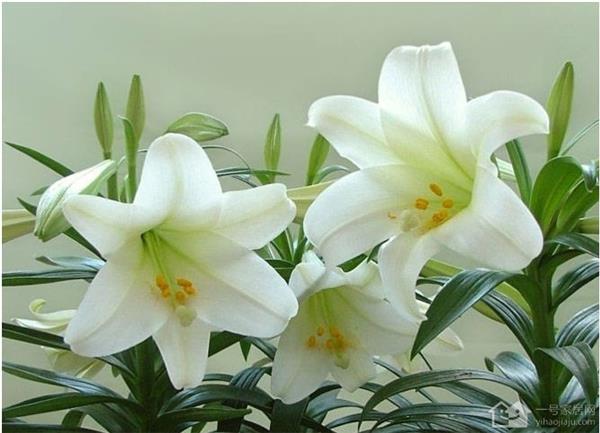
Lily propagation methods:
1. Lily propagation by dividing bulbs
If you need to propagate 1 plant or a few plants, you can use the lily bulb division propagation method. Usually, some small bulbs grow around the stem plate of the old bulb. When harvesting lilies in September to October, these small bulbs can be separated, stored in sand indoors to overwinter. Plant them in pots the following spring. After growing them until September to October of the third year, they can grow into large bulbs and be cultivated into large plants. Bulb division propagation produces a small quantity, so it is only suitable for home pot propagation.
2. Lily propagation by sowing seeds
Lilies can be propagated by sowing seeds. The main method is to collect seeds in autumn, store them until the following spring, and sow them. After sowing, they germinate in about 20 to 30 days. During the seedling stage, appropriate shading is needed. In autumn, the underground part has already formed small bulbs, which can be dug out and replanted separately. Depending on the species, some seed-grown seedlings bloom in 3 years, while others need to be cultivated for many years before blooming, so it is not suitable for home use.
3. Lily propagation by scale cuttings
The lily scale cutting propagation method can be used for moderate quantities of propagation. In autumn, dig out the bulbs, break off the plump and thick scales from the old bulb one by one, and each scale base should carry a small part of the stem plate. Let them dry slightly in the shade, then insert them into a flowerpot or shallow wooden box filled with river sand (or vermiculite), with 2/3 of the scale inserted into the substrate. Keep the substrate at a certain humidity. At around 20 degrees, in about 1.5 months, roots will grow from the wound of the scale. In winter, the humidity should be kept at around 18 degrees, and the river sand should not be too wet. When cultivated until the following spring, the scales can grow small bulbs. Separate them, plant them in pots, and manage them carefully. After about 3 years of cultivation, they can bloom.
4. Lily propagation by dividing bulbils
The lily bulbil division propagation method is only suitable for a few species. For lilies such as Lilium lancifolium and Lilium 'Yellow Trumpet', this method is often used. The method is: take the small bulbs formed in the leaf axils of the aboveground stems and leaves (also called "bulbils", when the bulbils have fully grown in summer but have not yet fallen off) and cultivate them. From growing into large bulbs to blooming usually takes 2 to 4 years. To encourage the production of more small bulbils for propagation, after the plant blooms, press the aboveground stem down and shallowly bury it in soil - divide the aboveground stem into small sections each with 3 to 4 leaves, shallowly bury the stem nodes in wet sand, and then small bulbils can grow from the leaf axils.
5. Lily propagation by tissue culture
The lily tissue culture propagation method uses different parts of the lily, such as filaments, styles, ovaries, and axillary buds at the base of scales, to culture test-tube plantlets, which are then transplanted into seedbeds for care and growth, to supply production bulbs.
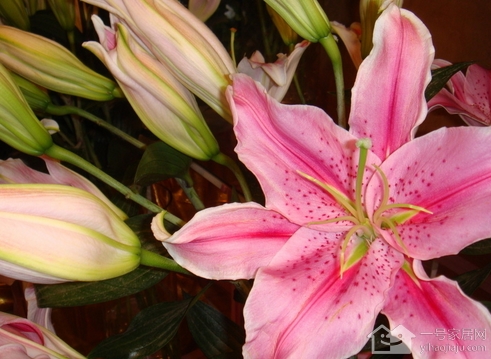
The above are the five cultivation techniques for lilies introduced by the editor. Have you learned them? You only need to choose one method suitable for you to cultivate them. Lilies are beautiful in appearance and can decorate and adorn the home. They can be said to be a beautiful scenery in the home.