Moss Bonsai Making Methods and Moisture-Retention Tips
More plant bonsai information recommendations
I Detailed explanation of the steps for making a Chinese boxwood (Buxus sinica) bonsai and its cultivation techniques
II Trident maple (Acer buergerianum) bonsai making tutorial, complete gallery of trident maple bonsai pictures
III Wintersweet (Chimonanthus praecox) bonsai making pictures, introduction to wintersweet bonsai care methods
━═☆Home Plant Zone: Decorate your small home, give you back a green homeland!
When it comes to moss, many friends say they are unhappy, because its impression in people's minds is not very good, and so they know very little about things like moss bonsai. In fact, moss bonsai is also a very good kind of plant bonsai. Modern people have many ideas and are full of creativity, and a moss bonsai that combines verdant moss with all kinds of plants and containers is really quite beautiful. But what exactly are the making methods for such a moss bonsai, and how should a moss bonsai be kept moist?
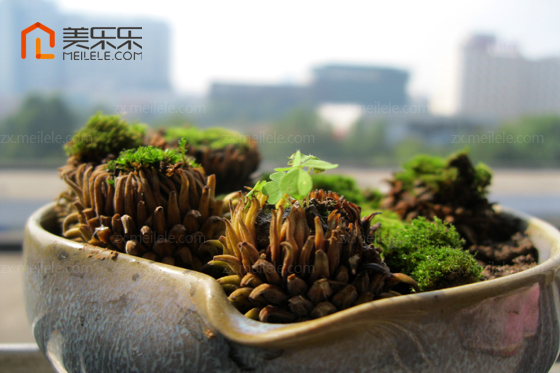
Moss bonsai making methods
1. Quick moss-growing method
The method is fairly simple: first soak all the prepared bonsai rocks in clean water for a period of time, then evenly sprinkle taro or potato powder over the soaked rocks and pot soil, and finally cover the watered rocks and pot soil with well-growing damp weeds, spraying water every day. After about a week, the weeds will grow verdant green moss.
2. Moss inoculation method
This method is a bit more complicated. First choose a few pieces of yellow soil, grind them fine and mix with water into a paste, put naturally collected moss from the wild into the mud and stir evenly, then use a brush to dip up a little and evenly apply it over the soaked rocks and pot soil, water every day, and after several days the moss will grow out. Natural moss can also be sun-dried, ground into powder, mixed with water and applied in the same way.
3. Natural moss-growing method
Natural moss-growing actually means letting the rocks and pot soil grow moss naturally, rather than us artificially adding moss. The method is still very simple: put the rocks from the bonsai into a water basin, water them at fixed times every day with rice-washing water and vegetable-washing water, keep the rocks moist, and place the rocks in a shaded indoor spot. After two days, moss will grow on the rocks, very quickly.
4. Pot surface moss-growing method
A moss bonsai still needs a bit of ornamental value. When making it, the moss can be made more refined. You can lay a sheet of thin film flat in a damp, sunless indoor place, put the original moss collected from nature on the film, water every day, keep it moist, fertilize after the moss sprouts, and after about half a month it can be spread over the pot soil. Moss that has been carefully cared for is even more verdant.
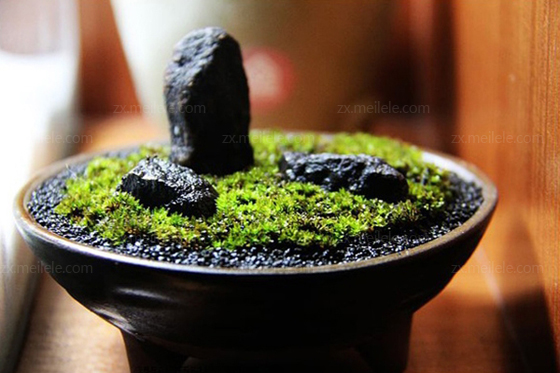
How to keep a moss bonsai moist
1. Light: Compared with other bonsai, a moss bonsai is a very unique bonsai, because moss plants prefer cool, shady environments. Moreover, in places with ample sunlight, moss loses water quickly. Therefore, in order to better keep the moss bonsai moist, it needs to be placed in a cool, ventilated indoor spot, with less sun exposure, especially avoiding the midday sun.
2. Watering: If moss is to keep growing for a long time, its water requirements are very high. After all, it is a water-loving plant, and in daily cultivation the moss must always be kept moist. Besides the necessary watering every day, you can also spray water on the moss and the surrounding rocks to maintain the humidity of the bonsai; this way the bonsai retains moisture better, and the moss can also grow more luxuriantly.
3. Temperature: Moss is relatively sensitive to temperature. If the temperature is too high, the plant does not grow easily. Usually a temperature of around ten-odd to twenty-odd degrees is already enough. In summer, when the temperature is high, it needs cooling; in winter, when the temperature is low, attention must be paid to keeping it warm.
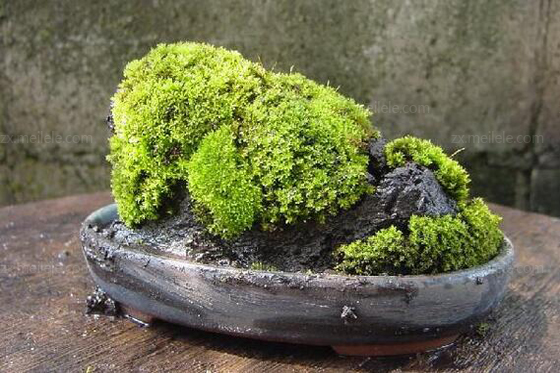
Summary: A moss bonsai is actually a really great bonsai, and compared with other bonsai, the biggest key to cultivating this kind of bonsai is paying attention to moisture and a cool, shady environment, so it is very easy to grow. Everyone can give it a try.
(Note: This article is an original article from Meilele Decoration Network, and reproduction is prohibited without permission. Malicious reproduction will definitely be pursued legally. If you like it, share it a lot.)
[You may be interested in]
☑ Money tree pruning ☑ Anti-fatigue floor mat ☑ Golden-edged serissa ☑ Calla lily pictures ☑ Mimosa pictures
☑ Redbud pictures ☑ Fortune tree pictures ☑ Bird of paradise flower language ☑ Plasticine pictures ☑ Rose flower language