How to grow a Clivia? Growing a prized Clivia well takes patience
Anyone who loves growing indoor plants must have heard of the Clivia (Clivia miniata), whose name and appearance are both appealing, so many people grow Clivia at home. When growing a Clivia, you need to pay extra attention to its care in everyday life, so what are the care methods for Clivia?
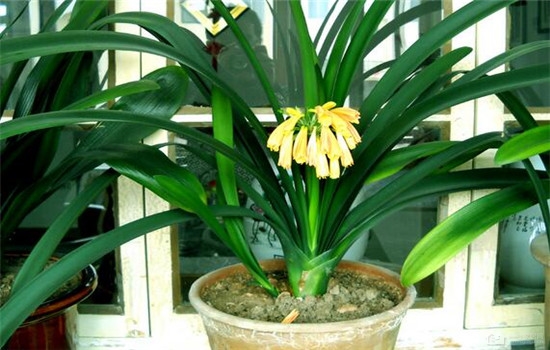
The Clivia is native to the tropical regions of southern Africa and grows beneath trees, so it fears both heat and cold, prefers a semi-shaded and humid environment, and dreads strong direct sunlight. Its optimal growing temperature is between 18 and 28°C; below 10°C or above 30°C, its growth is inhibited. The Clivia likes a ventilated environment and prefers deep, fertile, loose soil, and it is suited to growing in loose, fertile, slightly acidic organic soil. The Clivia is a famous greenhouse flower and is suitable for indoor cultivation.
When growing a Clivia, you need to pay attention to the following points:
Choosing soil - The roots of the Clivia are fleshy roots, suited to growing in loose, fertile, well-aerated, slightly acidic soil, so the soil for cultivating a Clivia should be chosen to meet the above requirements.
Watering - The principle of watering: do not water until the soil is dry, and when you do water, water thoroughly. Never pour just a little at a time; that skimpy, touch-and-go approach is especially harmful to the Clivia. Also pay attention to the timing of watering, preferably in the morning or evening; at noon in summer, when the temperature is very high, it is not suitable to water. One more point is that when watering, avoid the heart of the plant, so as to prevent the heart from rotting.
Fertilizing - There is no doubt that fertilizer is an essential and important source of nutrients for the vigorous growth of plants, and of course the Clivia is no exception; it too likes fertilizer to supply nutrients. Fertilizing a Clivia should be determined specifically according to its size, variety, and growth and development. Too much or too little fertilizer is no good. Too much will cause root burn; too little will lead to a lack of nutrients, and the leaves will noticeably narrow and fail to stand upright.
Light - The Clivia is a plant that loves a humid environment and is suited to growing in high-humidity conditions, but it has low light requirements; as long as the temperature is suitable, it does not matter whether the light lasts a little longer or a little shorter. Although good light can ensure the bright color of Clivia flowers, it still prefers somewhat weaker light, so be sure to avoid strong light.
Repotting - When the Clivia grows bigger, it needs a larger pot, and this is "repotting and changing the soil." The best time to change the soil is in spring and autumn, because at this time the Clivia grows vigorously and changing the soil will not affect the plant's growth. The most crucial point when changing the soil is to pack the soil firmly around the roots; otherwise, if there is no soil around the roots, water and nutrients cannot reach the roots, which easily causes root rot.
That is all for the introduction to Clivia care methods for now. Only by paying more attention to multiple steps such as watering, fertilizing, and soil can you thoroughly care for a Clivia well, avoid root rot, and let it play a positive role.