What causes root rot in the Money Tree? A Money Tree with root rot can still be saved
When growing a Money Tree (Zamioculcas zamiifolia), people often find that after caring for it for a while, the plant in their home develops root rot, and the whole flower pot gives off a putrid smell. Root rot in a Money Tree will certainly affect its growth, so how should it be dealt with when root rot occurs?
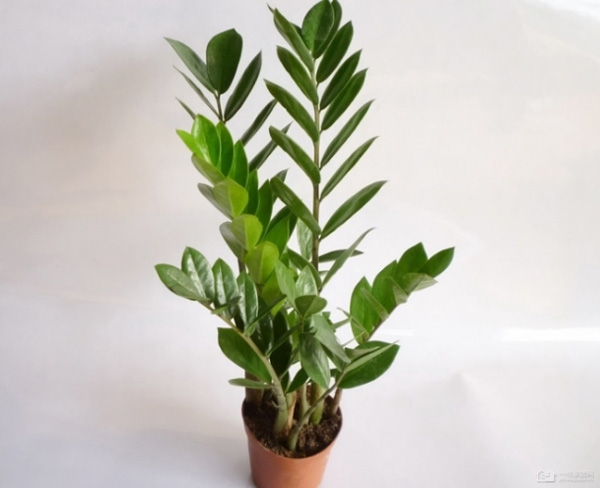
Root rot in the Money Tree may be caused by the potting soil being too dry. The Money Tree likes potting soil that is just slightly moist, and by nature it does not like water; but if the potting soil drains poorly and the water turns stagnant and foul, it will cause root rot.
Root rot in the Money Tree may be caused by using a fairly strong fertilizer before the root system has grown well. Strong fertilizer will scorch the root and stem base of the plant (the part close to the pot); the potting soil may also be unhygienic, and when watering or when it rains, disease pathogens may splash onto the Money Tree plant.
Root rot in the Money Tree is root rot disease, caused by watering too much, which leads to a shortage of air near the roots; in the damp environment a large amount of fungus breeds, and finally root rot forms. Carbendazim or thiophanate-methyl can both be used. Penicillin cannot be used. It is best to first dig the plant out and cut away the rotted roots. Soak it in a carbendazim solution for about 10 minutes, then replace the soil and replant.
Generally, the cause of root rot in the Money Tree is root rot caused by watering; the plant needs to be taken out of the pot promptly, part of the old soil shaken off, placed in a semi-shaded, cool spot to air for 1-2 days, and then replanted in fresh sandy loam soil; afterwards the pot must not be too large, and watering must not be too frequent, watering when 70% of the potting soil is dry, and there must never be a rigid watering interval; water flexibly. If the root rot is relatively severe, it is best to shake off all the soil, then soak in a 500-times dilution of potassium permanganate or carbendazim solution for 5-10 minutes, then rinse once with clean water, air until the root system is dry, and replant.
Another method is to first take the plant out of the flower pot, cut off the rotted tubers and branches and leaves, then apply charcoal powder to the wounds, leave the roots exposed in a warm place, and after the wounds have dried bury them in the potting soil and stop watering, until spring warmth raises the temperature above 20°C before resuming normal watering, but the amount of water must be very small, only keeping the potting soil slightly moist.
When a Money Tree has root rot, suitable methods can be used to deal with it; in addition, if you do not want the Money Tree in your home to develop root rot, you should usually use proper cultivation methods, so as to avoid the Money Tree developing root rot while being grown and affecting it.