Can Snake Plants Be Grown in Water? A Detailed Guide to Water Culturing Snake Plants
Snake Plant, also called mother-in-law's tongue, is native to tropical Africa, is drought-tolerant, and can withstand extremely harsh environments. Because snake plants can purify the air, many people keep snake plants at home. So can snake plants be grown in water? If so, what are the methods for water culturing them?
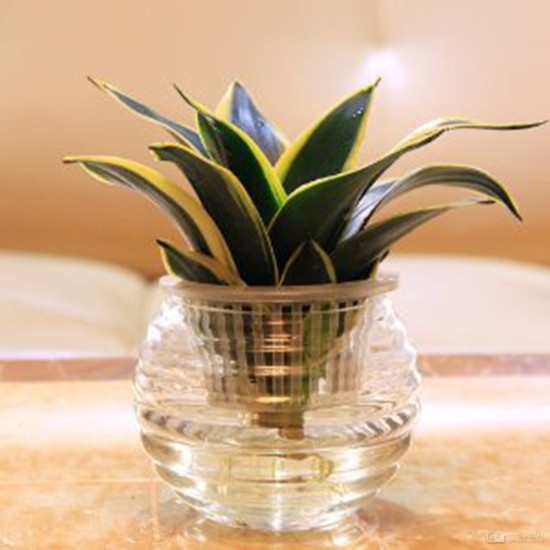
1. Changing the water for water-cultured snake plants
Whether a water-cultured snake plant succeeds depends on the most critical measure: changing the water. First, during growth the plant's roots carry out respiration, which continuously consumes the oxygen in the water; the oxygen in the water gradually decreases as the snake plant respires, and when it drops to a certain amount, it will affect the snake plant's growth (although the oxygen in the water is also replenished from the oxygen in the air, the amount is very small).
Second, during growth the roots produce mucus, and too much mucus will affect water quality. Third, when a snake plant is water-cultured, a certain amount of nutrient solution must be added to the water; apart from the portion of the added nutrient elements absorbed by the snake plant, the rest remains in the water, and as the culturing time lengthens, when the residual substances reach a certain amount they will also harm the snake plant, so the water of a water-cultured snake plant must be changed regularly.
2. Temperature for water-cultured snake plants:
The amount of dissolved oxygen in water is inversely proportional to the temperature: the higher the air temperature and the higher the water temperature, the less dissolved oxygen in the water; the lower the air temperature and the lower the water temperature, the more dissolved oxygen in the water. The snake plant's consumption of dissolved oxygen in water is directly proportional to temperature: the higher the air temperature and the higher the water temperature, the more vigorous the plant's respiration and the more dissolved oxygen in the water it consumes; the lower the air temperature and the lower the water temperature, the weaker the plant's respiration and the less dissolved oxygen in the water it consumes. In addition, when the temperature is high, microorganisms multiply rapidly, which easily causes water quality to deteriorate.
Therefore, when the temperature is high, the water should be changed frequently; when the temperature is low, the interval between water changes can be longer.
3. Growth of water-cultured snake plants:
If the snake plant is growing vigorously and normally, the interval between water changes can be longer. If the snake plant is growing poorly, the water should be changed more frequently. Especially at high temperatures or when root rot is caused by overly concentrated fertilizer, besides promptly trimming off the rotten roots, the water must also be changed every day, and only after the plant returns to normal growth and sprouts new roots can it go back to normal care.
If you want to freshen the air in your home but have no time to care for plants, then you can grow a snake plant! It is full of vitality and easy to keep alive; with just occasional attention it will grow very lush.