How to care for clivia in autumn? Mastering the right method is key
In autumn, many plants begin to lose their leaves and wither, and when a new season arrives, the methods for caring for plants also change. If you grow clivia at home, you need to pay attention to the corresponding care methods in autumn. But how do you care for clivia in autumn?
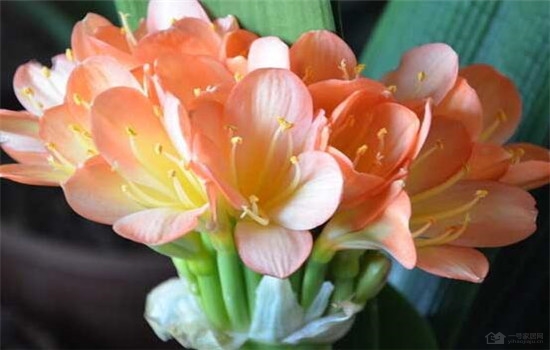
1. Water: As everyone knows, plant growth is inseparable from water; the absorption of nutrients and all physiological activities must rely on water. But different plants have different requirements for water, and the water quality also varies from place to place. Clivia's requirements for water are as follows:
The pH of water: Clivia likes neutral or slightly acidic water, with a pH of around 6.5. The water's pH varies from place to place. If the water is not neutral or slightly acidic, you should consider improving it. For example, alkaline water can be neutralized with rice-washing water.
Water quality: Tap water, river water, lake water and so on all differ in quality. Clean water rich in minerals is best. Tap water has been treated with artificially added chemicals, so it should usually be left to stand for a few days before being used to water flowers.
Moisture content in the soil: The suitable moisture content should be 20%-40%, and it is best that the soil is neither dry nor wet. If the moisture content in the soil remains too high for a long time, the soil's air permeability will worsen, easily causing root rot; conversely, if the moisture content is too low, it will dehydrate the plant, causing the roots to shrivel and wither.
Watering method: The principle of watering is not to water when the soil is not dry, and to water thoroughly when you do. The practice of giving just a little water at a time, like a dragonfly skimming the surface, is extremely harmful. The "dry" mentioned here does not mean dry to the point of no water, but rather that the moisture content in the soil has become relatively low, which is the time to water. People who often grow orchids usually tap the flowerpot with their fingers and judge the moisture content in the soil by the sound of the tapping. If the tapping produces a dull sound, it means the moisture content in the soil is relatively high and there is no need to water; conversely, if the sound is crisp, it means the moisture content in the soil is relatively low and you should water immediately. The reason the dragonfly-skimming approach is so harmful is that most of the small amount of water is absorbed by the soil or runs straight off along channels formed in the soil, so the roots absorb very little, almost as if no watering had been done at all.
In addition, when watering, you should also note that the water temperature and soil temperature should be close, and the difference between them should not be too large; the best times to water are morning and evening. At midday in summer, when the temperature is very high, it is not suitable to water; watering should avoid the flower center, especially during the period when the flower stalk is emerging and blooming, to prevent unclean water from causing the center to rot.
2. Soil: Clivia's roots are fleshy roots, suitable for growing in loose, fertile, water-permeable, and well-aerated soil, so the choice of growing medium should strictly take these four factors into consideration.
Soil quality: Leaf mold meets the above four requirements and is the first choice for growing clivia. The best leaf mold is made from oak leaves (oak tree leaves); leaves of other trees such as larch, hazel, pear, and apple trees can also be used, but you need to watch out for pesticide residues. Walnut tree leaves are toxic and cannot be used. High-quality leaf mold should be moderately rotted tree leaves, with a degree of rotting of about 50%; too much rotting is not good, as water permeability and air permeability become poor.
To further improve the structure of the leaf mold and enhance water permeability and air permeability, you can also add some larch pine needles, carbon made from burned rice husks (not ash), washed river sand, and furnace cinder, in a proportion of 10%-20%. Compacted, barren ordinary soil is not suitable for growing clivia and will seriously affect its normal growth.
In addition, the soil's pH varies in different regions, so you should choose neutral or slightly acidic soil, with a pH between 6.5 and 7.
3. Fertilizer: As the saying goes, "For a crop to bloom, it all depends on fertilizer." Fertilizer is an essential and important source of nutrition for clivia's vigorous growth. Clivia is a flower that likes fertilizer, and mature clivia must have sufficient fertility.
Fertilizing clivia should be determined by its size, variety, growth and development, and season. Too much or too little fertilizer is not good for clivia's growth. Too much will cause root burn, and the leaves will wrinkle or the plant will stall; too little will mean a lack of nutrients, so clivia grows slowly, and the leaves noticeably narrow, become soft, and do not stand upright.
How do you care for clivia in autumn? These are the autumn care methods for clivia. If you have clivia at home, it is recommended that you take more care of it after autumn begins. Also, the climate in the north and south is different, so the methods used when growing clivia will also differ.