Red Gentian Propagation Methods and Red Gentian Pest and Disease Control
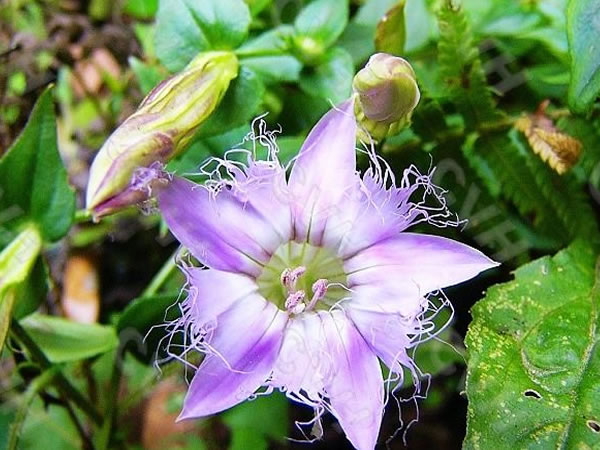
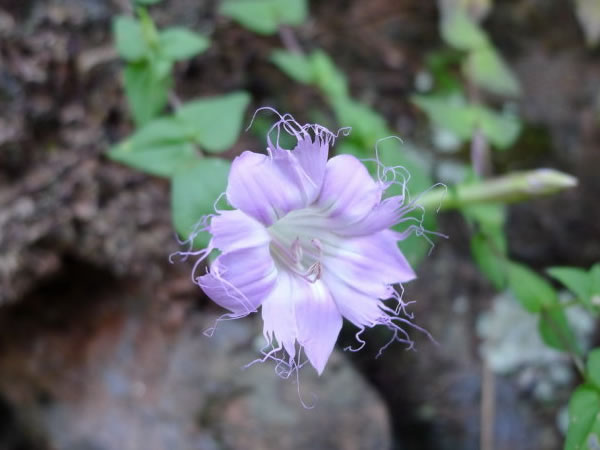
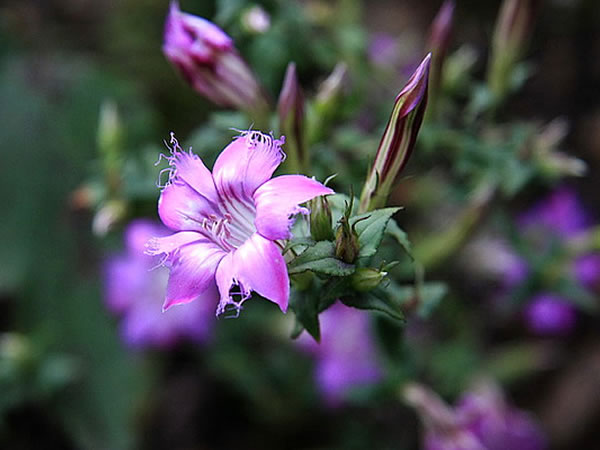
The flowers of the red gentian (Gentiana rhodantha) are bell-shaped or funnel-shaped. Gentians bloom in drifts and clusters, swaying in the wind and showing a kind of elegant, quiet beauty that many people love very much. So how do you propagate red gentian? How do you control its common pests and diseases?
I. Red Gentian Propagation Methods
1. Seed propagation: Spring sowing is best from mid-April to mid-May. 1-3 days before sowing, first dissolve gibberellin in a small amount of alcohol, then make it into an aqueous solution and soak the seeds for 12 hours. Then wash the seeds with clean water, put the seeds in a cloth bag and drain until no water drips out. Then soak the seeds in a 3% potassium nitrate aqueous solution at room temperature for 3 hours, then rinse with clean water until the water is colorless. Drain off the water, and mix the seeds with fine sand at a volume ratio of 3:1 to the seeds, then set aside for sowing. Evenly broadcast the treated seeds on the prepared seedbed surface, then flatten the bed surface with a wooden board or flat shovel so that the seeds and soil are closely combined, and cover the bed surface with a layer of long pine needles or rice straw, with a thickness that is as if exposed but not exposed, about 12 cm. Early sowing is preferable, so that the seedlings have enough time to grow. Large seedlings with thick roots and relatively sturdy overwintering buds help increase the survival rate of transplanting and form sturdy overwintering buds.
2. Root division propagation: In autumn, dig out the underground roots and rhizome parts, taking care not to damage the winter buds. Cut the rhizomes into sections of three nodes or more, bury them in the soil together with the fibrous roots, cover with soil, and keep the soil moist. New plants can grow the following year. Spray with new high-film to protect the seedlings and help them grow vigorously.
3. Cutting propagation: Before flower bud differentiation, cut branches from mature plants, with every three nodes as a cutting, remove the lower leaves, insert them into a prepared cutting bed, and water immediately. At a soil temperature of 18-28°C, they can root in about 3 weeks, and the survival rate reaches about 80%.
II. Red Gentian Pest and Disease Control
1. Leaf spot disease: This is a serious disease harming gentian. From early June to mid-June, spray with a 400-500 times dilution of 65% mancozeb once every 5-7 days. From mid-June to October, spray with a 300 times dilution of mancozeb once every 3-5 days. A 400 times dilution of 50% carbendazim can also be used once every 3-5 days, used alternately with mancozeb.
2. Mole crickets: After sowing, mole crickets cause damage under the covering on the bed surface. Fry wheat bran until fragrant, mix it moist with a 15 times dilution of 90% trichlorfon or dimethoate, and place it in piles along the edge of the bed for trapping and killing. The amount of poisoned bait is about 4-5 kg per mu.
3. Damping-off: Damping-off is a disease caused by fungi. The symptoms are water-soaked spots on the leaves of infected plants, and the plants lodge in patches and die after 5-8 days. Excessive humidity and overly high planting density make the disease severe. It can be controlled with a 500 times dilution of 65% mancozeb or fungicides such as carbendazim.
4. Leaf rot: The cause and symptoms of leaf rot are that infected leaves wilt, gradually turn black and rot, and in severe cases even the roots rot away. High temperature and high humidity favor the disease. After onset, suspend watering, and drench the affected area with an 800 times dilution of thiophanate-methyl or a 1500 times dilution of 50% carbendazim. Before onset, spray the leaves with a 700-800 times dilution of carbendazim or a 500 times dilution of mancozeb for prevention.
The above is an introduction to red gentian propagation methods and red gentian pest and disease control. We hope it is helpful to everyone. If you want to learn more about red gentian, keep following us.
Recommended reading:
① Red Gentian Cultivation Methods and Red Gentian Effects and Functions
② Milkweed Propagation Methods and Milkweed Growth Habits
③ Paphiopedilum with Leaves Propagation Methods and Complete Collection of Paphiopedilum Varieties
④ Complete Collection of Wisteria floribunda Propagation Methods and Common Disease Control of Wisteria floribunda
⑤ Complete Collection of Fagraea ceilanica Propagation Methods: 4 Methods to Teach You to Propagate Fagraea ceilanica