What to do about frost damage in a ZZ plant? Distinguish severity and urgency and treat it scientifically
The ZZ plant (Zamioculcas zamiifolia) is a tropical plant native to the tropical savanna regions of eastern Africa. Therefore, its suitable growing temperature is above 20°C; if it drops below this temperature and proper insulation measures are not taken, frost damage to the ZZ plant is very likely. So, what should you do when a ZZ plant freezes?
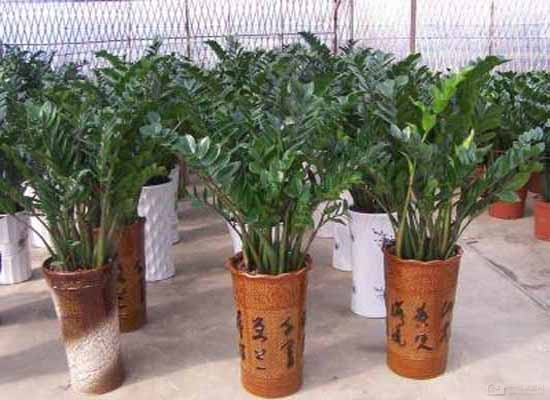
The ZZ plant is a perennial evergreen herbaceous plant, a rare evergreen species in the Araceae family that has underground tubers. The plant can reach 20 cm to 30 cm in height, and its optimal growing temperature is 20°C to 32°C. Whether grown in pots or in the ground, it requires small annual temperature fluctuations. When the temperature drops below 8°C, it should be moved promptly to a well-lit indoor location, and throughout the winter the temperature should be kept between 8°C and 10°C.
Cold damage is one of the common diseases of the ZZ plant. When the winter temperature drops below 5°C, combined with damp potting soil, the plant's pinnate young leaves are prone to collapsing from cold damage, and in severe cases the tubers may rot, making it very difficult for the plant to recover. So, what should you do when this happens?
1. Lightly frozen plants should be promptly sprayed with foliar fertilizer
For leaves that turn yellow and curl due to cold dew, wind, morning frost or a late cold snap, or for plants with withered terminal shoots or weakened vigor, you can immediately use Chunyu No. 1, Kuaihuolin antifreeze agent, plus 0.1% urea as a foliar fertilizer and spray 2-3 times. Note that the concentration used should be slightly lower than the usual application concentration.
2. Plants whose frozen branches and leaves have permanently wilted must have their roots protected first
When leaves lose water severely and become permanently wilted due to abnormally low temperatures or continuous frost, irrigation should be strengthened, the soil should be loosened by cultivating, and a thick layer of rice straw should be spread over the tree disc. At the same time, remove or shake off the withered leaves, lightly cut back the water-depleted withered terminal branches, and ensure a balance of water supply between the aboveground and underground parts so that the root system is not affected.
3. Post-freeze pruning should be done when buds break in spring
After freezing in winter, extensive pruning should not be done immediately, to avoid worsening the degree of freeze damage. If branches are broken by the weight of ice and snow, they should be tied up promptly, and supports or branch-tying should be set up to secure them, preserving and saving the injured branches as much as possible. Generally, branches that have lost their leaves or dried up from freezing should be pruned only when buds break in spring, adhering to the principle of "heavy pruning for severe injury, light pruning for light injury." When pruning, choose clear weather, and generally shorten branches to about 2 cm below the healthy part. When heavily cutting back or reducing to the main branches and secondary main branches, choose and retain reasonable, appropriate vigorous buds according to the condition of the base branches of the canopy, and saw off 2 cm above the buds. The saw cut should be flat and coated with Kuaihuolin wound healing ointment protectant. After pruning a frozen plant, the new buds sprout in a messy and numerous way, so buds should be thinned and the growing tips pinched in time to restore the canopy as soon as possible.
4. After freezing, focus on preventing pests and diseases
After freezing, the plant's vigor weakens, so organic fertilizer should be applied more, and waterlogging and drought prevention and pest and disease control should be carried out in time. In particular, gummosis (resin disease) is most likely to occur after freezing; in mid-May and mid-September, scrape off the diseased bark, wash it with 75% alcohol, and then apply Xinzi flower and tree fungicide at 100 times dilution, all with ideal results. In addition, aphids, mites and moth and butterfly pests should be controlled in time to protect the smooth growth of new shoots and help the canopy recover.
Light frostbite and severe frostbite require different handling methods and must be treated scientifically. However, no matter what, timely treatment is always a kind of harm to the ZZ plant; the key is to do a good job of prevention beforehand.