What are the common pests of lucky bamboo and how to prevent and control them
Plants inevitably suffer from pests during their growth. As a result, at best the appearance of the green plant is damaged and its ornamental value is greatly reduced, and at worst the plant withers and dies. Lucky bamboo (Dracaena sanderiana) is no exception, and it too can suffer from pests during its growth. So, what are the common pests of lucky bamboo? How do you prevent and control them?
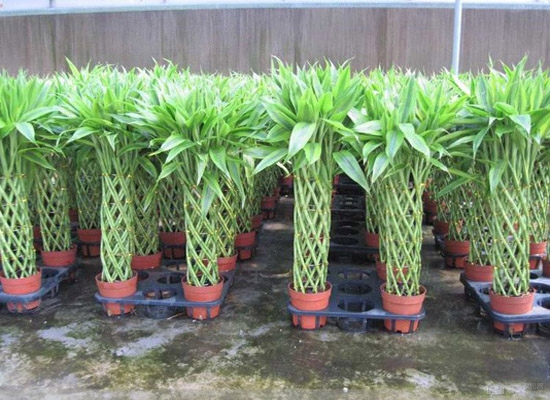
Lucky bamboo symbolizes blooming flowers and wealth, bamboo bringing peace, great fortune and prosperity, and a life of wealth and honor. Its name comes from this, and the beauty of lucky bamboo is inseparable from its auspicious name.
Lucky bamboo generally does not grow bugs. If it does grow bugs, it is also caused by dry air and poor ventilation, and they are nothing more than pests such as scale insects and red spider mites. If bugs grow in the water, they are most likely mosquito larvae, and simply changing the water promptly will take care of it.
I. Red spider mite
The adult red spider mite is the size of a needle eye and red in color. It gathers on the back of leaves and sucks the plant's sap in a piercing-sucking manner, causing the chlorophyll in the leaves to be destroyed and irregular small yellow-white spots to appear on the leaf surface. It also likes to spin webs, and when the damage is severe, the leaves turn yellow, dry up and fall off.
Control method: pesticides such as dichlorvos, dimethoate and dicofol can all kill them. When using, dilute with water according to the instructions on the medicine packaging and spray (the back of the leaves must be sprayed), and be careful not to exceed the recommended concentration. If these pesticides are not available, you can also dilute neutral laundry detergent with water and spray it, and the back of the leaves must also be sprayed. Laundry detergent can dissolve the protein that makes up the basic structure of red spider mites, and is a "natural, eco-friendly insecticide" found in every home.
II. Scale insects
Scale insects are relatively more troublesome. Scale insects are also piercing-sucking pests, but they carry a thick round waxy layer on their backs. The waxy layer is initially cream-colored, and as time goes on it gradually turns brown and becomes thicker and thicker. Ordinary pesticides have difficulty penetrating it. The adult insect is the size of a mung bean and clearly visible to the naked eye.
Control method: use a brush dipped in water to gently brush off the insect bodies, then spray white vinegar or an alcohol-water solution (scale insects are very afraid of white vinegar and alcohol) for prevention.
Lucky bamboo does not have many pests, but once it is infected by pests, the impact on lucky bamboo should not be ignored. However, for the prevention and control of lucky bamboo pests, you need to treat the root cause with the right remedy.