Harlequin flower
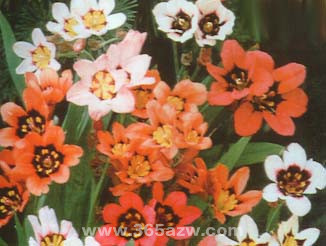
The harlequin flower, also known as water nymph grass iris, is native to southern Africa. It likes a warm and humid environment. It prefers full sunlight but dislikes high temperatures. It is fairly adaptable to soil, with loose, fertile and well-drained soil being the best. The corms lie dormant in summer.
Propagation: mainly by dividing corms. Dig up the corms from October to November for division and planting. In warm regions, corms can also be divided and planted in spring from March to April. Generally, corms are divided once every 3 years. For seed propagation, sow in autumn in September; germination occurs 1 month after sowing, and seedlings need 3-4 years to flower.
Cultivation: plant in autumn, with a planting depth of 5-7 cm. For field planting, cover with straw in winter to prevent frost damage. After seedlings emerge in spring, pay attention to watering and keep the soil moist; never let it dry and crack. From May to June, before flowering, apply 1 dose of phosphorus and potassium fertilizer. After flowering, when the leaves turn yellow, stop watering. The corms enter dormancy, and the soil should not be too wet, otherwise the bulbs rot easily.
Pests and diseases: common ones include iris rust; during the onset period, spray with 25% carboxin EC at 400 times dilution. For damage by the slender larvae of the noctuid moth, use 40% omethoate EC at 1000 times dilution for poisoning control.
Uses: the harlequin flower blooms in early summer, with rich flower colors including white, yellow, red, purple, orange and others; individual flowers are especially multicolored and very attractive. It is suitable for flower beds and flower borders, and can also be grown in pots for viewing.