Yellow spots on Clivia leaves: is it a disease? Different situations need to be distinguished
The leaves of Clivia are dark green like satin, so even without flowering, Clivia has ornamental value. This may be one of the reasons why Clivia is so popular. However, if the leaves have yellow spots, it directly affects its ornamental effect. So, are yellow spots on Clivia leaves a disease?
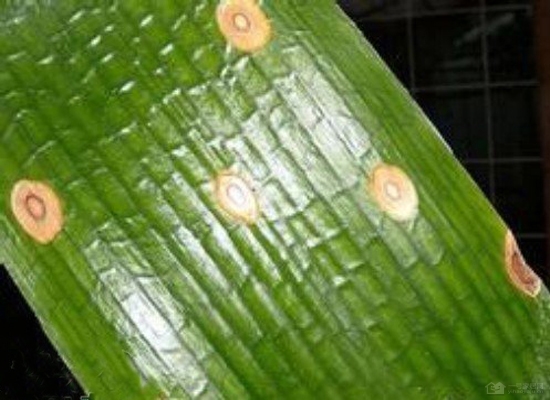
It is said that when Clivia leaves turn yellow, different parts and situations must be distinguished to confirm whether it is a disease. There are generally several situations in which Clivia leaves turn yellow.
1. If the bottom leaves produce new roots from the leaf axils and the leaves turn yellow, this is normal metabolism.
2. If no new roots grow from the leaf axils and the leaves turn yellow, it is mostly due to raw soil, poor air permeability, too much fertilizer, or poor control of watering dryness and moisture causing root rot; these can all make Clivia leaves turn yellow. If watering does not penetrate thoroughly, the root tips lack moisture, and the leaf tips will turn yellow and dry. In this case, you must water thoroughly. In summer, every 7-10 days you can set the flower pot bottom in a small basin of water, so that thorough watering is ensured; this is called the soaking method.
3. If yellow spots of unequal size appear on both sides of the leaf, it may have leaf spot disease.
The main symptoms of leaf spot disease are that small yellow or brown round spots appear on the leaf surface, after which the spot color gradually deepens, and the ulcerated area of the spots gradually expands, until the leaf or the whole plant rots away.
The main causes of leaf spot disease: First, applying fertilizer that has not been well fermented, which allows pathogens to multiply greatly in the potting soil. Second, the potting soil has not been changed for a long time, and disease-causing bacteria exist in the old soil. Third, the new soil used is relatively raw and not fully fermented, and undergoes secondary fermentation in the pot. Fourth, the fertilizer is unbalanced in nitrogen, phosphorus, and potassium, especially when there is too little potassium fertilizer or when fertilizer directly contacts the roots during application. Different methods should be adopted according to the specific causes to prevent and completely cure it. The fertilizer applied must be fully fermented, the fertilizer concentration should be low, nitrogen, phosphorus, and potassium should be balanced, and the fully fermented nutrient soil should be replaced regularly twice a year in spring and autumn; do not use raw soil. In this way, leaf spots can be eliminated.
4. If the leaves turn yellow irregularly, then it may have yellow leaf disease.
First, part of the leaf turns yellow, and the position of the yellow leaf is irregular. This is caused by the leaf surface being burned by sunlight exposure, cold wind, local bites by pests such as slugs and snails with pathogens spreading there, or wounds enlarging after external injury.
Second, the leaf tip turns yellow first and gradually spreads toward the pseudobulb. This is mainly because root rot interrupts the nutrient supply to the leaves, and yellowing starts from the leaf tip toward the pseudobulb. Or overly large and concentrated fertilizer, use of raw soil, or poor soil quality can all cause this phenomenon.
Third, the pseudobulb area turns yellow first and gradually spreads toward the leaf tip. The cause may be that pests bite the leaves at the pseudobulb and make it gradually spread toward the tip, or in summer water accumulates at the pseudobulb, bacteria breed there, and the leaves turn yellow locally.
Fourth, the entire leaf turns yellow simultaneously from the base to the tip. This situation is relatively common, and the causes are also relatively complex, mainly caused by improper management. For example, poor ventilation and too much water in summer, excessive fertilization, problems with the roots, etc., can all make the whole leaf turn yellow.
Yellow spots appearing on Clivia leaves may be the beginning of leaf spot disease or yellow leaf disease. As growers, we should attach great importance to this, find out the cause of the yellowing as soon as possible, and treat it according to the symptoms.