Differences Between White Clover and Wood Sorrel, and the Benefits and Effects of White Clover
White clover plants are low-growing and highly adaptable, making them an excellent lawn plant. So what is the difference between white clover and wood sorrel? And what are the benefits and effects of white clover? Let's find out together.
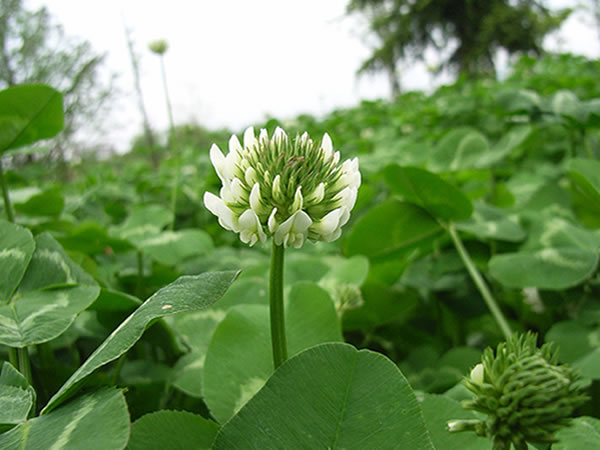
White Clover Image
I. Differences Between White Clover and Wood Sorrel
White clover is white clover, and first of all its leaves are different from those of wood sorrel. The leaves of white clover are oval, some nearly heart-shaped, with a white ring on them. The leaves of wood sorrel are inversely heart-shaped. White clover blooms white flowers, while the wood sorrel I have seen blooms red, yellow and white flowers, and there is also purple wood sorrel with purple leaves.
Clover and wood sorrel are both very common garden plants. The ones I have seen most are red wood sorrel and white clover. Wood sorrel has a longer flowering period. White clover grows creeping along the ground, giving the impression of densely covering the whole ground, while red wood sorrel is different.
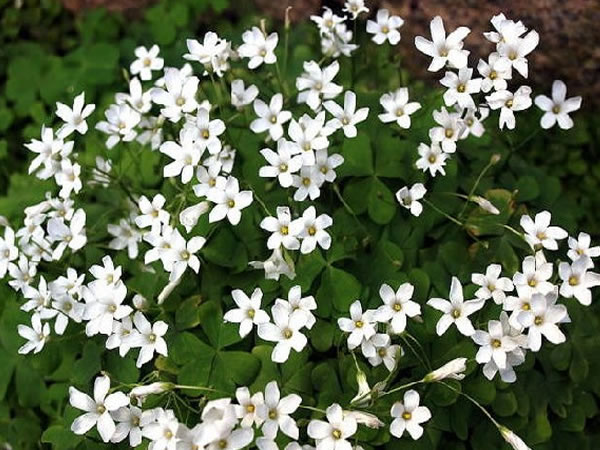
Wood Sorrel Image
II. Benefits and Effects of White Clover
1. Medicinal effects: The whole plant of white clover can be used as medicine. It tastes slightly sweet and is neutral in nature, with the effects of clearing heat and cooling blood, calming the nerves and relieving pain, and eliminating phlegm and relieving cough. Foreign clinical trial reports say that the tincture of white clover flowers can be used to treat colds, and the tincture of the whole plant has an astringent and hemostatic effect, used as a medicine for stopping bleeding from external injuries and promoting wound healing. It has also been found that the isoflavones it contains have anti-cancer effects. The macromolecular substance polysaccharide extracted from white clover has a series of medicinal and health functions, including improving immunity, anti-tumor, anti-aging, and lowering blood lipids.
2. Feeding value: White clover has excellent palatability and high digestibility, and is favored by various livestock and poultry. It is suitable for raising cattle, sheep, herbivorous fish and so on. Its nutritional composition and digestibility are higher than those of alfalfa and red clover. On natural grasslands, the feeding value of the grass population also increases with the proportion of white clover, while hay yield and seed yield vary by region. It has the characteristics of sprouting early, declining late, and a long grass supply season. In the south, the grass supply season is from April to November. White clover has creeping stems, long petioles, and a low grass layer, so when grazing, the leaves and tender stems are mostly eaten.
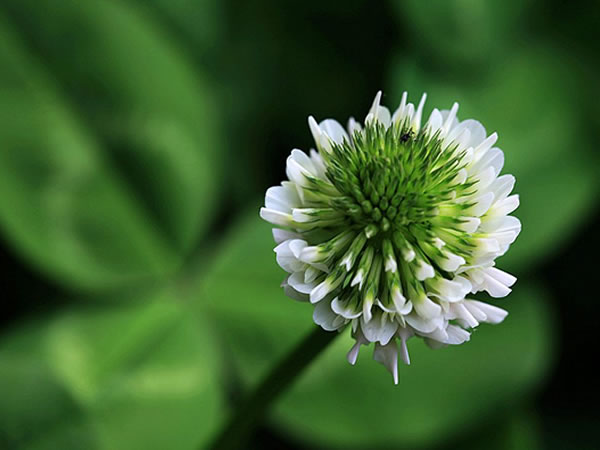
White Clover Image
The above is an introduction to the differences between white clover and wood sorrel and the benefits and effects of white clover. We hope everyone can clearly distinguish white clover from wood sorrel. If you want to learn more about white clover, keep following us.
Recommended Reading:
① Differences Between Moss Rose and Sunflower, Symbolic Meaning of Moss Rose
② What Is the Difference Between Tree Peony and Chinese Peony, Difference Between Tree Peony and Chinese Peony in Pictures
③ What Are the Differences Between Hall Crabapple and Midget Crabapple, How to Prune Hall Crabapple
④ What Is the Difference Between Camellia and Sasanqua, Difference Between Camellia and Sasanqua (Text and Pictures)
⑤ What Is the Difference Between St. John's Wort and Hypericum patulum (Text and Pictures)