A Complete Guide to the Flower Language of Lupinus polyphyllus and an Introduction to Its Growing Habits
The beautiful appearance of Lupinus polyphyllus attracts many people. Its abundant flower spikes and brilliant, colorful blooms make people stop and admire them. So what is the flower language of Lupinus polyphyllus? And what are its growing habits?
I. The Flower Language of Lupinus polyphyllus
Flower language: fantasy, sorrow, greed, bitterness.
The flower of Saint Eugenius, bishop of Carthage in the 5th century. In Taiwan, China, it is vividly called the "mother flower."
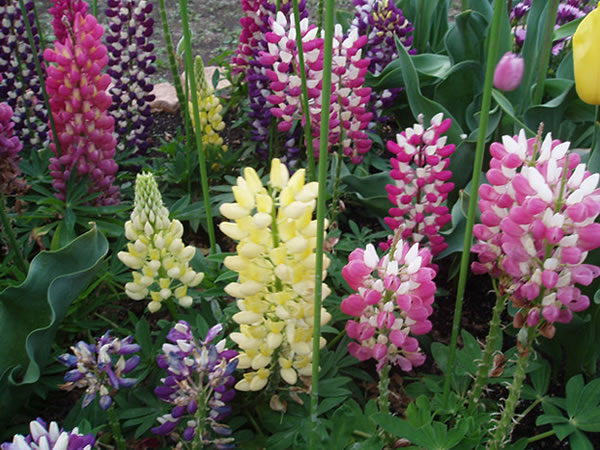
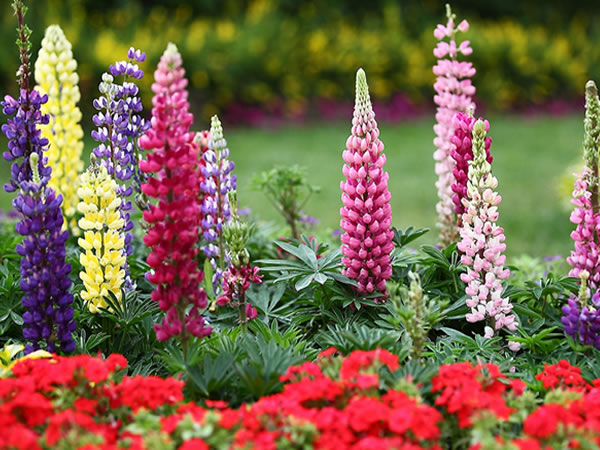
Lupinus polyphyllus, an annual herb, can reach 100 cm in height. The stem is upright, with palmately compound leaves; the leaflets are lanceolate to oblanceolate, and the leaf texture is thick. The inflorescence is a raceme, with many densely packed flowers, alternate, the inflorescence axis slender, the pedicels very short, the calyx bilabiate and covered with stiff hairs, the corolla blue, and the standard petal and keel petal marked with white patterns. The pod is oblong-linear, and the seeds are ovate, flat, mottled, and smooth. It flowers from June to August and fruits from July to October.
II. Growing Habits of Lupinus polyphyllus
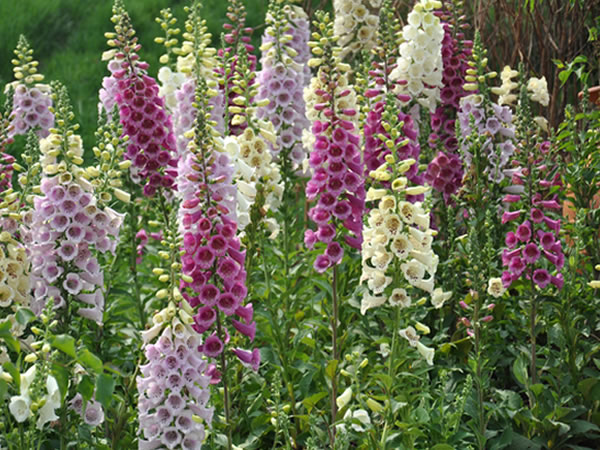
It is relatively cold-tolerant (above -5°C) and prefers cool climates and sunny locations; it dislikes intense heat, is slightly shade-tolerant, and needs fertile, well-drained sandy soil. Its taproot is well developed, with few fibrous roots, and it does not tolerate transplanting. The root system is well developed and drought-tolerant, and sandy soil suits it best; it also has a relatively strong ability to use the poorly soluble phosphorus in phosphates. It can still grow in rainy, easily waterlogged areas and in acidic soils where other plants struggle to grow; however, calcareous soil or poor drainage often leads to poor growth. It can endure temperatures of 0°C, but freezes to death when the temperature falls below -4°C; scorching summer heat also inhibits its growth.
The above is an introduction to the flower language of Lupinus polyphyllus and its growing habits. Although the flower language of Lupinus polyphyllus may not seem like much, being called the "mother flower" shows how much people love it.
Recommended reading:
① The Complete Flower Language of Antigonon leptopus and Its Morphological Characteristics
② The Complete Flower Language of Lilium longiflorum and Its Morphological Characteristics
③ The Flower Language of Salvia farinacea and Its Morphological Characteristics
④ The Complete Flower Language of Iris germanica and Its Effects and Functions
⑤ What Is the Flower Language of the Eminium flower? Its Symbolic Meaning and Legend