How to Apply Potassium Fertilizer to Clivia? Controlling the Amount Is Key
It is said that potassium fertilizer is an indispensable nutrient in the growth of Clivia; a lack of potassium fertilizer will affect the growth of Clivia, especially how beautiful its appearance is. So, what role does potassium fertilizer play in the growth of Clivia? How do you apply potassium fertilizer to Clivia?
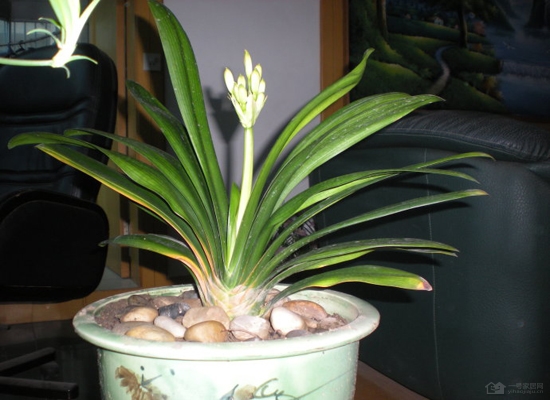
First, let us talk about the effect of potassium fertilizer on Clivia.
Potassium is one of the elements found in relatively large amounts in the Clivia plant, with the highest content in the tender leaves of seedlings and in parts such as the root tips. It can promote the plant's absorption of nitrogen and promote the formation of protein. Potassium can make the plant's roots grow thick and strong, and the leaves broad, thick and upright. The veins become clear and raised, and it can improve the plant's drought resistance and resistance to pests and diseases. When a plant lacks potassium, the cellulose in the cell walls decreases, the leaves become soft, the veins do not protrude, it is prone to disease infection, and yellow-brown spots easily appear on the old leaves.
The common potassium fertilizers at present mainly include: plant ash, "charcoal" ash, rice straw ash, rice husk ash, and so on.
From the above, one can see the importance of potassium fertilizer in Clivia care. Growers often ask why the Clivia they bought grows worse and worse the longer they keep it, why the veins no longer stand out, and so on. In fact, this has a great deal to do with a lack of potassium fertilizer. Therefore, during cultivation, everyone should supplement potassium fertilizer in appropriate amounts. Plant ash, "charcoal" ash and some homemade liquid fertilizers (fermented eggshells and fish scales), compound organic potassium fertilizer, and so on.
Indeed, the nutrient supply for potted Clivia is mainly ensured by artificial topdressing. Different fertilizers should be applied in different seasons and at different growth stages:
(a) In combination with the autumn soil change, add oil crops such as hemp seeds and sesame seeds as solid fertilizer, which has the characteristics of lasting fertilizer effect, slow and uniform release of nutrients; oil plants will also make the leaves glossy.
(b) Supplement liquid fertilizer appropriately and at the right time; supplement whatever is lacking, under human control.
And potassium fertilizer is for nourishing the roots, and nourishing the roots is the first priority. When the roots are well nourished, all aspects of quality will show. Appropriately supplementing potassium fertilizer is beneficial to flower growth. However, although potassium fertilizer is good, it cannot be used in excess; in excess, the leaves turn yellow-brown and the plant's growth is inhibited.
In fact, the application of potassium fertilizer is mainly done after the flowers are pollinated, with the focus on ensuring the formation and growth of the fruit embryo. . The amount used must not be too large, otherwise it will inhibit plant growth.
As for how to apply potassium fertilizer to Clivia, I believe everyone can understand and grasp it. The application of potassium fertilizer is highly targeted, so the timing of its application must be well controlled.