How to care for an asparagus fern? Create a suitable growing environment according to its habits
The delicate, slender appearance of the asparagus fern inspires affection at first sight. And the integrity that bamboo represents gives the asparagus fern deep cultural meaning as well. For this reason, the asparagus fern has become a regular in home greenery. So, how do you grow an asparagus fern? What kind of growing environment do its habits require?
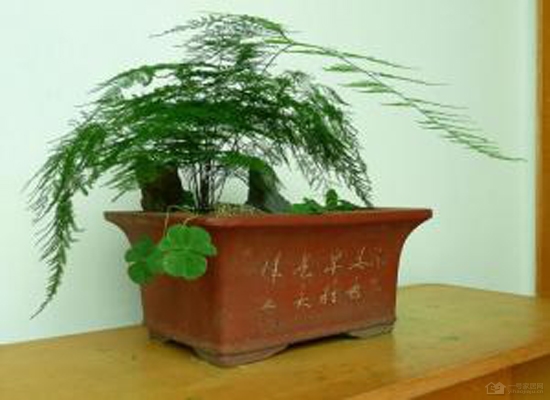
The asparagus fern is an evergreen ornamental plant belonging to the genus Asparagus in the family Asparagaceae, originally from Africa. It is a common potted feature in homes. The asparagus fern is a green vine plant; its roots and stems are fleshy clustered stems, fairly soft, and stretch straight upward. Like bamboo, it has nodes, symbolizing steady rise step by step. Because it resembles a dwarf bamboo but carries more elegance and artistic flair than bamboo, ancient scholars and writers called it "wenzhu" (asparagus fern). The lush green that the asparagus fern displays is actually not leaves but its leaf-like branches; these leaf-like branches grow densely and, clustered together, look like feathers, very refined. Viewed from a distance, the whole asparagus fern layers up one tier upon another, like green clouds, so it is also called yunpian song or yunzhu. With luxuriant foliage in graceful, staggered arrangement, it has been called the literatus among bamboos. Generally, the asparagus fern looks best in its first three years of growth; after it gradually matures it needs appropriate pruning, and it is grown mainly for its foliage. Moreover, placing an asparagus fern in the home not only purifies the air, but its fragrance also has a cough-suppressing and lung-moistening effect.
1. Choosing the soil
The asparagus fern is generally suited to pot culture, because potting soil can ensure good drainage and is easier to amend with humus. The soil must also be clean, otherwise the plant is easily harmed. The soil should be moist, and you should loosen the soil promptly to ensure air circulation.
2. Water requirements
The asparagus fern is actually not strict about water; the usual rule for watering is to water once the soil has dried, and when watering, water thoroughly, meaning the leaves should be watered too, but be careful not to cause waterlogging. Generally, the air in spring and autumn is fairly humid, so water according to the standard, while in summer the soil dries easily, so you may mist the leaves appropriately.
3. Controlling fertilizer
The asparagus fern actually does not care much for fertilizer, unlike pothos, snake plant and the like; as with the money tree, a light fertilizer is enough, generally nitrogen-based, applied about once a month, otherwise, because the potting soil is relatively limited, nutrients cannot be replenished in time and the plant will show signs of poor health.
4. Light duration
The asparagus fern is a semi-shade plant and should not be exposed to the sun for long periods; especially the summer sun must be shaded in time. In spring and autumn it can get some sunlight appropriately.
5. Temperature adjustment
In daily care, the asparagus fern can grow normally as long as the temperature stays above 10°C. In summer, place it in a ventilated, shady spot and water appropriately to cool it down, while in winter the indoor temperature must be kept above 5°C, otherwise low temperatures will freeze and injure or kill the asparagus fern.
6. Choosing the environment
The asparagus fern is rather delicate; if placed where there is smoke or a lot of soot and dust, its leaves will turn yellow and dry up.
It seems the asparagus fern still needs more care, unlike pothos and snake plant, which are rugged and generally easy to keep alive. Of course, what the asparagus fern can bring to the home is likewise something pothos and snake plant cannot achieve.