Identification and Control Methods of Wireworms on Money Tree
For the money tree (Pachira aquatica), there are two main pests: red spider mites and scale insects. So what are wireworms? Why do money trees also suffer from wireworm damage? What are the key points for controlling wireworms on money trees? This article aims to give a brief introduction to the above series of questions.
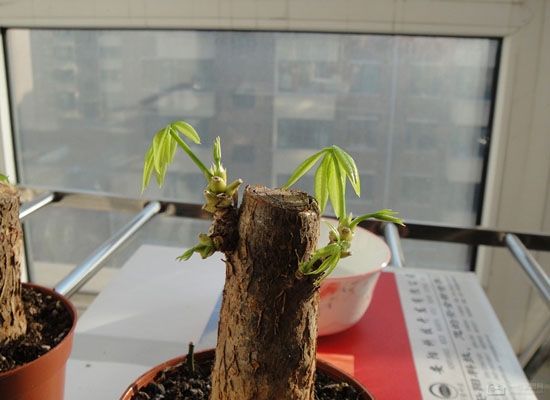
Strictly speaking, wireworm damage is not exclusive to the money tree. Wireworms are the larvae of click beetles, a soil-dwelling pest. Their targets are: various herbaceous plants, shrubs and ornamental nursery stock, mainly damaging the young shoots and seeds of corn, tobacco and Chinese medicinal herbs. The larvae feed in the soil on sown seeds, sprouted shoots and the roots of flower seedlings; they can bite through newly emerged seedlings, and can also burrow into the roots of larger seedlings to feed, with the damaged parts not completely bitten through and the broken edges uneven. The consequence is that the plants wilt and die, causing gaps in the seedling rows, and in severe cases the entire crop is destroyed.
Their occurrence characteristics are: wireworms overwinter as adults or larvae in the soil at a depth of 20-40 cm, begin to emerge from the soil in early to mid-March of the following year and damage early-sown crops, with the most severe damage in April-May. The adults hide by day and come out at night, have a feigning-death habit, and often gather in groups under strongly rotting and fermenting smells, rotten grass piles and clods of earth. Each female can lay 30-35 eggs. The larvae tolerate low temperatures, so they rise to cause damage early in spring. A soil temperature of 17°C and a soil moisture content of 15% are optimal, and sandy soil generally suffers more severe outbreaks.
I. Agricultural control
① Where conditions permit, paddy-upland rotation can be carried out;
② Intensive cultivation, deep ploughing and repeated harrowing to kill the pest sources;
③ Pile and cover farmyard manure with plastic film to fully decompose it, preventing adult wireworms from laying eggs in the manure piles.
II. Chemical control
① Poisoned soil: before sowing, use 100 ml of 50% phoxim emulsifiable concentrate per mu plus 0.5 kg of water, or 25% phoxim microcapsule slow-release formulation at 1-2 kg per mu, mixed with 20 kg of sieved fine dry soil and applied evenly;
② Poison bait: at the seedling stage, use 0.5 kg of 90% trichlorfon crystals, add 5 kg of water and mix with an appropriate amount of roasted wheat bran (20 kg of wheat bran per mu) or soybean cake to make poison bait, and scatter it around the base of the seedlings in the evening; taking advantage of the habit of soil-dwelling pests of hiding by day and coming out at night, they can be killed (this method is recommended when the pest density is relatively high and the damage is relatively severe);
③ Drenching: 100 ml of 50% phoxim emulsifiable concentrate per mu diluted in 100 kg of water can be used for drenching.
Although wireworms are not the main pest of the money tree, it can be seen from the above introduction that their harm to the growth of the money tree is still considerable. Therefore, once this kind of pest is found, it must be controlled promptly.