How to Grow Japanese Iris? Detailed Guide to Daily Care Methods
Japanese iris is a perennial aquatic flower, and its flower stems can reach over 15cm. This article introduces the cultivation methods for Japanese iris so that more people can learn about it.
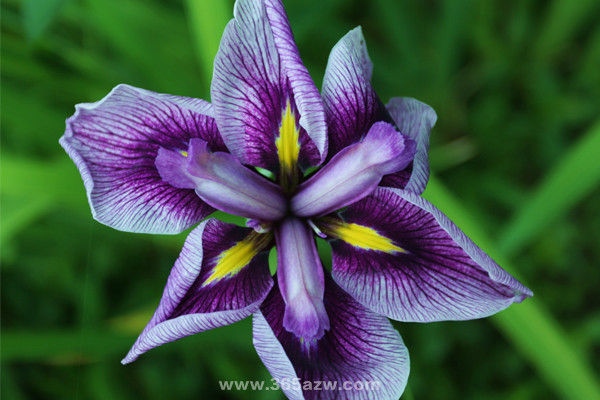
Japanese Iris Cultivation Methods
Generally, the Japanese iris we see comes in two types: one is planted in water, and the other is planted in soil above the water surface. Under normal conditions, Japanese iris in soil is not as good as Japanese iris in water, so cultivation usually chooses wetland.
Japanese iris likes a moist environment and has a relatively high water demand for growth. During the planting process, ensure sufficient light, with light duration controlled at more than 6 hours; provide sufficient air humidity and soil moisture, and fertilize at the right time.

Japanese Iris Propagation and Care
The propagation of Japanese iris mainly includes three methods: sowing, division, and tissue culture.
Sowing is mainly carried out in spring and autumn. Division can be done in spring, autumn, or after flowering, and tissue culture can be carried out at any time. In today's advanced technology, lateral buds, leaves, and stem tips are sterilized and then subjected to differentiation culture, which can produce a large number of plants.
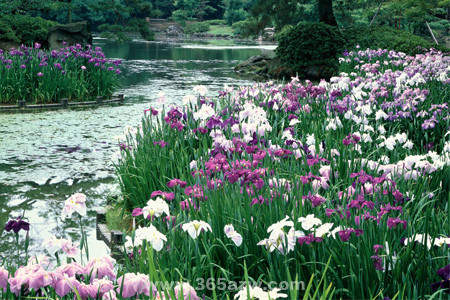
Japanese Iris Care and Management
Watering and Fertilizing
Japanese iris needs proper watering and fertilizing. Potted plants require more meticulous management, and fertilizer should not be too concentrated to avoid burning the roots. Field-planted plants are managed relatively extensively, and fertilizing once in spring and once after flowering is sufficient.
Pruning
After flowering, promptly cut off diseased leaves, residual roots, and flower stems. When repotting and transplanting, cut off the upper part of the leaves, leaving 20cm for transplanting. For some introduced varieties, soak the roots in rooting agent before planting.
Weeding
After Japanese iris is planted, many weeds will grow around it, so loosen the soil and remove weeds in time. Weed when the soil is relatively dry. Pull them out by hand.