How to care for asparagus fern in winter? Master the correct watering method
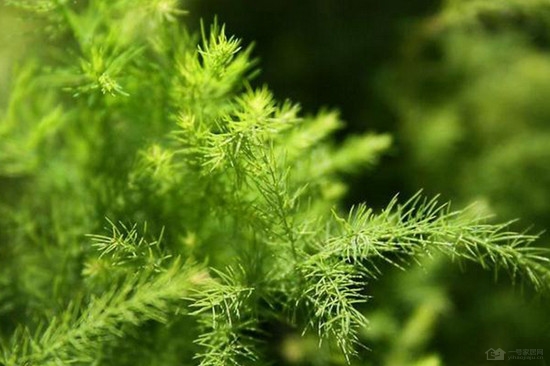
Asparagus fern has a light and graceful form, slender branches, and stays green all year round, always giving people a fresh and elegant feeling. It is a small potted flower commonly grown in homes. However, asparagus fern is not cold-tolerant in winter, and many people do not know how to care for it in winter, and are even more at a loss about how to water it in winter.
Cold protection and warmth
Asparagus fern is native to southern Africa and is not cold-tolerant, so it cannot overwinter outdoors in the north. In mid-October each year, when the temperature drops sharply, asparagus fern should be moved indoors in time, and the room temperature should be kept above 15°C. The flowerpot should be placed on a sunny windowsill, and the leaves should be kept some distance from the glass to prevent the leaves from being partially frozen and turning dry and yellow.
Proper watering
Asparagus fern is adapted to growing in a moist environment. The dry winter air in the north is extremely unfavorable to the growth of asparagus fern, and this is the main cause of tip drying in asparagus fern.
Every day at noon, you can spray the leaf surface to keep the branches and leaves green. Although asparagus fern likes moisture, it is taboo to water it too much. If the potting soil is too wet for a long time, it is easy to cause root rot, yellowing leaves, and even plant death; but if the potting soil is too dry, it can also cause yellow leaves or scorched tips. Therefore, always keeping the potting soil half-dry and slightly moist can make the branches and leaves of asparagus fern green and evergreen all year round.
The water quality should preferably be fresh water that does not contain salt, alkali, or other harmful substances. If using tap water, it should be left to stand for 1-2 days so that the water temperature is close to room temperature before use.
Reasonable fertilization
Asparagus fern likes fertilizer. A thin liquid fertilizer can be applied once every half month, mainly nitrogen fertilizer. For indoor flowers, compound flower fertilizer is more ideal. Reasonable fertilization can promote dense green and upright branches and leaves, improving ornamental value.
Moderate light
Asparagus fern is suitable for growing in a semi-shaded environment. In winter, when indoor light is weak, appropriate light can be given, and attention should be paid to placing it in a sunny and wind-sheltered spot. If it is kept in a shaded place for a long time, yellowing leaves will appear.
Beware of smoke and dust
Asparagus fern has weak resistance to smoke and dust. In winter, if a stove is used for heating indoors, in addition to reducing smoke and dust as much as possible, ventilation should be carried out at noon on sunny days to keep the air fresh.
In addition, asparagus fern should avoid the kitchen cooking fumes and air conditioner vents, and should certainly not be placed too close to heating.
Placing the delicate and elegant asparagus fern flower in the study gives a special charm. When you are tired from office work or reading, you can look up at it, and the fatigue instantly disappears. Growing asparagus fern in winter is not too difficult, as long as you are familiar with what the editor introduced above.