Is Alocasia macrorrhizos afraid of the cold? Creating a suitable environment for growth
Alocasia macrorrhizos gets its elegant name because when the leaves are too full of water, the leaf tips drip water. Alocasia macrorrhizos is easy to keep alive, but if we want to grow it well, we should still understand the environment suitable for Alocasia macrorrhizos. For example, is Alocasia macrorrhizos afraid of the cold? Next, let us understand one by one the living environment suitable for Alocasia macrorrhizos in detail!
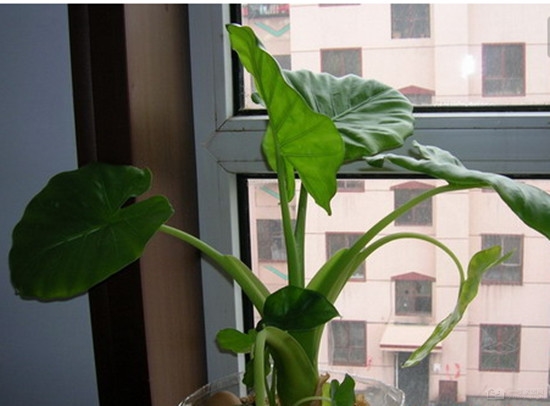
1. The growth temperature is 20-30°C, and it can tolerate a minimum low temperature of 8°C. In summer, as long as the soil is kept moist, water is sprayed frequently, and shade is provided, it can still grow normally during high temperatures. In winter, the room temperature must not be lower than 5°C. Alocasia macrorrhizos is an understory plant of tropical rainforests, so its growth requires high humidity, and scattered light is best.
2. It is a shade-tolerant plant and likes a semi-shady environment, so it should be placed in an environment that is both shaded and ventilated.
3. It especially likes moisture. During the growing season, not only should the potting soil be moist, but the air humidity should also be no lower than 60%. During high temperatures in summer, spraying water should be strengthened to create a relatively cool and humid environment for it. If it is placed in an indoor air-conditioned hall, it is necessary both to keep the potting soil moist and to spray the leaves with water from time to time. If the room temperature in winter cannot reach 15°C, watering should be controlled, otherwise it is easy to cause root rot in the plant. Under normal circumstances, spraying warm water once a week is enough to keep its leaves dark green.
4. It can be cultivated with nutrient soil mixed from leaf mold, peat soil, river sand and a small amount of thoroughly decomposed cake fertilizer. Alternatively, it can be grown hydroponically, but attention should be paid to preventing root rot and adding nutrient solution. Usually, the pot is changed once every spring, and the soil can be loosened once a month to keep the potting soil in a well-aerated state.
5. It relatively likes fertilizer. From March to October, liquid fertilizer should be applied once every half month as a top dressing, and the proportion of nitrogen can be appropriately increased. If a little ferrous sulfate can be added, so much the better; this way the leaves will grow as large as lotus leaves and become smooth and attractive. Fertilization should be stopped when the temperature is lower than 15°C.
6. Because Alocasia macrorrhizos is a foliage plant, when planting and care are improper, the largest leaves may turn yellow and dry up. At this time, they should be cut off together with the stem using a knife, otherwise it will affect the growth and ornamental value of the other leaves.
7. The white sap in the stem of Alocasia macrorrhizos is toxic, and the water it drips is also toxic. Accidental contact with or ingestion of its sap can cause discomfort in the throat and mouth, and in severe cases can also cause suffocation and lead to death from cardiac paralysis. Skin contact with its sap can cause itching or strong irritation, and eye contact with the sap can cause severe conjunctivitis or even blindness. Therefore, contact with Alocasia macrorrhizos should be minimized, and families with children had best not plant it.
Alocasia macrorrhizos is a plant from the south, afraid of the cold, and likes light. So friends should pay attention: when growing Alocasia macrorrhizos in winter, it is better to place it in a somewhat milder place! Of course, Alocasia macrorrhizos also has other living habits, and friends should also take these into account at the same time!