How to Peel Asparagus Fern Seeds: Seed Handling Methods for Asparagus Fern
Asparagus fern can be propagated in two ways: sowing and division. Among them, sowing means growing it from seeds. So, what are asparagus fern seeds like? How do you plant asparagus fern seeds? How do you peel asparagus fern seeds? This article aims to give a brief introduction to these questions.
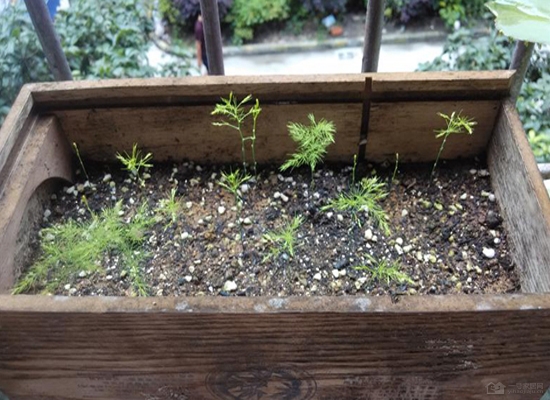
Asparagus fern, also known as cloud pine, thorny asparagus, and cloud bamboo, is a perennial evergreen vine foliage plant and a famous ornamental plant. It is Asparagus plumosus Baker of the genus Asparagus in the lily family. Its roots are used as medicine, having effects on treating acute bronchitis and relieving cough, and having a lung-moistening function. It is mainly grown in pots for its foliage, and is also an important material for cut foliage.
So, how should asparagus fern be planted by sowing?
Asparagus fern can be propagated by two methods: sowing and division. This article focuses on the sowing method of propagation.
Asparagus fern seeds mature successively from December to April of the following year, and the ripe berries are purplish red. When the fruit changes color, the seeds should be collected promptly, the seed coat removed, and the seeds dried in the sun, then sown on a substrate mixed with equal amounts of river sand and leaf mold, covered with soil (not too thick), watered thoroughly, and kept moist. At a temperature of 20-30°C, they can germinate in about one month. When the seedlings are more than 5 cm tall, they can be transplanted into small pots. Generally, plants 3-5 years old grow more densely and can be propagated by division. Division is generally carried out in spring. Use a sharp knife to split the clustered stems and roots into 2-3 clumps, with each clump containing 3-5 buds, and then plant them separately in pots. When dividing, try to damage the root system as little as possible, and after division, pay attention to moisture retention and shading.
From this we can know that asparagus fern seeds, that is, the berries mentioned above, are purplish red, which is a sign that asparagus fern seeds can be harvested. Since the outer coat of the plant seeds is relatively hard, germinating them directly by soaking in water, or scattering them directly into the soil, may be relatively slow or even difficult, so the outer coat is generally removed to allow them to absorb nutrients directly and germinate quickly.
The method for peeling asparagus fern seeds is actually very simple: after harvesting the berries, rub off the outer fruit skin and take out the seeds.
After the seeds are peeled and rinsed clean, they can be sown. It should be noted that if the room temperature is below 15°C, sowing should wait until after the warmth of spring. During this period, the seeds should be stored in sand and then sown, mainly by indoor pot sowing, generally sown individually in shallow pots at a seed spacing of 2 cm, with soil covering not too deep. After soaking in water, cover with glass or plastic film to reduce water evaporation and keep the potting soil moist, and place in a sunny spot. After sowing, maintain the temperature at around 20°C. Under normal conditions, they can germinate in 25-30 days; but at 15-18°C, it takes 30-40 days to germinate.
Obviously, only after rubbing off the outer skin can the seeds be seen. Without the peeling step, perhaps this is one of the reasons many people who sow asparagus fern complain that the seeds never germinate.