A Detailed Guide to Watering Cymbidium kanran: How to Water It Correctly
Summer is the growing season for Cymbidium kanran, and once it lacks water, the plant will grow poorly. Watering should follow the principle of eight parts dry and two parts moist: water when dry, stop when moist. But many flower lovers have trouble judging the right amount of water. Below is an explanation of how to water Cymbidium kanran!
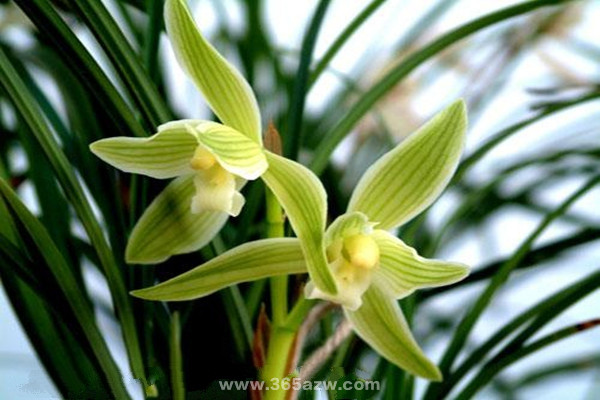
Watering Principles for Cymbidium kanran
Watering Cymbidium kanran should be strictly controlled, and in daily care it is best to keep the potting soil moist but not wet, and dry but not parched. Water according to the principle of "water when dry, stop when moist," watering thoroughly each time, and keeping it slightly dry as a general rule. Cymbidium kanran grown this way develops a well-developed root system and grows robustly, with very little occurrence of root rot or premature root decline.
Many flower lovers who are just beginning to learn orchid growing worry that the orchid lacks water, so they water whenever they have a moment, causing the potting soil to become too wet and the orchid roots to rot, which leads to failure at the very start.
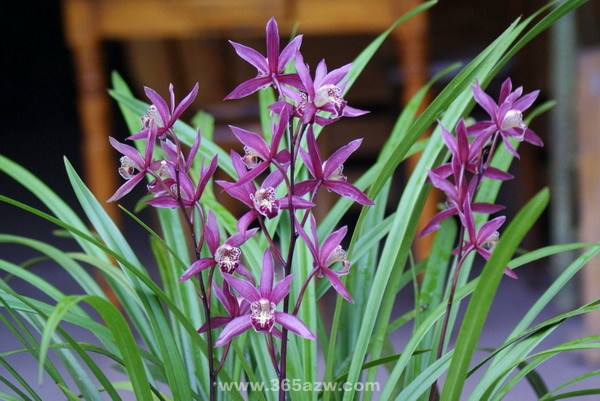
Watering Methods for Cymbidium kanran
Watering Method
Generally, water once every 8-15 days in late spring, once every 4-6 days on sunny days in summer, once every 5-10 days in autumn, and in winter and early spring often do not water for more than 20 days or even over a month.
Watering is generally done in the early morning or evening, and it is essential to avoid watering at noon or pouring water directly onto the crown.
Watering Cycle
In order to make management relatively uniform for both large and small pots, pots should be matched reasonably according to the number of shoots and the degree of root development, that is, plant more shoots in large pots and fewer shoots in small pots, use large pots for well-developed root systems and small pots for poor roots. You can also use strong seedlings to accompany weak seedlings, or plant rare and famous varieties together with ordinary varieties. This approach not only suits the orchid's habit of liking to grow in clusters, allowing orchid fungi to accumulate and benefit growth, but also basically achieves the same watering cycle for both large and small pots.