Detailed Explanation of Key Field Management Techniques for Dandelion
Dandelion generally grows along roadsides, in courtyards, wastelands, fields and hilly areas, and has strong adaptability. Its tender seedlings and young leaves can be eaten raw or stir-fried, and being green and all-natural, it is deeply loved by people and has good market prospects, so its field management is also extremely important.

Field Management
Field Management in the Year of Sowing
Before emergence, keep the soil moist. If the soil is dry before emergence, first sparsely scatter some wheat straw or thatch over the surface of the sowing bed; then water lightly, and after the seedlings have emerged evenly, rake off the covering grass with a fork; after emergence, moisture should be properly controlled to allow the seedlings to grow vigorously and to prevent excessive growth and lodging; during the period of rapid leaf growth, keep the field moist to promote vigorous leaf growth; before winter, water once thoroughly, then cover with horse manure or wheat straw, etc., to help them overwinter.
Intertillage and Weeding
When dandelion seedlings have emerged for about 10 days, the first intertillage and weeding can be carried out, and thereafter intertillage and weeding once about every 10 days until the rows close; ensure there are no weeds in the field. After the rows close, weeds can be pulled by hand.

Thinning and Final Spacing
Combine thinning and final spacing with intertillage and weeding. Thin the seedlings about 10 days after emergence, with a plant spacing of 3-5 cm; after 20-30 days, final spacing can be carried out, with a plant spacing of 8-10 cm, or 5 cm for broadcast-sown plants.
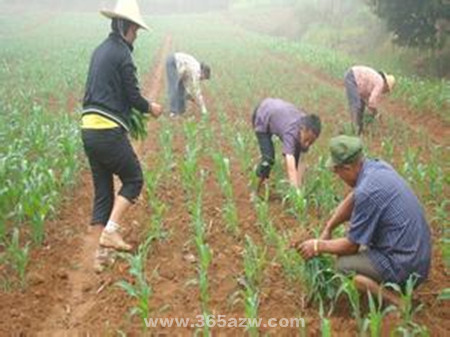
Dandelion thinning and final spacing
Fertilizer and Water Management
Dandelion has strong disease resistance and does not require pest and disease control. The focus of field management is fertilizer and water. It does not have strict requirements for soil conditions. When planting dandelion, if the soil surface is not covered, it should be watered frequently to keep the soil moist so as to ensure full stands. After emergence, soil moisture should also always be maintained.
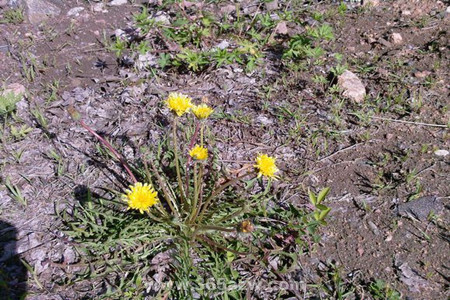
Topdressing During the Growing Period
Topdress 1-2 times during the growing period, and water frequently to keep the soil moist, so as to ensure full stands and the needs of growth after emergence. Young plants in the year of sowing may not have their leaves harvested; wait until the second year to begin harvesting, when the plants are of good quality and high yield. For autumn-sown plants, after winter begins, spread 2500 kg of organic fertilizer and 20 kg of superphosphate per mu on the bed surface, which both fertilizes and protects the root system for safe overwintering. After greening up the following spring, chemical fertilizer can be applied together with watering. In late autumn and early winter, water once thoroughly.
Harvesting
Dandelion can be harvested in batches during the seedling stage by picking the outer large leaves for food, or the leaves other than the heart leaves can be cut with a knife for consumption. Cut once every 15-20 days, or the whole plant can be cut at once for market. Generally, each harvest per mu can yield 700-800 kg.