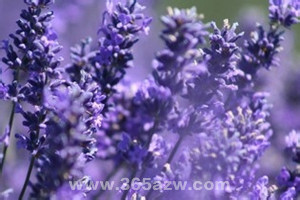
How to grow lavender? A complete guide to care knowledge explained clearly at once
Lavender is the most popular herb plant in the world, native to France, the Netherlands and other European countries, and includes nearly a hundred different varieties. This plant has extremely high ornamental value and also has broad commercial value in various fields. This article mainly explains the care and management of lavender.
Pruning and shaping
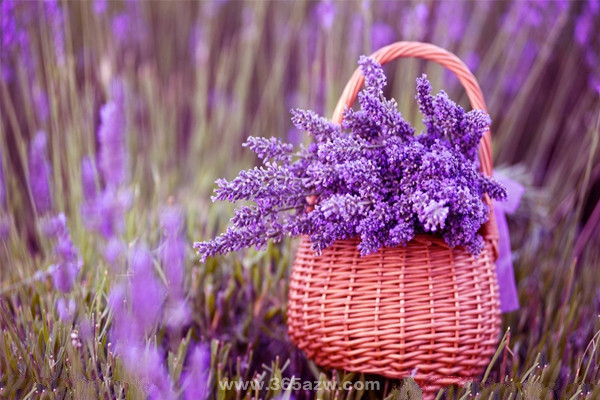
Newly planted lavender grows relatively slowly in the early stage. As spring temperatures rise, lavender enters the greening stage in mid-April. To promote increased branching and root development in lavender, artificial pruning should be carried out from late April to early May, that is, cutting back the top branches more than 15cm above the ground, pruning the middle of the plant heavily and the surrounding parts lightly.
Management during the bud and flowering stage
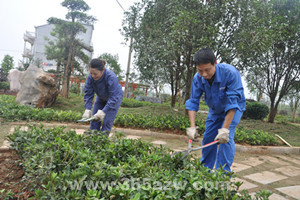
In this region, the first flush of lavender flowers enters the bud stage in late May and the full bloom stage in late June. In the first year after planting, to promote branch growth of lavender seedlings and reduce nutrient consumption, the first flush of flower buds can be removed in early June. The second flush enters the bud stage in mid-August and the full bloom stage in mid-September. When autumn weather conditions are relatively good, the third flush reaches full bloom in mid-October.
Watering and intertillage weeding
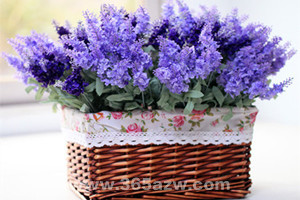
For newly planted lavender, sufficient irrigation must be ensured in the first three years to promote plant growth. In mid-to-late April each year, during the greening stage of lavender, water the greening water in time. According to weather conditions and soil moisture, water 6-8 times throughout the year, paying attention to watering the bud stage water and flowering stage water as priorities, watering evenly and thoroughly to ensure watering quality. Combine each irrigation with timely intertillage to achieve the goals of preserving soil moisture, raising temperature and weeding. Generally, intertillage and weeding are done 5-7 times throughout the year. In early-to-mid November, irrigate winter water.
Topdressing
Although lavender has relatively strong tolerance to poor soil and drought, after planting, in order to promote rapid plant growth and increase yield, it needs to be supplied with relatively more water and fertilizer. For newly planted lavender, fertilize early and frequently within 3 years after planting. Combine the first fertilization with irrigation at the bud stage of the first flush of flowers, applying 15kg of urea and 10kg of diammonium phosphate per mu combined with watering; for the second topdressing, apply 10kg of urea per mu, applied manually in holes beside the plants.
Management before overwintering
Winters are long and temperatures are relatively low. Field trials have shown that to ensure lavender overwinters safely in this region, artificial mounding of soil must be carried out before overwintering. That is, after irrigating winter water in early November, first cut back the branches more than 15-20cm above the ground, then surround the plants with soil, with a soil thickness of about 15cm, to ensure that the basal growth part is not damaged by freezing. Note that the mounded soil should be neither too thick nor too thin. In the following spring, before watering the greening water, promptly remove the soil to release the seedlings, that is, remove the soil covering the plants to prevent branches and leaves from rotting in the soil.
Harvesting
The suitable harvest period is the full bloom stage, that is, when 70% of the florets in the flower spikes are open. Harvesting too early or too late will affect yield. The first flush of flowers is generally from late June to mid-July, and the second flush from late September to early October. Before harvesting, predict the yield. During harvesting, weeds and excessive stems and leaves must not be included, so as not to affect oil quality. After harvesting, choose a sunny day after 10:00. If the morning dew is heavy or it is cloudy, it is not suitable to harvest. The stronger the light and the hotter the day, the higher the oil yield. During transportation and drying of the flowers, do not pile them too thickly, to prevent heating and self-steaming. They must be harvested and processed on the same day.