A Detailed Guide to Common Diseases of Phalaenopsis and Their Control Methods
Phalaenopsis is a highly ornamental flower among the orchids, loved by the general public. In the process of cultivating Phalaenopsis, the prevention and control of pests and diseases is undoubtedly a very critical part. Below, let's talk about some common diseases of Phalaenopsis and their control methods.
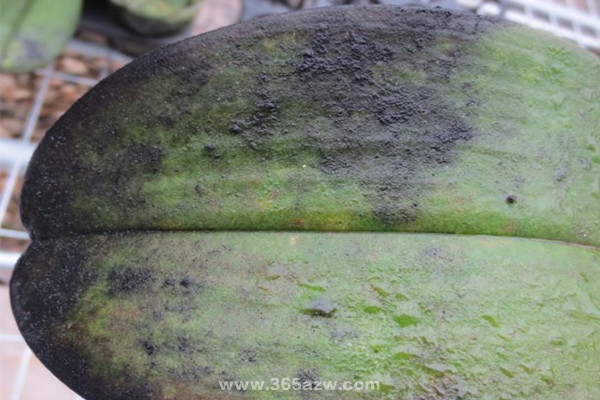
Common Diseases of Phalaenopsis and Their Control
Anthracnose
Cause
Lack of good ventilation in a warm and humid growing environment.
Symptoms
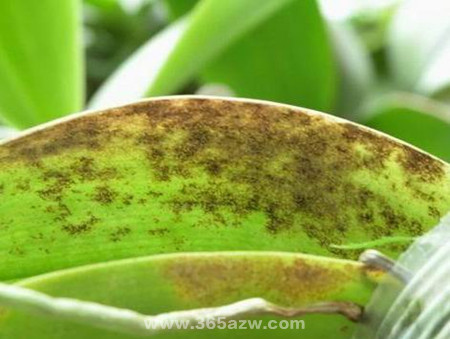
The leaves are most susceptible to damage. At the beginning of the disease, small yellow spots appear at the leaf tips and leaf margins, gradually turning into round or irregular yellowish-brown or dark brown lesions. In the later stage, the lesions merge into patches with small black dots on them.
Control
First, ensure adequate ventilation and light, then strengthen water and fertilizer management. The amount of nitrogen fertilizer applied should not be excessive. Applying an appropriate amount of zinc fertilizer can increase leaf thickness and improve disease resistance. To prevent this disease, spray equal-amount Bordeaux mixture, 65% mancozeb at 800 times dilution, and 75% chlorothalonil at 800 times dilution, once every 7-10 days, three sprays being sufficient. If the disease has already occurred, spray Tanjuqing at 800 times dilution, 50% carbendazim at 500 times dilution, and Shibaogong at 1000 times dilution, once every 7-10 days, 2-3 sprays being sufficient.
Gray Mold
Cause
It is prone to breeding in a humid environment with excessively low temperatures.
Symptoms
The flowers are most susceptible to damage. At the beginning of the disease, water-soaked spots appear on the petals and sepals, then slowly form (dark) brown round large patches. In severe cases, the entire flower withers, greatly reducing the ornamental value of the Phalaenopsis.
Control
Good ventilation and light are likewise needed, while maintaining a relatively dry growing environment at this time. Diseased flowers should be removed immediately, otherwise the disease will spread. For control, spray 65% zineb wettable powder at 500-800 times dilution, 50% procymidone wettable powder at 1500 times dilution, and 3% duokejun at 600 times dilution, once every ten days, 2-3 sprays being sufficient.
Soft Rot
Cause
Prolonged influence of hot and humid weather.
Symptoms
At the beginning of the disease, transparent, water-soaked spots appear on the leaves. In the later stage, the small spots expand into brown lesions that cause the leaves to rot and produce a foul odor. This disease spreads quickly and is highly destructive. In severe cases, it can also cause the basal stem to rot, and the plant will die within a short period.
Control
The first step is to control moisture; stopping water spraying can effectively cut off the transmission route of the disease. At the beginning of the disease, spray 72% agricultural streptomycin at 1000 times dilution, 10% polyoxin at 80 times dilution, 50% tuzet wettable powder at 800 times dilution, and Xinzhiomycin at 4000 times dilution, once every ten days, 2-3 consecutive sprays being sufficient.
Brown Spot
Cause
It is easily triggered by the influence of hot and humid seasons, and is especially severe during typhoon or rainstorm weather.
Symptoms
At the beginning of the disease, light brown water-soaked small spots appear, gradually turning into brown or black (elliptical) round irregular lesions, with a yellow halo clearly visible around the edges. The condition easily worsens and is extremely harmful to the survival of seedlings. On severely affected older plants, the leaves become dry or yellowed and then all drop off.
Control
For control measures against this disease, refer to those for soft rot.
Southern Blight
Cause
The plum rain season is the peak period for this disease, and it is also prone to occur in other hot and humid weather.
Symptoms
At the beginning of the disease, yellowish-brown water-soaked small spots appear at the root and stem area, then expand into brown lesions. Under high humidity conditions, white silky mycelium and mouse-dropping-shaped sclerotia appear, ultimately causing the diseased plant to wither and die.
Control
First, ensure ventilation measures are properly implemented, and never let potted flowers or plant clusters be too densely packed. Spray 50% fodoning at 1000 times dilution or 75% miepuning at 2000 times dilution for control, once a week, continuing for 3-5 weeks.