Detailed Guide to Identifying and Treating Common Water Lily Diseases
Water lilies can be cultivated as ornamental plants, but these plants are prone to pests and diseases, so how should they be controlled?
Disease Control for Water Lilies
Water Lily Rot
Symptoms
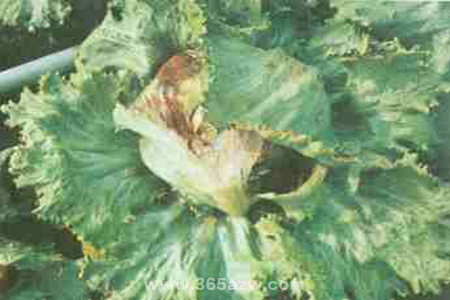
This disease affects the whole plant, starting from the roots. In the early stage of infection, the underground stem shows no symptoms, but its cut surface turns from its original color to light brown or brown, and the discoloration gradually spreads. In some cases the discoloration of the diseased stem is not obvious, but the stem develops longitudinal wrinkles all over or on one side. The leaves growing from the diseased stem appear light green, and later dry up starting from the leaf margins, causing the leaves to curl and eventually die.
Control Methods
Select disease-resistant varieties according to local conditions.
In heavily infested fields, a 2-3 year crop rotation should be practiced.
Carefully select disease-free seed lotus rhizomes, and treat them with a 800-fold dilution of 50% carbendazim or thiophanate-methyl wettable powder. Deeply plow and harrow the lotus field, apply 1500-2250 kg of lime per hectare, strengthen the management of fertilizer and water, apply sufficient decomposed organic fertilizer, and top-dress timely and appropriately, combining organic fertilizer with chemical fertilizer and nitrogen fertilizer with phosphorus and potassium fertilizer. After promptly removing diseased plants, spray a 600-fold dilution of 50% carbendazim wettable powder plus a 600-fold dilution of 75% chlorothalonil wettable powder.
Water Lily Leaf Rot
Symptoms
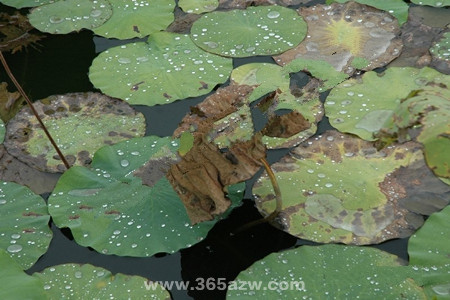
It mainly harms the leaves lying flat on the water surface. The lesions are irregular in shape, some S-shaped, some shaped like an earthworm, brown or dark brown. In the later stage, white wrinkled spherical mycelial masses appear on the necrotic areas, followed by tea-brown spherical small sclerotia. Severely affected leaves turn brown and rot, and are difficult to lift out of the water.
Control Methods
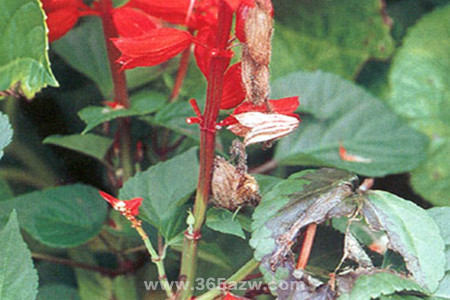
Reduce the source of inoculum, remove diseased and residual plants at harvest, and bury them deep or burn them in a centralized manner. In the early stage of the disease, spray a 800-fold dilution of 50% carbendazim wettable powder, once about every ten days, and 2-3 consecutive treatments are sufficient. Water Lily Spot Rot Symptoms: The lesions are irregular in shape. Small water-soaked black spots first appear on the leaves, then expand into circular, polygonal or irregular lesions with black edges and yellow halos, gray-black centers with concentric rings. The diseased parts tend to crack or fall off, causing the leaves and leaf margins to become incomplete and ragged. In severe cases, most or even all of the leaf turns dark brown and rots, with a gray-brown mold layer growing on it, namely the fungal fruiting bodies.
Control Methods
During the growing season, collect diseased and residual material and bury it deep or burn it.
Apply sufficient decomposed organic fertilizer, and top-dress timely and appropriately, combining organic fertilizer with chemical fertilizer and nitrogen fertilizer with phosphorus and potassium fertilizer.
After promptly removing diseased plants, spray a 600-fold dilution of 50% carbendazim wettable powder, with a cycle of about 10 days, for 2-3 consecutive sprays.
Water Lily Anthracnose
Symptoms
The disease occurs on the leaves, with small brown spots appearing first, which then expand into nearly circular lesions over 10 mm in size, with relatively dark lesion margins.
Control Methods
During the growing season, collect diseased and residual material and bury it deep or burn it.
Apply sufficient decomposed organic fertilizer, and top-dress timely and appropriately, combining organic fertilizer with chemical fertilizer and nitrogen fertilizer with phosphorus and potassium fertilizer.
After promptly removing diseased plants, spray a 600-fold dilution of 50% carbendazim wettable powder, a 600-fold dilution of 75% chlorothalonil wettable powder, a 500-fold dilution of 36% thiophanate-methyl suspension concentrate, a 1500-fold dilution of 50% benomyl wettable powder, or a 800-fold dilution of 80% anthracnose carbendazim-plus-thiram wettable powder, spraying once about every 10 d, for 2-3 consecutive treatments.