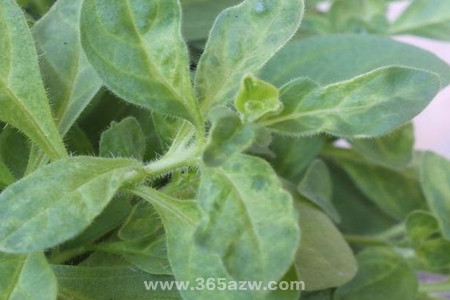
Complete Guide to Petunia Pest and Disease Control
Petunias need regular pest and disease control and care to ensure their long-term beautification effect and aesthetic value. Follow along to learn about the pest and disease threats that affect petunias.
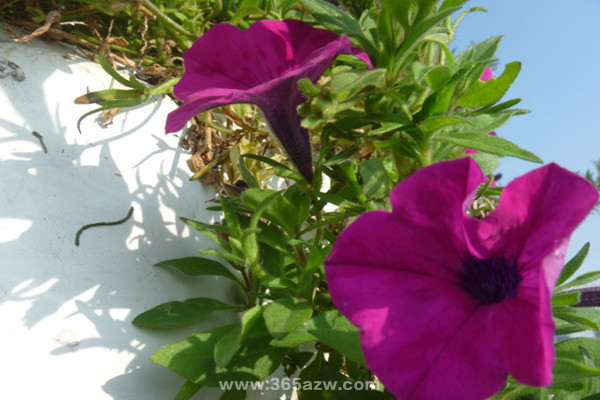
Petunia white rust
White rust causes the most serious damage to the leaves, petioles and tender stems of petunias. The infected leaves first develop small light green spots, which then slowly turn pale yellow; as the disease progresses further, they become large lesions. In the later stage, white scar-like protrusions appear on the underside of the infected parts of the leaves. Infected tender stems cause distorted growth of flowers and stems. When the lesions spread and surround the petioles and tender shoots, the host parts above the girdling surface grow abnormally until they shrivel and die.
Solution
In the early stage of infection, spray 1% Bordeaux mixture or 50% Dimethomorph 500x solution; spraying at intervals of 10-15 days gives better control results.
Petunia white mold
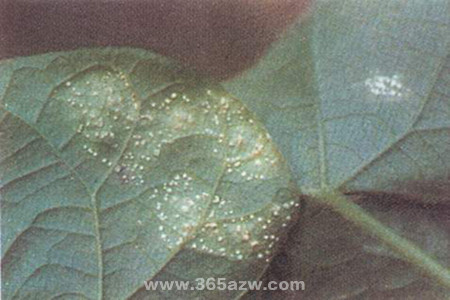
White mold causes the most serious damage to the leaves. The initial infection appears as patches of white spots, and in the later aggravated stage it causes the infected leaves to fall off.
Solution
Once early signs of infection appear, remove the diseased leaves as soon as possible and promptly spray 75% chlorothalonil 600-800x solution.
Petunia leaf spot
Leaf spot mainly damages the leaves of petunias as well, and in severe cases it can also cause the death of the entire plant.
Solution
Promptly remove and burn the diseased leaves, and clear away the fallen leaves around them as soon as possible; spray 50% amobam 1000x solution.
Petunia viral disease
If a petunia plant shows slow growth and weak roots and stems, it is very likely infected with viral disease, and in severe cases the leaves become yellow.

Solution
Spray 40% omethoate 1000x solution.
Aphids
Aphids are the most common and most important pest of petunias, causing fairly serious damage to the leaves and tender stems of petunias.
Solution
When large numbers of aphids appear, isolation measures should be taken, and spray with 10% omethoate emulsifiable concentrate 1000x solution, or dichlorvos emulsifiable oil 1000x solution, or malathion emulsifiable concentrate 1000-1500x solution, or Gaobo (70% imidacloprid) water-dispersible granules 15000-20000x solution.