Planting Methods and Uses of the Red Spider Lily
The red spider lily is a flower variety with a beautiful appearance and vivid colors. So how should you go about growing it well? On this question, the following content will explain the cultivation methods of the red spider lily.
The red spider lily, also called manzhushahua, has strong cold resistance, likes partial shade, and also tolerates intense sunlight; it likes moisture and also tolerates drought. It can grow in all types of soil, with loose, fertile humus soil being the best. It has the habit of going dormant in summer. In winter the leaf clusters are verdant and full of vitality. Wild varieties grow in shady, damp places, and their growing sites are red soil, so they have strong cold resistance, like shade, and can endure a high-temperature limit of a daily average temperature of 24°C; they like moisture and also tolerate drought, are accustomed to slightly acidic soil, with loose, fertile humus soil being the best. They have the habit of going dormant in summer.
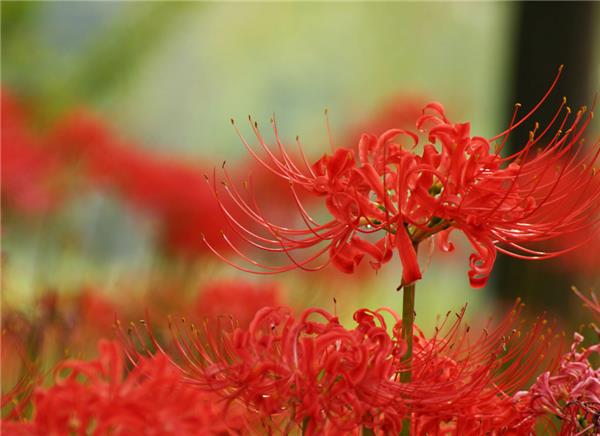
Cultivation Methods of the Red Spider Lily
Growing environment: The red spider lily likes scattered light and does not like strong light, so the light should not be too strong. The planting depth of the red spider lily should not be too deep; it is best to just bury the top of the bulb at the soil surface. The soil should be well-drained sandy soil or loose potting soil, slightly acidic soil; when planting, apply an appropriate amount of base fertilizer and water thoroughly after planting; during the vegetative growth period, it should be watered frequently to keep the soil moist, but not waterlogged, to prevent the bulb from rotting. For the red spider lily, from 20 days before flowering to the flowering period, an appropriate amount of water must be supplied to achieve uniform flowering, and the flowers are easy to maintain.
The red spider lily is planted by open-field cultivation, greenhouse pot cultivation, frame cultivation, or hydroponics. The small bulbs around the main bulb are peeled off for propagation. Trim off the residual roots of the main bulb, sun-dry for two days, and plant once the wound is dry. When covering with soil, the planting of the red spider lily should leave the top of the bulb exposed above the soil surface. For pot cultivation of the red spider lily, choose large bulbs that have grown for 3 years and can flower (with a diameter of more than 7 cm) for potting; you can plant one bulb per pot, or plant 3 to 4 bulbs in a large pot. Plant shallowly, so that 1/3-1/2 of the bulb sits above the soil surface.
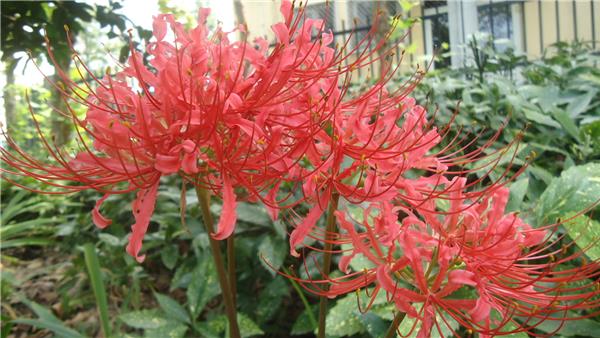
Topdressing: After potting, water once, just enough to make the soil slightly moist. Water again after new leaves emerge. Apply liquid fertilizer once every half month. For the red spider lily, when the leaves thicken and mature in autumn, watering can be stopped. Then between February and March, after sprouting, repot or replace the potting soil. The potting soil can be made by mixing 2 parts peat, 2 parts garden soil, and 1 part perlite, while adding a small amount of base fertilizer. For the red spider lily, water less during the summer dormant period, and in spring and autumn keep the potting soil moist frequently. During the growing season, apply a diluted cake fertilizer solution once every half month. The red spider lily likes partial shade; avoid direct sunlight in summer, place it in a partially shaded spot for care in spring and autumn, strictly control watering during the winter, and stop fertilizing.
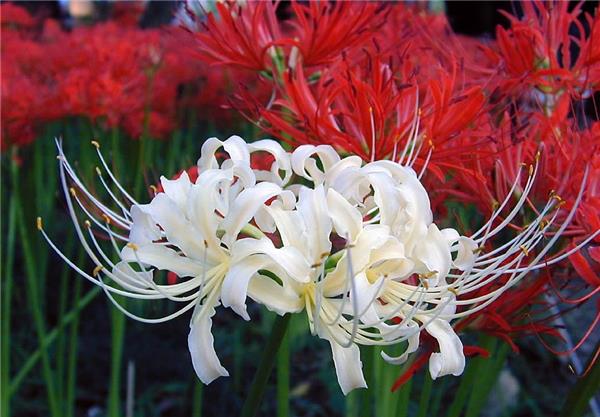
Preventing pests and diseases: For the lycoris noctuid moth, plants invaded by its larvae usually have their leaves hollowed out, and the larvae can directly bore into and feed on the inside of the bulb; the damaged areas usually leave a large amount of green or brownish frass. Frequently check the undersides of leaves for neatly arranged eggs, and remove them immediately when found. For control, you can combine winter or early spring plowing to dig out overwintering pupae and reduce the pest population base; when they appear, spray with 1500 times diluted Lorsban or 800 times diluted phoxim emulsifiable concentrate, choosing to spray in the morning or evening when the larvae come out to be active, for a relatively good control effect.
The Role of the Red Spider Lily in the Home
The red spider lily is also called "red-flowered lycoris." When the red spider lily is in full bloom it looks like a ball of flame, and it grows beautiful and elegant; many people like to grow the red spider lily. Placing the red spider lily in the home's living room, balcony, and other places all has the function of beautifying the environment.
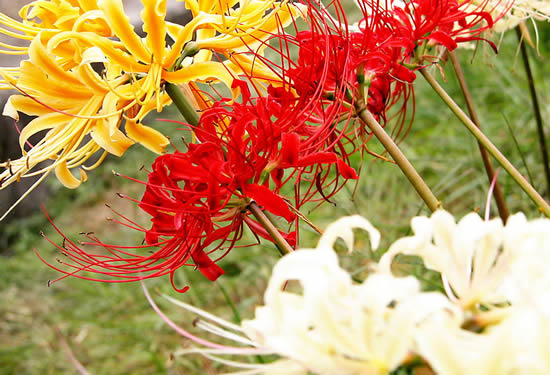
Although the red spider lily is highly ornamental, its rhizome is toxic. The bulb contains the alkaloid lycorine toxin, which can cause symptoms such as vomiting and spasms. It must not be eaten casually, but it can be used for sedation, inhibition of drug metabolism, and anti-cancer effects. Although toxic, the bulb can be eaten after processing, and it is also used as a medicinal material. "Galantamine" extracted from the rhizome of lycoris can be used to treat polio. The red spider lily has the effects of dispelling wind and reducing swelling, and detoxifying and fighting cancer. It is used to treat gastric cancer, esophageal cancer, and liver cancer. According to records in classical traditional Chinese medicine texts, the red spider lily bulb is warm in nature, bitter in taste, and toxic; when used as medicine it has the effects of inducing vomiting, eliminating phlegm, reducing swelling, relieving pain, and detoxifying. But if eaten by mistake, it may cause poisoning, with mild cases involving vomiting and diarrhea. According to pharmacological research, the red spider lily has a certain anti-cancer activity, and can also fight inflammation, reduce fever, sedate, and induce vomiting, and it also has a therapeutic effect on amoebic dysentery.
It also has a therapeutic effect on amoebic dysentery.