How to Grow Crape Myrtle: Key Points for Caring for Crape Myrtle
Crape myrtle, also known as the hundred-day red, is a flower variety with excellent ornamental effect, and if you want to grow it well, understanding some crape myrtle growing methods and precautions in advance is very worthwhile. The following content will explain how to grow crape myrtle.
Growing Methods and Precautions for Crape Myrtle
1. Growing methods for crape myrtle: Crape myrtle is a sun-loving tree species. When planting, choose an environment with plenty of sunlight, and the soil should be moist and fertile while also having good drainage. The transplanting time for crape myrtle is in early March to April, with Qingming Festival being the best, followed by autumn. When transplanting, the plant should be moved with its soil, keep the trunk at 100 to 120 cm and cut off the upper part. After new shoots grow, select 3 to 4 main branches with the most suitable angles and let them bloom.
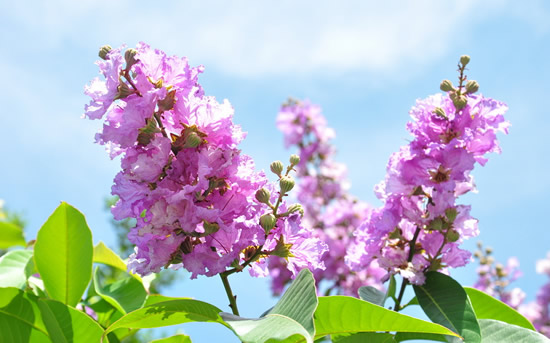
2. Light and watering: Crape myrtle is a light-loving plant, so during the growing season it must be placed outdoors in sunlight. At the same time, crape myrtle has a high water requirement during the growing season and needs the soil to remain moist. In spring and winter, keep the potting soil moist; in summer and autumn, water once each in the morning and evening, and in high-temperature seasons the number of waterings can be increased.
3. Regular fertilizing: Crape myrtle is a fertilizer-loving plant. A lack of fertilizer in potted crape myrtle will lead to thin and weak branches and yellowing color, which causes the plant to grow weakly and bloom little or not at all. However, too much fertilizer will cause excessive growth of branches and leaves. In the vigorous growing seasons of spring and summer, more fertilizer can be applied; after autumn begins, apply less fertilizer; in winter during the dormant period, no fertilizer is needed; do not fertilize during the rainy season or at noon during high summer temperatures.
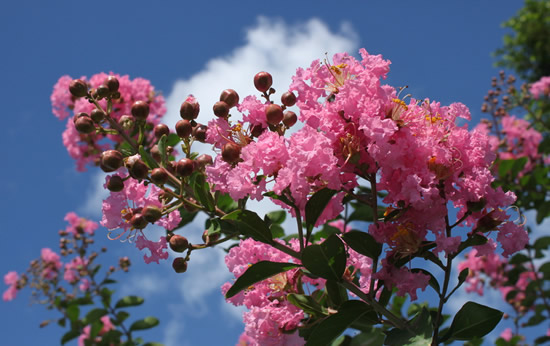
At the same time, the principle of applying thin fertilizer frequently should be followed. In early March, apply nitrogen, phosphorus, and potassium fertilizer together to promote new shoot growth. From late May to early June, apply phosphorus and potassium fertilizer once to promote the enlargement of flower buds, strengthen branches, and induce flowering. In late July and early September, apply flowering fertilizer once each time, using fertilizers such as cake fertilizer water, so that the flowers bloom more brilliantly.
4. Shaping and pruning: Crape myrtle has strong branching ability, and the growth of new shoots is also very large, so it is very tolerant of pruning. After crape myrtle blooms, the faded flowers should be cut off, which can extend the flowering period. At the same time, crossing branches, diseased branches, and radiating branches should be removed promptly to avoid consuming excess nutrients. Also, in order to beautify the shape, generally cut back other branches about 1 cm above a plump terminal bud, keeping about 5 cm.
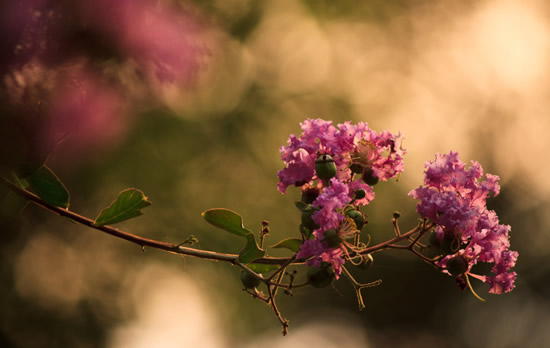
5. Repotting in time: Potted crape myrtle needs to have its potting soil replaced once every two to three years. Use a culture soil mixed with 5 parts loose mountain soil, 3 parts garden soil, and 2 parts fine river sand. When repotting, organic fertilizers such as bone meal and soybean cake meal can be used as base fertilizer, mixed into the surface layer of the soil. Fertilizer must not directly contact the root system, so as not to burn the roots and affect plant growth.
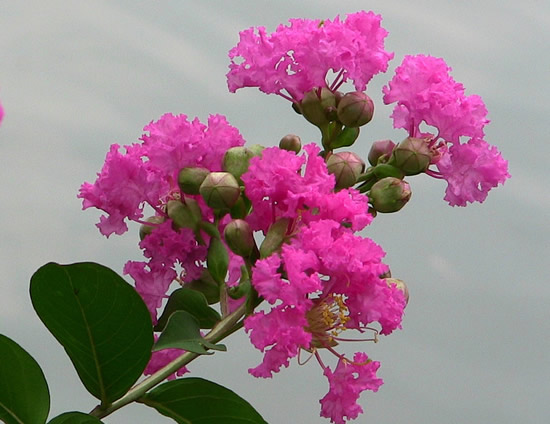
Now that the growing methods for crape myrtle have been covered, finally let's talk about the pest and disease control methods for crape myrtle.
Common pests and diseases of crape myrtle include scale insects, aphids, mealy aphids, and sooty mold. When crape myrtle is in conditions with insufficient light and poor ventilation, it is prone to scale insect damage, which can also cause sooty mold, making leaves withered and yellow and causing premature leaf drop. Scale insects can be killed by spraying with a 1000-fold dilution of 40% dimethoate emulsifiable concentrate, or by using 3% carbofuran granular soil for toxic control. During the plum rain season, aphids and mealy aphids often cause damage, causing leaves to turn yellow or become stained with oily filth, after which the leaves fall off completely, affecting inflorescence formation. They can be killed by spraying with 40% dimethoate diluted to 1500 times, or by using a 1000-1200 fold dilution of 80% dichlorvos emulsion. Once crape myrtle is infected with sooty mold, lime sulfur mixture can be used for control.