How to Grow Succulent Plants? A Detailed Explanation of Planting Methods
Succulent plants are plants with plump leaves. Because of their strong reproductive capacity and their fleshy, endearing appearance, they have high ornamental value. Many plant care enthusiasts choose to grow succulent plants themselves, but some people who have never grown flowers or plants do not know where to start. Next, let us take a look together at how to grow succulent plants.
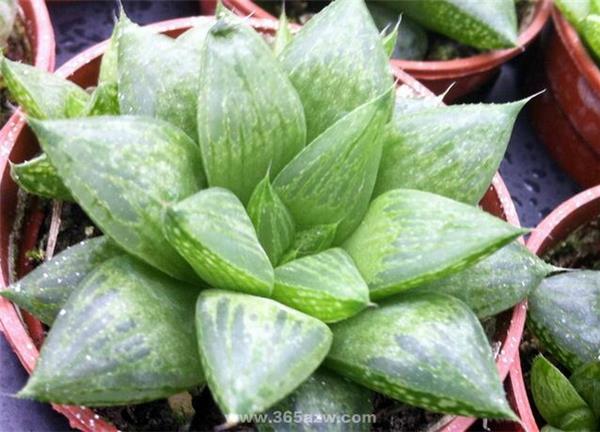
According to statistics, there are more than 10,000 species of succulent plants in the world, all originally living in arid places or places with high salt content. However, with the development of high-tech techniques, succulent plants that could not be grown because of climate and geographical environment can now be seen everywhere. Regardless of the variety, whether it is the stem, the leaf, or the root, it always has one part that is fat, thick, and fleshy. The succulent plants commonly seen on the market also all have pleasant names, such as Haworthia cooperi, Mingyue, White Peony, Lithops, Sedum rubrotinctum, and Triangular Glass Lotus, and so on.
How to Grow Succulent Plants - Entry Level for Beginner Enthusiasts
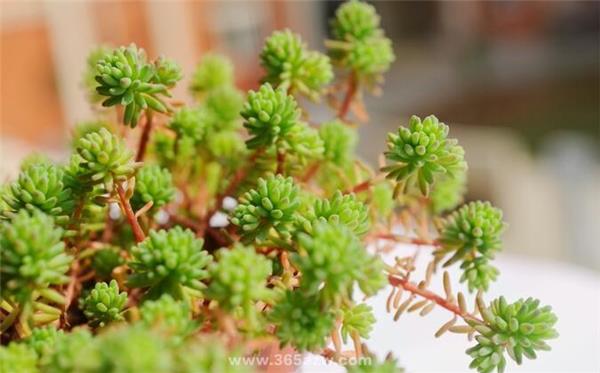
Beginner enthusiasts can water according to the condition of the plant and the dryness of the soil. It sounds simple, but the specific operation is still rather particular. For Sedum plants in normal growth, you can generally observe the leaves. If the soil surface is dry and the leaves are slightly wrinkled under normal growth conditions, looking listless, then at this point you can basically water. For newcomers who do not understand, this operation is still somewhat helpful. If you are already a more experienced enthusiast, watering can basically be done once the potting soil is completely dry. Once a month, you can water once with diluted carbendazim or similar, which can prevent the invasion of disease pathogens (this is the watering for healthy growing leafy succulent plants, that is, the watering for the situation in which some beginner enthusiasts directly buy a potted plant and take it home).
Propagation of Succulent Plants:
1. Sowing: The advantage is that a large number of seedlings can be obtained at one time. Among succulent plants, except for a few species that can self-pollinate, most belong to insect-pollinated or bird-pollinated flowers and must be pollinated artificially in order to set fruit. The seeds of succulent plants have a short lifespan; for example, the seeds of Haworthia cooperi have a lifespan of only a few weeks. Generally, the seeds of succulent plants stored at room temperature for 1 year quickly decline in germination rate. For this reason, many succulent plants are sown immediately after the seeds mature, or stored for sowing in the following spring. The germination time after sowing also differs among different families and genera; the earliest can germinate in 2 days, while the latest will germinate only after 25 days.
2. Leaf cuttings: Thick, fleshy leaves are often placed on a slightly moist sand bed or loose soil surface, and they will soon take root, with adventitious buds growing from the base of the leaf to form small plantlets, such as Adromischus cristatus, Echeveria, and Kalanchoe daigremontiana.
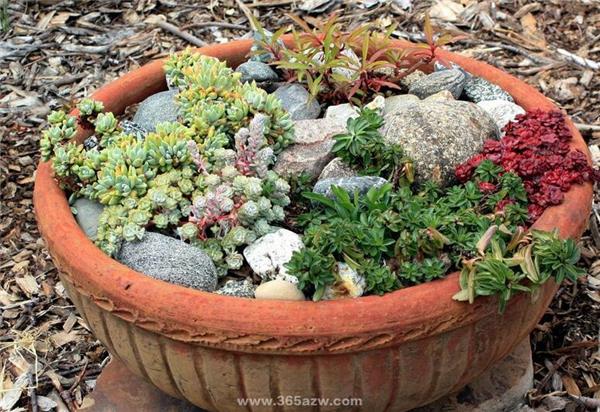
3. Stem cuttings: In the process of succulent propagation, combined with pruning and shaping, branches are cut into segments as cuttings, such as Adenium obesum, Stapelia, Euphorbia milii, and Euphorbia tirucalli. For Adenium obesum, African Baobab, and Euphorbia, whose cut wounds exude white milky sap, the sap must be cleaned off, and the cuttings should be dried slightly before insertion for better results.
4. Root cuttings: For the relatively precious varieties of the Liliaceae Haworthia genus, the roots are very thick and well developed. A relatively mature fleshy root is cut off and buried in a sand bed with the upper part slightly exposed. Keeping a certain moisture and bright light, new buds can sprout from the top of the root to form a complete small plantlet.
5. Grafting: In succulent plants, grafting is often used to propagate variegated and cristate varieties. For example, Euphorbia neriifolia is used as the rootstock to graft Euphorbia, Portulacaria afra is used as the rootstock to graft Dance of the Yaku, African Baobab is used as the rootstock to graft the cristate form of African Baobab, and Stapelia grandiflora is used as the rootstock to graft Stapelia, and so on, with good ornamental results. However, during the grafting process, because the plant body contains white latex, it is highly sticky. Therefore, the grafting operation must be as fast and skilled as possible in order to succeed.
6. Division: Division is the simplest and safest method of propagating succulent plants. As long as a succulent plant has a rosette leaf cluster or a clustered growth form, it can be propagated by division through its suckers, runners, bulbs, tubers, and small plantlets, and this can be done when repotting in spring. Of course, among succulent plants, varieties with variegation, such as Sansevieria trifasciata 'Laurentii', Queen's Agave Variegata, Buzzing Night Variegata, and Green Fan Variegata, must be propagated by division in order to maintain the purity of the variety.
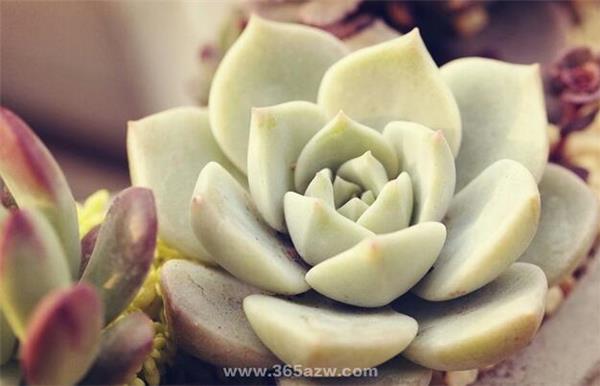
The above is the relevant introduction on how to grow succulent plants, which everyone can use as a reference.
The above is the relevant introduction on how to grow succulent plants, which everyone can use as a reference.