Illustrated Guide to Succulent Propagation Methods and Daily Precautions
More Home Plant Information Recommendations
Ⅰ Sedum mucizonia | Precautions for Growing Succulent Plants in Pots
Ⅱ Sedum adolphi 'Golden Sedum' Cultivation Tips_Daily Care Precautions
Ⅲ How to Grow Succulents, Daily Care Precautions for Succulents
━═☆Home Plant Zone: Decorate Your Little Home, Give You Back a Green Home!
The reason living things can continue without dying out is that they have their own ways of reproduction. For animals it is called reproduction, while for plants in nature it is called propagation, so the matter of succulent propagation should be taken seriously by everyone. But how do succulents propagate? Life never ceases, and the methods of succulent propagation are actually diverse, so what are the common methods, and what precautions are there during the propagation process? Let us take a look together below.
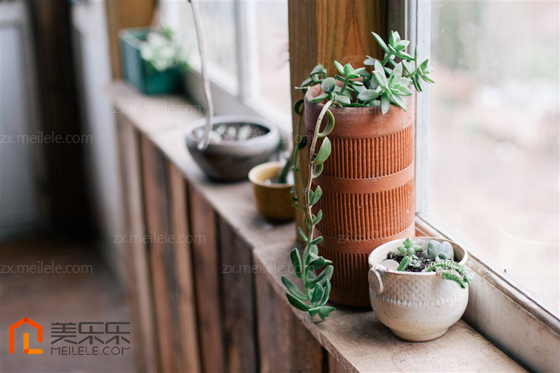
Succulent Propagation Methods
1. Grafting Propagation
When grafting succulents, you should choose to do it during the plant's growing season, that is, in early summer each year. In the early morning we select robust succulents for grafting, paying attention to the union of the rootstock and the scion. With sufficient light and water, and after careful management, succulents can usually be propagated successfully.
2. Cutting Propagation
This is a method many people use, generally chosen in spring. Robust succulents are indispensable. Be careful to disinfect the succulent plants to avoid infection, then let them dry and air out. Once the succulent wounds have healed, they can be inserted into the substrate.
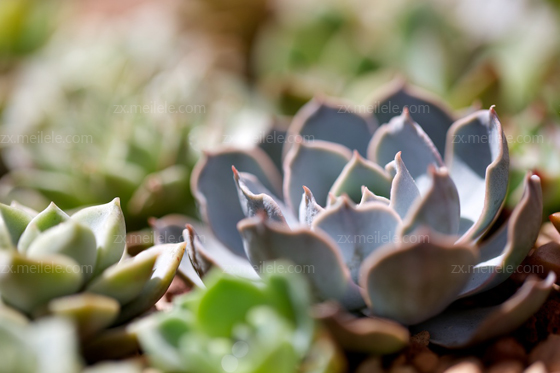
3. Adventitious Bud Propagation
This method is generally suitable for succulents of the leaf-rooting type, for example, plants of the Crassulaceae family Kalanchoe genus are this type of plant. The best time for propagation is May or June. Choose robust succulent leaves and lay them flat on the surface of a sand bed, maintaining sufficient humidity. After about a week, the succulent leaves will grow small plantlets.
4. Seed Propagation
Seed propagation is not particularly common for succulents, but some people have tried it. Before sowing, the seeds of succulent plants need to be sterilized. After planting, they must be carefully tended, and only when the plants grow leaves do you no longer need to worry constantly.
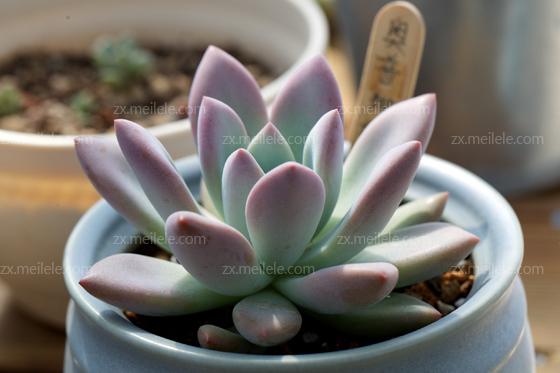
Daily Precautions for Succulent Propagation
1. Light: Usually, newly planted succulents cannot be placed in the sun immediately, because no matter which propagation method was used, the succulent plants at this time are very fragile. When life has just begun, it is very easily snuffed out, so they need to adapt in a semi-shaded environment. After about one to two weeks, the plants can enjoy sunlight.
2. Water: Just like light, you cannot water immediately. Moreover, for succulent plants, the root system is quite important. Too much water is actually not conducive to plant growth, so keeping the soil at appropriate humidity is enough.
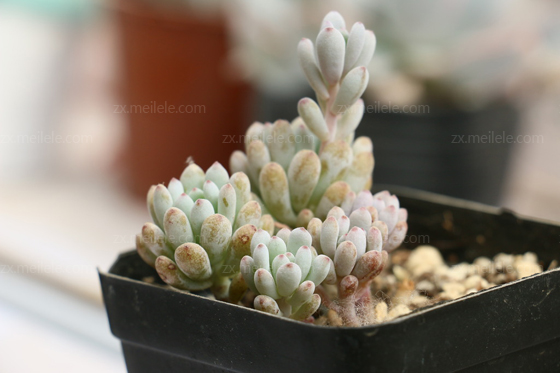
3. Fertilizing: Plants are at the initial stage of propagation, and their need for fertilizer is extremely low. Also, because the growing substrate we prepared should have sufficient fertility, there is no need to apply additional fertilizer. Everyone must remember this clearly.
4. Observation: Succulents are at an important stage of propagation, and any small neglect may cause life to fade away. So in order for the plants to survive smoothly, pay more attention to observing the condition of the plants in daily life. Sprouting and growing leaves are both very important stages. Different methods are used at different times, adapting measures to the time.
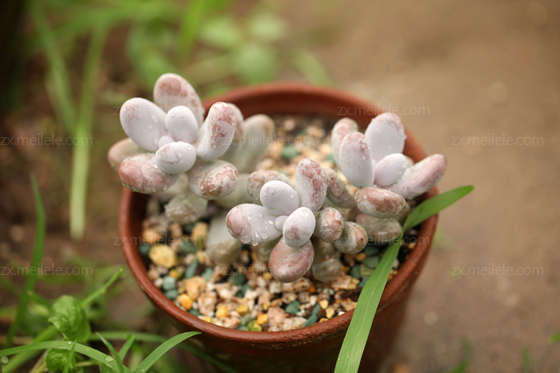
Summary: Succulent propagation is not a particularly difficult matter; on the contrary, as long as the methods are mastered accurately, it is very easy to carry out. The problem is how to adopt the methods, and at the same time pay attention to every small detail during the propagation process.
(Note: This article is an original article from Meilele Decoration Network. Reproduction is prohibited without permission. Malicious reproduction will definitely be pursued legally. If you like it, share it a lot.)
[You May Be Interested]
☑ Transparent soft door curtain ☑ Rainproof louver window ☑ Hydrangea flower language ☑ Campanula picture ☑ Solid wood louver window
☑ Plaid fabric ☑ Wholesale cross-stitch ☑ Cross-stitch wholesale ☑ Branded cross-stitch ☑ Blue rose flower language
The problem is how to adopt the methods, and at the same time pay attention to every small detail during the propagation process.(Note: This article is an original article from Meilele Decoration Network. Reproduction is prohibited without permission. Malicious reproduction will definitely be pursued legally. If you like it, share it a lot.)
[You May Be Interested]
☑ Transparent soft door curtain ☑ Rainproof louver window ☑ Hydrangea flower language ☑ Campanula picture ☑ Solid wood louver window
☑ Plaid fabric ☑ Wholesale cross-stitch ☑ Cross-stitch wholesale ☑ Branded cross-stitch ☑ Blue rose flower language