Methods for Converting Alocasia macrorrhizos from Soil to Hydroponics and Transplanting Tips
Hydroponic Alocasia macrorrhizos matches the appearance of Alocasia macrorrhizos quite well, so many households grow Alocasia macrorrhizos hydroponically and place it indoors. So how do you convert Alocasia macrorrhizos from soil to hydroponics? This article takes that as its starting point and briefly introduces the relevant techniques for transplanting Alocasia macrorrhizos into hydroponics.
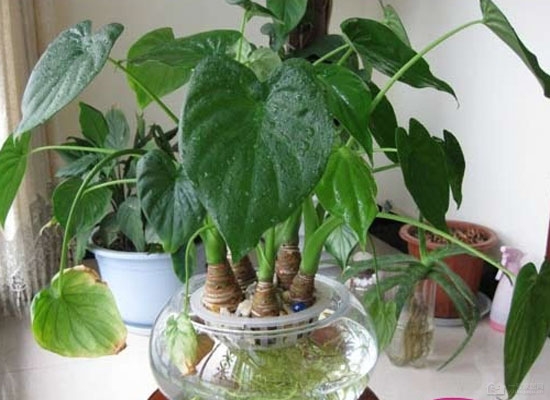
Alocasia macrorrhizos, also known by other names such as langdu (its underground stem), tianyu, and guanyinlian, is one of the indoor hydroponic plants that many people love. Its main propagation methods are sowing, cuttings, and division into three types. This article only discusses how to convert Alocasia macrorrhizos from soil culture to hydroponics.
When converting Alocasia macrorrhizos from soil to hydroponics, first carefully remove it from the pot, then gently shake off the soil; next find a basin and soak the Alocasia macrorrhizos roots in it, which makes the soil easier to clean off thoroughly. During handling, be careful not to damage the roots, and at the same time cut off rotten roots and roots that have already aged. If the rhizome has a wound, first place it in a shaded spot to air-dry for 1~3 days, and after the wound has dried, soak it in water; after 2~3 days new roots can be seen emerging.
1. Plant selection: When growing Alocasia macrorrhizos hydroponically, mainly select Alocasia macrorrhizos with a plant height of 30~40cm whose leaf tips or leaf edges drip water downward, gently pull the selected Alocasia macrorrhizos out of the soil, and try not to damage the tuber and root system.
2. Water temperature: Keep the water temperature controlled between 5°C~30°C; within this range Alocasia macrorrhizos can grow normally.
3. Changing the water: In the early stage of hydroponics, change the water once every 2~3 days, and the water depth should preferably submerge 2/3 of the root system. After 1 week new roots can grow, and after 3 weeks, once Alocasia macrorrhizos has adapted to the hydroponic environment, switch to nutrient solution culture. After that, change the water about once every 7 days in summer and about once every 10~15 days in winter, and add a few drops of special nutrient solution for hydroponic flowers (prepare the nutrient solution concentration according to the instructions).
4. Light: For hydroponic Alocasia macrorrhizos, mainly use scattered light, 3~5 hours per day, and try to avoid direct sunlight in summer.
5. Container: The container for hydroponic Alocasia macrorrhizos easily grows moss, which affects the ornamental value of the root system and also consumes oxygen in the water. When changing the water, first wash away the mucus on the flower roots with clean water, cut off old roots and rotten roots, and scrub the moss off the container and the root system.
6. Moisture retention: To prevent the leaves from drying out, in daily care spray the leaf surface with clean water to retain moisture. It is best to spray foliar fertilizer once a week, which can both provide nutrients to the leaves and increase leaf gloss, and in winter can also achieve the purpose of resisting low temperatures.
7. Precautions
First, the selected plant should not be taller than 40cm, because a plant that is too large is inconvenient for hydroponics and for survival.
Second, because the stem tissue of Alocasia macrorrhizos is relatively loose, if the water quality is poor it is easily contaminated and causes root rot and stem rot. Therefore, keep the water clean, and at the same time, when changing the water, wash the mucus off the tuber and root system, and cut off rotten roots.
Third, do not expose it to direct sunlight; it is best to maintain it under scattered light. Direct sunlight will, first, scorch the leaves, and second, hydroponic plants are not suited to direct sunlight, otherwise green algae will grow on the root system.
Fourth, do not fertilize easily; when fertilizing, the amount must be controlled, and fertilizing should stop in winter.
For hydroponic Alocasia macrorrhizos, pay attention to two aspects: first, the cleanliness of the roots, and second, the cleanliness of the water used. This not only relates to whether the conversion from soil culture to hydroponics succeeds, but also relates to the quality of the hydroponics.