What Does the Daisy Represent? A Full Analysis of Its Floral Symbolism
The daisy is a common little flower. What are the floral meanings of the daisy? Let's take a look together.
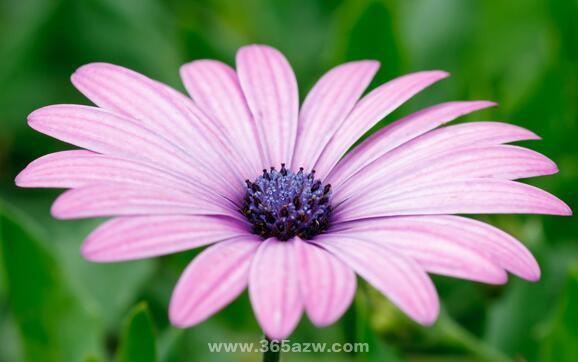
Fresh flowers generally have a mythological background, and their origins and stories can be found in mythology. The beautiful daisy is certainly no exception.
According to myth, when the forest sprite Belides was playing happily with her lover in an orchard, they were discovered by the god of the orchard, and as she was being chased she transformed into the delicate, dainty, romantically spirited daisy.
The daisy, with its small white petals, has three meanings.
The first is eternal happiness. Legend says that the fairy Bertis in the forest transformed herself into a daisy; she was a lively and happy child.
The second is "Do you love me or not?" For this reason, the daisy is usually the flower given by someone with a secret crush.
The third is -- parting.
The fourth is a love hidden deep in the heart. It is much the same as the second.
The daisy's floral meaning is innocence, peace, hope, pure beauty, and love hidden deep in the heart.
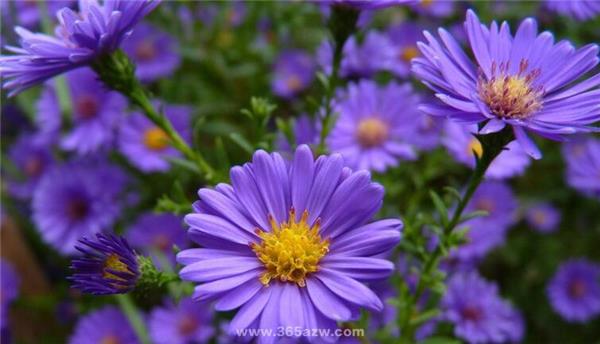
Daisy legends:
The daisy is used to commemorate a 13th-century Hungarian princess who refused the husband chosen by her father and entered a convent, and also to commemorate the 13th-century Margaret, who reformed herself, turned to goodness, and ultimately became a saint. Both were stubborn and strong figures. In European folklore, the daisy can be used to divine love: girls pluck the daisy's petals one by one, "He loves me? He loves me not?" counting silently, and the last petal is the prophecy of love. In Hamlet, the pure and tragically beautiful Ophelia fell into the water and drowned while hanging a garland on a willow tree, and that garland also contained daisies. The stories related to the daisy, though ordinary and sorrowful, all have protagonists who are obsessive, have faith, and possess a certain conviction and unyielding spirit.
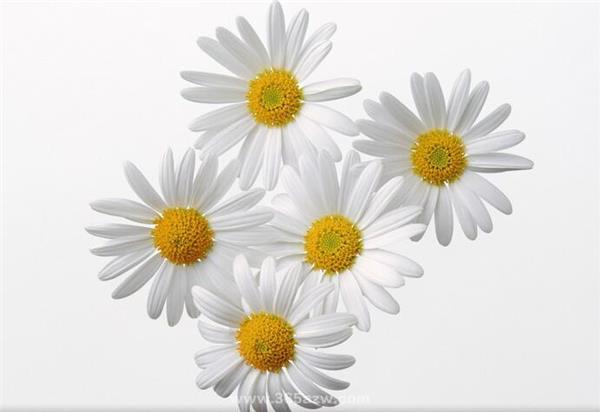
The value of the daisy:
The daisy is also called ganju or baiju, and its medicinal value is very high. It also contains volatile oil, amino acids and various trace elements. Among these, its brass content is 32% to 61% higher than that of other chrysanthemums, and its tin content is eight to fifty times higher than that of other chrysanthemums.
The daisy's leaves are spoon-shaped, growing in clusters in a rosette form, densely and low-growing, and emerald green in color. Flower scapes emerge from between the leaves, one flower per scape, arranged in a scattered and staggered manner, with a simple and antique appearance; the flowers are delicate and dainty, with harmonious colors. Flower scapes emerge from between the leaves, one flower per scape, arranged in a scattered and staggered manner, with a simple and antique appearance; the flowers are delicate and dainty, with harmonious colors. It blooms in early spring, full of vitality, possessing the bearing of a gentleman and a naive, unrestrained elegance.
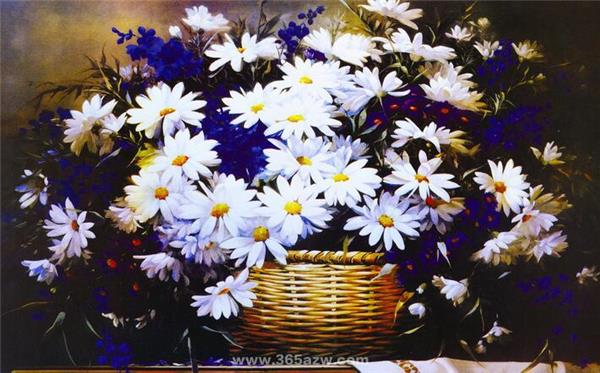
The above is the relevant introduction to the daisy's floral meaning. I hope it is helpful to you.