How to grow Kalanchoe blossfeldiana? A full guide to growing methods and precautions
Kalanchoe blossfeldiana is a succulent herbaceous plant whose blooms cluster together in dense bunches, making it deeply beloved. Today I will share with you the growing methods for Kalanchoe blossfeldiana.
Introduction to Kalanchoe blossfeldiana:
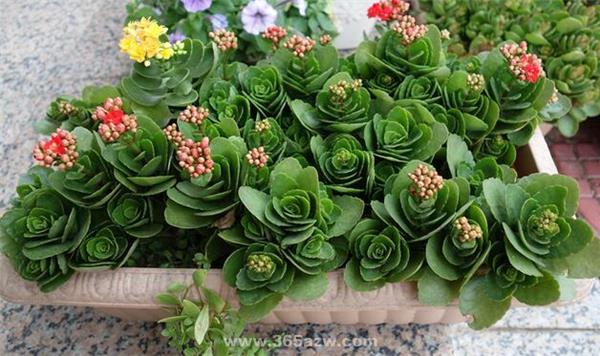
Kalanchoe blossfeldiana (scientific name: Kalanchoe blossfeldiana Poelln.): also known as kalanchoe or flaming Katy. Perennial succulent herb. Plant height 10-30 cm. Stems erect. Leaves simple, opposite, elliptical, with blunt teeth along the margins. Cyme inflorescence; small flowers orange-red to crimson. Follicle fruit. Seeds numerous. Flowering period February-May.
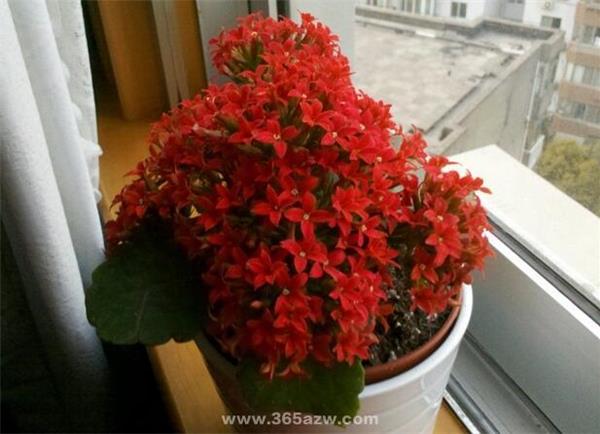
The leaves are dense and emerald green, and it blooms near the Christmas holiday, with flowers clustered in dense bunches and rich in color, making it a beloved indoor potted flower. This flower was introduced to Europe from southern Africa by the German R. Blossfeld. But it was not until the 1930s that it was more widely cultivated for ornamental purposes in Europe. To date, the Netherlands, a major flower-exporting country in the world, saw the output value of Kalanchoe blossfeldiana reach 333 billion USD in 1995, ranking third in potted flower production. In Denmark, potted Kalanchoe blossfeldiana has become the top potted flower in Denmark, ranking first in both output and output value. This shows that Kalanchoe blossfeldiana occupies an important position among potted flowers and has become one of the fastest-growing potted flowers in the international flower market.
Growing methods for Kalanchoe blossfeldiana
1. Soil selection for growing Kalanchoe blossfeldiana:
Kalanchoe blossfeldiana must not be grown in heavy, sticky soil, otherwise it will lead to poor growth, root rot and leaf drop, and in severe cases cause the plant to die. The potting soil should be mixed with 4 parts leaf mold, 4 parts garden soil, 2 parts river sand, plus a small amount of bone meal. This growing medium is loose and fertile, has good drainage, and shows a slightly acidic reaction, which is favorable for root development.
2. Fertilization method for growing Kalanchoe blossfeldiana:
Kalanchoe blossfeldiana must not be grown in heavy, sticky soil, otherwise it will lead to poor growth, root rot and leaf drop, and in severe cases cause the plant to die. The potting soil should be mixed with 4 parts leaf mold, 4 parts garden soil, 2 parts river sand, plus a small amount of bone meal. This growing medium is loose and fertile, has good drainage, and shows a slightly acidic reaction, which is favorable for root development.
During the peak growing season, apply a dilute compound liquid fertilizer once every 15-20 days to promote robust growth and abundant flowering. After flower buds form in November, apply 1-2 additional applications of 0.2% potassium dihydrogen phosphate or 0.5% superphosphate, which will result in more flowers, brighter colors and a longer flowering period.
3. Watering method for growing Kalanchoe blossfeldiana:
Like other succulent flowers, Kalanchoe blossfeldiana contains a relatively large amount of water in its body and has strong drought resistance, so it does not need large amounts of watering. During the growing period, simply water thoroughly once every 2-3 days, keeping the potting soil slightly moist. When temperatures are low in winter, watering must be controlled even more. If watered too much, drainage is poor, and the potting soil is too wet, root rot is likely to occur.
Although Kalanchoe blossfeldiana is relatively drought-tolerant, it must not lack water during the growing season either; normally it can be watered once every 2-3 days. During the vegetative growth stage, the soil must be kept moist, with timely and appropriate watering. In summer, when Kalanchoe blossfeldiana is in an environment of high heat, strong sunlight, high evaporation and dry air, it can be watered once every evening. In cold winter, Kalanchoe blossfeldiana enters dormancy, so watering should be controlled, or even withheld for a short period.
4. Light requirements for growing Kalanchoe blossfeldiana:
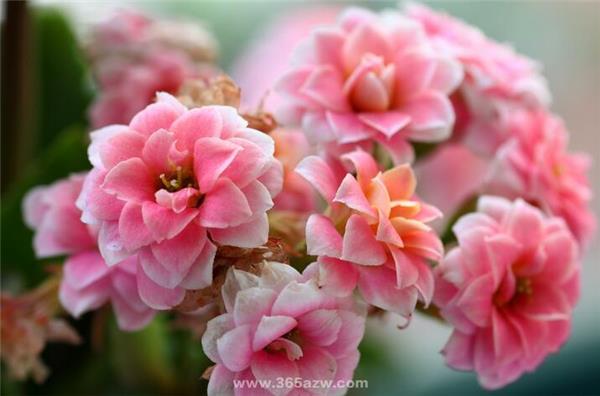
Kalanchoe blossfeldiana likes ample sunlight, and when grown at home it should be placed in a spot with direct sunlight throughout the year. In the hot summer in the north, light intensity is high and can easily turn the leaves yellow, so around midday it is advisable to provide appropriate shading, or place it in a semi-shaded spot indoors, but be careful to ventilate and cool it down. When cultivating Kalanchoe blossfeldiana, if light is insufficient for a long time, not only will the branches become thin and long and the leaves thin and small, affecting the beauty of the plant's shape, but the number of flowers will also decrease, the flower color will be less vivid, and large numbers of leaves will drop, causing it to lose its ornamental value.
5. Temperature requirements for growing Kalanchoe blossfeldiana:
The most suitable temperature for the growth of Kalanchoe blossfeldiana is 20-25°C. Above 30°C or below 10°C, it will clearly stop growing and enter a dormant or semi-dormant state. In winter, if the temperature is below 10°C, it should be moved into a greenhouse to overwinter. If conditions permit, the indoor temperature can be kept at 16-20°C during the day and 10-15°C at night, so that Kalanchoe blossfeldiana can bloom at New Year's Day and Spring Festival.
In winter, room temperature must not be lower than 12°C, and it is best at 15-18°C during the day and above 10°C at night. If the temperature drops to 6-8°C, the leaves will turn red and the flowering period will be delayed.
Precautions
Kalanchoe blossfeldiana belongs to the cool-growing type, growing fastest in spring and autumn, flowering in winter and spring, and basically being in a dormant state in summer. Therefore, in summer, watering should be reduced, and it should be placed in a cool, ventilated place to pass the summer.
In addition, in winter, flower growers in the north should pay attention to protecting Kalanchoe blossfeldiana from the cold. Although Kalanchoe blossfeldiana can sometimes tolerate low temperatures of 0°C, it is afraid of frost and snow. Therefore, flower growers in the north had best place it on an enclosed balcony.
About pests and diseases
The most common pests of Kalanchoe blossfeldiana are aphids and scale insects. For these two problems, prevention and control are key, and under generally ventilated conditions the incidence is much lower. There is also a leaf-miner moth larva that likes to bore into the leaves, and by the time it is discovered the leaf mesophyll has basically been eaten away. At present, no effective treatment is known; usually pay more attention to the underside of the leaves, and it is best to remove the eggs as early as possible. If moths are found nearby, insecticide can be sprayed immediately. In addition, carbofuran can be sprinkled on the surface of the flower pot, and after the plant absorbs the liquid, it will poison the insects. But please handle with caution. Huahushen, dimethoate, imidacloprid, Baichongling and others are all effective against these three pests and diseases.
The above is a related introduction to the growing methods for Kalanchoe blossfeldiana, which everyone can use as a reference.
If moths are found nearby, insecticide can be sprayed immediately. In addition, carbofuran can be sprinkled on the surface of the flower pot, and after the plant absorbs the liquid, it will poison the insects. But please handle with caution. Huahushen, dimethoate, imidacloprid, Baichongling and others are all effective against these three pests and diseases.
The above is a related introduction to the growing methods for Kalanchoe blossfeldiana, which everyone can use as a reference.