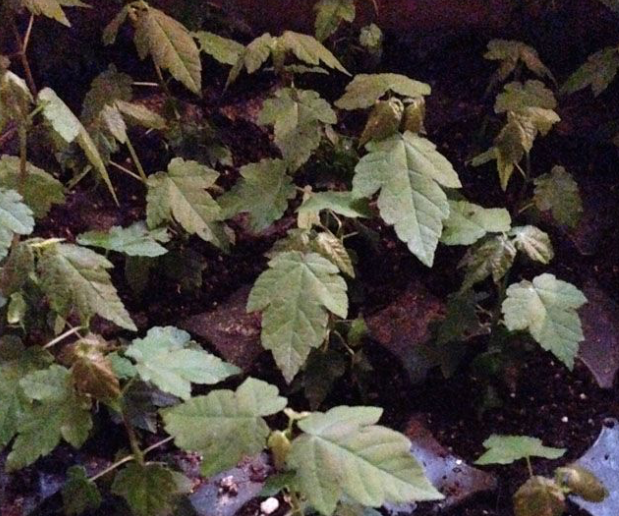
What is the relationship between iron chlorosis in plants and leaf greening? The role of iron in plants
Iron chlorosis can affect many kinds of plants and can be frustrating for gardeners. Iron deficiency in plants causes unsightly yellow leaves and eventually death. Therefore, correcting iron chlorosis in plants is important. Let's take a look at the role of iron in plants and how to solve systemic chlorosis in plants.
What does iron do for plants? Iron is a nutrient that all plants need to function. Many important functions of plants, such as the production of enzymes and chlorophyll, nitrogen fixation, development and metabolism, all depend on iron. Without iron, plants simply cannot function properly. Symptoms of iron deficiency in plants The most obvious symptom of iron deficiency in plants is usually called leaf chlorosis. This is where the leaves of the plant turn yellow, but the veins of the leaves remain green. Typically, leaf chlorosis will start at the tips of new growth on the plant and, as the deficiency worsens, will eventually affect the older leaves on the plant. Other signs may include poor growth and missing leaves, but these symptoms will always be combined with leaf chlorosis.
Fixing iron chlorosis in plants is rarely caused by iron deficiency in the soil. Iron in soil is usually abundant, but various soil conditions can limit how much iron plants can obtain from the soil. Iron chlorosis in plants is usually caused by one of four reasons.
They are: soil pH too high soil contains too much clay compacted or overly wet soil, too much phosphorus in the soil, fixation soil pH too high Test your soil at your local extension service. If the soil pH exceeds 7, soil pH can limit the ability of plants to obtain iron from the soil. You can learn more about lowering soil pH in this article. Correcting soil that contains too much clay Soil lacks organic matter. The lack of organic matter is actually the reason plants cannot obtain iron from clay. Plants need micronutrients from organic matter to bring iron into their roots.
If clay causes iron chlorosis, correcting iron deficiency in plants means amending the soil with organic matter such as peat moss and compost. Improving compacted or overly wet soil If the soil is compacted or too wet, the roots do not have enough air to properly absorb enough iron for the plant.
If the soil is too wet, you need to improve the soil's drainage. If the soil is compacted, it is usually difficult to reverse, so other methods are usually used to add iron to the plant. If you cannot correct drainage or reverse compaction, you can use chelated iron as a foliar spray or soil supplement. This will further increase the amount of iron available to the plant and offset the plant's weakened ability to absorb iron through its roots. Reducing phosphorus in the soil Too much phosphorus can hinder a plant's absorption of iron, causing leaf chlorosis. Usually, this situation is caused by using fertilizer with too high a phosphorus content. Use a fertilizer with a lower phosphorus content (the middle number) to help the soil return to balance.