How to grow the adorable succulent Sedum rubrotinctum (Jelly Bean Plant)
In recent years, growing succulents has become a popular trend. Succulents are very cute and very popular with everyone. But growing plants is not a simple matter. Sedum rubrotinctum (Jelly Bean Plant) is an ornamental succulent. Do you know what its growing methods are like? Let's take a look together below at how to grow Sedum rubrotinctum!
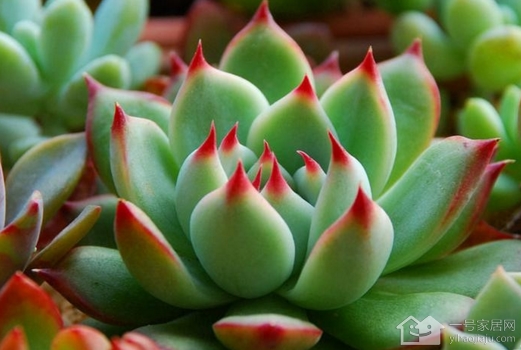
How to grow Sedum rubrotinctum
Temperature: Sedum rubrotinctum has a very strong ability to adapt to temperature. It loves environments with a large temperature difference between day and night. A growing temperature of around 10°C-28°C will let Sedum rubrotinctum survive very well. In autumn, you can lower the temperature artificially, which can keep the leaf surface of Sedum rubrotinctum emerald green and effectively improve its ornamental value. At the same time, in winter, the temperature can be kept above 5°C.
Light: Sedum rubrotinctum loves sunlight. In winter, Sedum rubrotinctum can be placed on a balcony to absorb sunlight. In summer, Sedum rubrotinctum can be given half a day of sun or half shade. At noon in summer, direct sunlight must be avoided to prevent damage from sunburn on the leaves. During the growing period, make sure Sedum rubrotinctum gets enough sunlight.
Ventilation: Sedum rubrotinctum needs a certain ventilated environment to ensure that it can grow well.
Soil: Sedum rubrotinctum does not have high requirements for soil. Generally, as long as the soil is loose and has good drainage, it is fine.
Watering: Sedum rubrotinctum has a certain degree of drought tolerance, but during its growing period, a certain amount of water must be ensured so that Sedum rubrotinctum can grow better. Generally, if Sedum rubrotinctum grows slowly or its leaves show a sunny red color, it means it lacks water. At this time, water according to the plant watering principle of "do not water until dry, and water thoroughly when you do."
Fertilizing: Sedum rubrotinctum has no great requirements for fertilizer. Applying a thin fertilizer once or twice during the growing period is enough.
Pruning: Sedum rubrotinctum generally becomes messy after being grown for more than three years, so pruning should be done in advance to maintain the shape of Sedum rubrotinctum.
The above is the introduction to the growing methods of Sedum rubrotinctum brought to you by the editor. I hope it can help friends who need it. Many succulents are very cute, but they must be grown correctly. For more related information, please stay tuned to No. 1 Home Network.