How to grow magnolia? Master the key points to grow a beautiful and elegant magnolia
Magnolia is a very popular plant, beautiful and elegant. When planting magnolia, you must grasp the right timing; it cannot be too early, nor too late. Today, the editor will give you a good introduction to the methods of growing magnolia. Come and take a look!
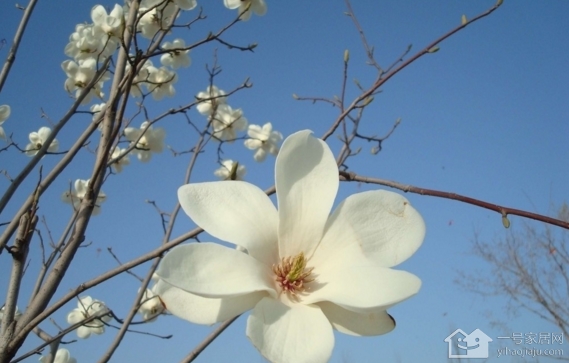
Magnolia flowers prefer fertilizer, but avoid heavy fertilizer; during the growing season, applying fertilizer twice is generally enough to help flower bud differentiation and promote growth. One application is in early spring, and the other is from May to June. The fertilizer is mostly fully decomposed organic fertilizer. Newly planted saplings do not need fertilizer; wait until after leaf fall or the following spring to fertilize. The root system of magnolia is fleshy roots and is not tolerant of waterlogging. During the flowering and growing period, the soil should be kept slightly moist. After autumn begins, watering should be reduced to delay magnolia rooting and promote branch maturity, which helps it overwinter. In winter, generally do not water; water only once when the soil is too dry. Magnolia branches and trunks have poor wound-healing ability, so pruning is generally not done. However, for a reasonable tree shape, water sprouts, dead branches, diseased and pest-infested branches, and branches that hinder the beauty of the tree shape should still be cut off in the early leaf-unfolding stage. In addition, after the flowers fade, if seeds are not to be kept, the spent flowers and follicle fruit clusters should also be cut off to avoid consuming nutrients and affecting flowering the next year.
Magnolia flowers are mostly planted in the ground; when potted, they should preferably be cultivated into bonsai-style specimens.
Magnolia propagation can use methods such as grafting, layering, cuttings, and sowing, but the two most commonly used are grafting and layering.
White magnolia prefers a sunny and moist environment and is not suitable for long-term growth in alkaline soil. For planting, choose a wind-sheltered, sunny, well-drained, and fertile location. Before flowering, there should be sufficient water and fertilizer to promote large, fragrant flowers. Magnolia has few branches; apart from dead branches, diseased and pest-infested branches, and branches that disrupt the tree shape, pruning is generally not needed. After the flowers fade, if seeds are not to be kept, the fruit should be cut off to avoid consuming nutrients. White magnolia has relatively strong cold resistance and can overwinter outdoors in North China and the southern part of Northeast China.
For potted magnolia, wiring and bending can be carried out, that is, after budding in April, as new shoots grow, wire and bend them at any time into curved postures to limit the trunk from growing too tall. Also, because magnolia has a deep root system, it is prone to weakened growth after staying in a pot for a long time, so after the flowers fade, the main roots should be trimmed and the plant should be planted in the ground for cultivation, then repotted before flowering; only in this way can the flowers be abundant and vivid.
If propagated by seed, then the seed maturation period must be grasped. Collect when the follicles turn red and split open; collecting too early will not germinate, and collecting too late makes them easy to fall off. After collecting the follicles, spread them thinly, soak and rub-wash the fruits with red outer seed coats in cold water, remove the outer seed coats completely, take out the seeds, dry them in the shade, stratify them in sand storage, and sow in February to March of the following year. One-year-old seedlings can reach about 30 cm in height. Those cultivating larger seedlings should transplant them the following spring, properly cut the main roots, apply heavy base fertilizer, and control density; in 3 to 5 years, qualified seedlings with a complete crown, sparse flower buds appearing, and a plant height of more than 3 m can be cultivated. After 2 to 3 years of field planting, they can enter full bloom. This kind of seedling has vigorous growth and strong adaptability, and its effect is no less than that of graft-propagated seedlings.
Cuttings are the main propagation method for purple magnolia. The cutting time has a great influence on the survival rate; it is generally carried out from May to June, and cuttings from the current-year growth of young trees have the highest survival rate. Soaking the base in 50 ppm naphthalene acetic acid for 6 hours can increase the rooting rate.
Layering is a traditional propagation method, suitable for preserving and developing famous and superior varieties. Purple magnolia is best propagated by this method. Select well-growing plants, take 1- to 2-year-old branches 0.5 cm to 1 cm thick as layers; if there are branches, they can be layered on the branches. Layering time is February to March. After layering, they root in the same year; the longer they remain connected to the mother plant, the more developed the root system and the higher the survival rate. After field planting, they can bloom in 2 to 3 years.
In recent years, tissue culture has been used, with buds of Yulan magnolia used as explants, and successful cultivation has been achieved in test tubes. This method has special significance for preserving and developing new types bred through bud sports and hybridization.
The above is the editor's introduction to magnolia growing methods. After reading the article, do you know them now? I hope it can help everyone. To learn more related information, please follow No. 1 Home Network.