How to grow pomegranate flowers? Master these methods for bright and beautiful blooms
Everyone has eaten pomegranates, right? The pomegranate has a lovely shape and tastes very sweet and refreshing. Although it takes some effort, it is also a kind of pleasure. So do you know about pomegranate flowers? Pomegranate flowers are bright and beautiful, and many people grow them at home. Want to know how to grow pomegranate flowers? Let us take a look together at the methods for growing pomegranate flowers!
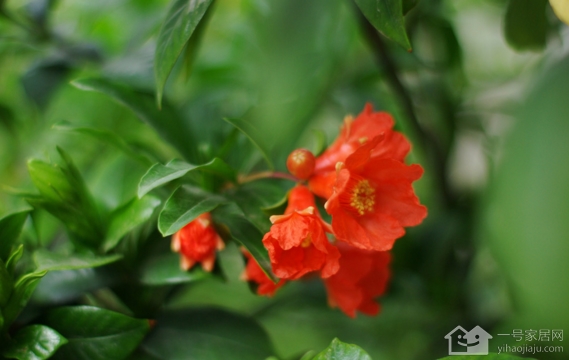
Pomegranate flowers are fairly widely distributed, and are grown in many places. They can be cultivated in many types of soil and environmental climates. Generally speaking, when planted in courtyards, or dwarf pomegranates can also be grown in pots. Their lifespan is relatively long; with reasonable care, they can live for several decades. In some tropical rainforests, pomegranate trees can grow for more than 200 years. As an evergreen fruit tree, the pomegranate flower loves light. Unlike some household decorative plants such as snake plants, clivias, and peace lilies, it only needs sufficient water and can grow very well even under strong light. As a pomegranate tree also planted in the north, its drought tolerance is still relatively strong. Generally, the best growing method is semi-cultivated and semi-wild. It can grow in ordinary soil, as long as the annual temperature is not lower than 10°C. Below this temperature, the leaves will fall off and it will enter dormancy. Summer temperatures are very suitable for growth, so pomegranate trees bloom relatively well in summer. Pomegranate trees generally sprout in early spring and then begin to grow branches and leaves. They generally grow relatively quickly in summer, but in the first year they usually cannot bloom. They generally bloom more in the second year and then bear fruit, and by the third year they may grow relatively large.
1. Light: The pomegranate flower is a sun-loving plant, and the daily light period is best up to 12 hours, because pomegranate trees need sufficient light to grow. Generally, the abundant sunlight of summer is the best storage period for fruiting in autumn. The better the sunlight, the larger the flowers bloom and the better the fruit sets.
2. Water: Pomegranates are found in many places in the country, and they can survive in some relatively dry places, so pomegranates are a drought-tolerant variety. However, pomegranate trees grown in such places generally do not bloom brightly, and the fruit is not tasty either. This also proves that if you want to grow pomegranate trees well, it is still recommended to provide sufficient water.
3. Soil: Pomegranate trees have the lowest requirements for soil, and can generally be planted in natural soil. However, for potted pomegranates, it is recommended that the soil be somewhat fertile.
4. Temperature: Pomegranate flowers like warmth, so they grow fastest in late spring and early summer. However, the temperature during winter generally should not be lower than 10°C, otherwise the pomegranate tree will suffer frost damage, causing it to stop growing and enter dormancy.
The above is the introduction to pomegranate flower growing methods brought to you by the editor. Pomegranate flowers are bright and beautiful. Do you like them? If you want to grow plants, you must pay attention to the methods. For more related information, please stay tuned to No. 1 Home Network!