Ivy brings a southern charm, a detailed explanation of basic information
Ivy is a fairly popular large indoor potted flowering plant, especially when placed in larger living rooms, studies, and sitting rooms, where it lends an elegant, simple style with a southern charm. It is a world-famous new-generation indoor foliage plant with a graceful, neat plant shape. Below, the editor will introduce the basic information about ivy.
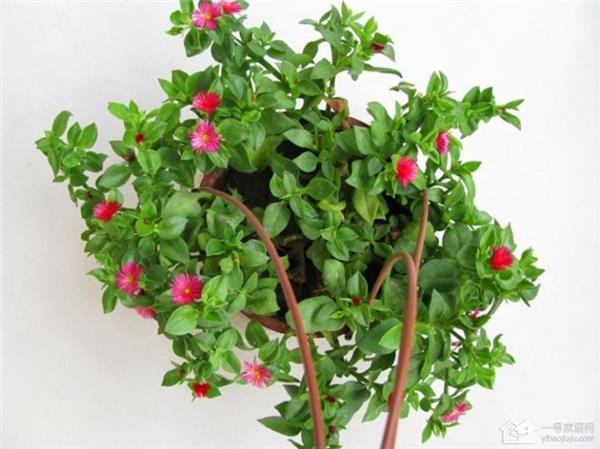
To understand ivy more deeply, we need to look at it from the following angles:
1. Many varieties.
Ivy varieties include Chinese ivy, Japanese ivy, goldheart ivy, English ivy, Canary ivy evergreen vine, leatherleaf ivy, silver-edge ivy, Crimean ivy, and glacier ivy, among which the most numerous are Chinese ivy, Japanese ivy, variegated ivy, goldheart ivy, and silver-edge ivy.
2. Landscaping uses.
In courtyards it can be used to climb rockeries and rocks, or as vertical greening material on the shady side of buildings. Seeing a patch of green in one's own garden, a scene full of vitality, not only pleases the eye but also gives one a feeling of relaxation and joy. The most beautiful thing about ivy is its long branches and leaves; as long as the branches and leaves are placed ingeniously, it can bring people a "visual feast"; it can also be potted for indoor greening and ornamental use, absorbing indoor carbon dioxide. Ivy can absorb harmful substances and convert them into harmless sugars and amino acids, effectively resisting the carcinogenic substances in nicotine and releasing fresh oxygen, so its contribution is indispensable.
3. In pharmacology, it has the effects of dispelling wind and dampness, promoting blood circulation and reducing swelling, calming the liver, and detoxifying. In biology it also has a use as a medicinal material. In cross-sectional identification, the stem is cylindrical, of varying lengths, 1-1.5 cm in diameter, with a grayish-green or grayish-brown surface, transverse lenticels, and scaly soft hairs on young branches; the texture is hard and not easy to break, and the cross-section is fissured and yellowish-white. The leaves are alternate, leathery, and grayish-green; the leaves on vegetative branches are triangular-ovate, while the leaves on flowering and fruiting branches are elliptic-ovate and elliptic-prostrate. The flowers are yellowish-green. The fruit is spherical, yellow or red. The odor is slight and the taste is astringent.
4. Propagation methods
Ivy can be propagated by cutting, division, and layering. Except in winter, it can be done in the other seasons, while greenhouse cultivation is not limited by season and can be propagated all year round. Cutting method: the suitable period is April to May and September to October. Cut off semi-mature branches with aerial roots as cuttings, which must have one to several nodes. After insertion, provide shade, keep moisture, and increase air humidity; roots will form in 3-4 weeks. Branches creeping on the ground can root at the nodes and penetrate the soil, so ivy can be propagated by both division and layering.
The above is the basic information about ivy brought to you by the editor. I hope it can help everyone further understand ivy. If you want to learn more related information, please continue to follow No. 1 Home Network.