Cultivation Methods for Bromeliads, Their Landscaping Role and Air-Purifying Benefits
Bromeliads are highly ornamental flowering and foliage plants, especially suitable for indoor cultivation, and are a very refined choice for home gardening. This plant is very well suited to indoor decoration. Below, the editor introduces the cultivation methods for bromeliads and their benefits. Friends who like bromeliads, come and take a look.
Bromeliad Cultivation Methods
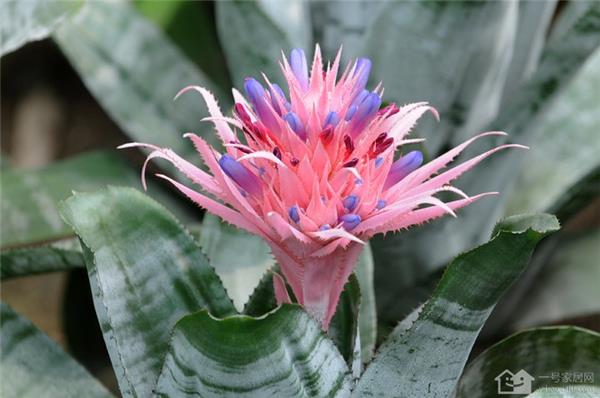
The bromeliad is the most common flower in the Bromeliaceae family, and whether as a home-grown flower or in courtyard lights and other places, it is a commonly seen ornamental flower. Because it has many varieties and each one is highly ornamental, it is called a horticultural treasure. Bromeliad actually refers to the Bromeliaceae family, just as the pineapple is a member of the Bromeliaceae family; it is an edible bromeliad. The bromeliad flower only blooms and does not bear fruit; its leaves are green and slender, with patterns on the leaf surface, and some variegated leaves turn red near the flowering period. Flower color varies by variety, and different varieties have different flower colors.
Bromeliads are quite suitable for indoor decoration, and Guzmania, one of the varieties, is an example.
How to Grow Bromeliads
1. Soil selection: If growing bromeliads in pots, choose soil rich in organic matter and loose, because only then will the bromeliads look good when they bloom. For home cultivation, it is best to use peat soil mixed with garden soil, though these are generally available for sale in flower and bird markets.
2. Temperature control: Bromeliads are actually not very strict about temperature, and generally spring and summer are very suitable for growth. However, if the summer temperature exceeds 35°C, the flowers will be damaged by the excessive heat. At this time, timely watering is needed to cool them down and ensure humidity. Properly managing temperature is the basic condition for ensuring the growth of bromeliads.
3. Light requirements: Bromeliads actually do not have high sunlight requirements, because when they originally grew in the tropics they generally grew under tree shade. So for their lighting, it is best to use diffused light, placing them on a bright balcony or by a window. They are not suitable for overwintering in winter, so it is recommended to place them indoors for cultivation and provide suitable light to ensure their growth.
4. Water supply: Bromeliads are relatively drought-tolerant, and potted ones only need appropriate watering; generally, just water a little when the soil is dry. However, note that bromeliads have a tubular groove from top to bottom at their base, and the water in this part cannot be interrupted.
5. Although bromeliads do not have high fertilizer requirements, in order to make them produce large and brightly colored flowers, appropriate fertilizer should be applied before flowering, mainly phosphorus and potassium fertilizer. However, thin fertilizer should be applied, otherwise it will cause eutrophication.
6. Precautions: During the growing period, bromeliads should be watered appropriately; they should not be dry or waterlogged, and in summer they should be sprayed with water frequently. Hydroponic bromeliads should have their water changed once every half month, and in winter they should be watered less. Provide half an hour to one hour of light every day, but in summer avoid direct sunlight. They should also be watered when flowering, but they cannot be exposed to strong light. After the flowers fade in autumn, pruning should be carried out to ensure nutrients for flowering the following year.
Benefits of Bromeliads
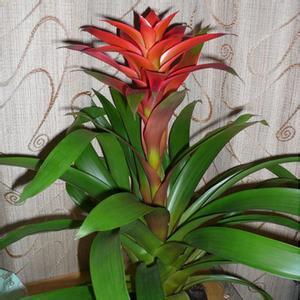
Bromeliads are mainly ornamental flowers, and in many places they represent perfection and good luck. Among them, Guzmania is the most popular and most representative. What they can express in home decoration cannot be replaced by many plants, being both subtle and comfortable. For example, the relatively famous Cryptanthus, whose potted form is the most renowned, has beautiful flower shapes and bright leaves, and is regarded as a fine among bromeliads for its fresh and elegant quality. Of course, common ones also include Billbergia and Nidularium.
Of course, as green plants, bromeliads also have a landscaping role and air-purifying benefits. Many varieties of bromeliads with strong purifying functions are called air plants. This is because they can reduce the formaldehyde content in newly renovated houses by 80%, making them not only practical but also beautiful.
The above is the editor's introduction to bromeliad cultivation methods and their benefits. I hope it has helped everyone. If you want to learn more related information, please continue to follow No. 1 Home Network.