It gives off a sweet, delicate fragrance: a basic introduction to the snake plant
The snake plant, also known as bowstring hemp and thousand-year plant, is a perennial evergreen herbaceous plant of the Liliaceae family and the genus Sansevieria. Its rhizome grows in a creeping manner, and it has no stem. The snake plant is now very commonly grown in homes. Today, the editor brings you some basic information about the snake plant. Friends who are interested, come and take a look.
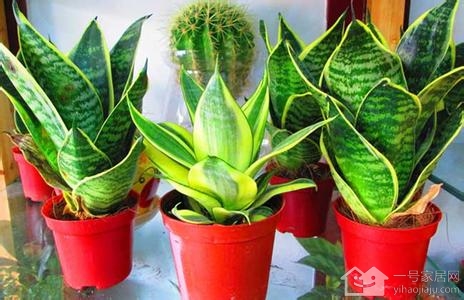
1. Its leaves have markings. The snake plant is a perennial succulent herb; its rhizome has a creeping habit, and the rhizome produces funnel-shaped leaf clusters. The leaves are upright, thick and leathery, light green, with irregular dark green horizontal banded markings. These markings look very much like the stripes on a tiger, which may be why it is called the snake plant. Generally, snake plants are 50 cm to 70 cm tall, and the leaves are about 3 cm to 5 cm wide. In spring and summer, which is the flowering season for the snake plant, it sends up flower stalks singly from the rhizome, forming a raceme, with 3-5 flowers per cluster, giving off a sweet, delicate fragrance.
2. It has multiple cultivated varieties. The commonly seen snake plant varieties include the golden-edged snake plant, the short-leaf snake plant, the silver short-leaf snake plant, the golden-edged short-leaf snake plant, and the stone pencil snake plant. It can be said that the golden-edged snake plant is one of the varieties with relatively high ornamental value: the leaf margins have thin yellow banded stripes, while the center is light green with dark green horizontal stripes, looking very beautiful.
3. Its living environment. The snake plant is drought-tolerant, moisture-tolerant, and shade-tolerant, and can adapt to all kinds of harsh environments. It does not have great demands for fertilizer, and growing it in sandy soil with relatively good drainage is best. In addition, the snake plant should not grow in dark places for a long time; it should be given indirect scattered light, but be sure not to suddenly put the snake plant in direct sunlight. It grows best in an environment of 20-30°C, and in winter be careful to maintain an indoor temperature of 10°C.
The above is the basic information about the snake plant brought to you by the editor. The markings on the leaf surface of the snake plant are its important hallmark, and they also make it look peculiar and interesting. It is a plant of unyielding perseverance and is suitable for growing at home. If you want to learn about more houseplants, please keep following No. 1 Home Network.