When does osmanthus bloom? How long is the flowering period
For friends who enjoy admiring osmanthus flowers, when osmanthus blooms is a matter of great concern. Next, let us take a look at when osmanthus blooms.
When does osmanthus bloom
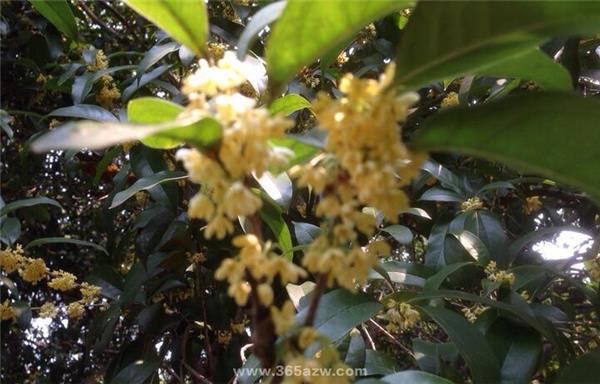
People often say that osmanthus is fragrant in the eighth month, which shows that osmanthus blooms from August to October. There are many varieties of osmanthus, and because some varieties differ, some osmanthus also blooms all year round, but at that time the floral fragrance is not strong and there is almost no scent. The osmanthus of August to September is the most fragrant. Many streets are now planted with osmanthus, so every time it blooms it is especially fragrant.
Different varieties of osmanthus bloom at different times, and the colors of the flowers they produce are also different.
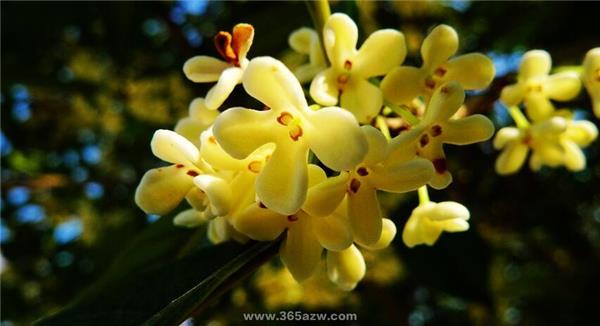
Jingui (golden osmanthus): flowering period September to October, the color is usually golden yellow.
Yingui (silver osmanthus): flowering period September to October, the color is white or yellowish white.
Dangui (orange osmanthus): flowering period October, the color is mostly orange-red or orange-yellow.
Sijigui (four-season osmanthus): blooms in all four seasons, with a small number of flowers every month, and the color is white.
Osmanthus benefits:
As for the benefits and uses of osmanthus, most of us are familiar with the fact that osmanthus can be used to make osmanthus cake and osmanthus pastry, and can be used for ornamental purposes. In addition, osmanthus has many other benefits and uses. These mainly include its medicinal value and edible value.
The medicinal value of osmanthus lies in the fact that the fruit of the osmanthus tree, when used as medicine, has the effects of resolving phlegm, promoting fluid production, warming the stomach, and soothing the liver. The twigs, leaves and roots are decocted into a juice and applied to the affected area, which can invigorate the muscles and bones, stop pain, and treat conditions such as rheumatism and numbness. In addition, the wood of osmanthus is also a top-grade solid wood; its material is dense, its grain is beautiful, it is not easy to crack, and its planed surface is smooth, making it a good material for carving.
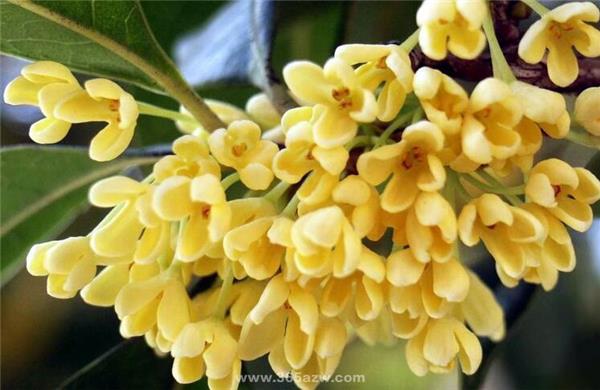
The edible value of osmanthus is extensive. Osmanthus brewed as tea can be used to relieve symptoms such as asthma, cough and excessive phlegm, abdominal pain due to amenorrhea in women, and toothache from dental caries. It can also be used in dietary conditioning, such as making glutinous rice osmanthus lotus root, osmanthus huanglin pastry, braised osmanthus sausage, and so on.
Everyone now understands the benefits and uses of osmanthus. In the future, while enjoying osmanthus, you can also use your imagination. Who knows, you might even create a distinctive osmanthus dish yourself.
Characteristics of osmanthus:
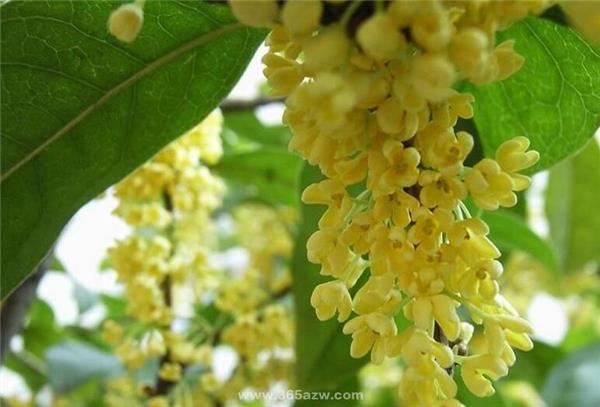
Osmanthus is an evergreen tree or shrub, with a maximum height of up to 18 m. The bark is grayish brown and hairless, and the leaves are elliptical or oblong-elliptical, etc. The flowers are yellowish white, pale yellow or orange-yellow. The flowers are dense and the fragrance is sweet and rich. Osmanthus prefers warm, humid places and is suitable for planting in subtropical regions. It has strong stress resistance and is both tolerant of high temperatures and relatively cold-resistant.
After reading today's article, I believe everyone must have some understanding of when osmanthus blooms.