Recommended Ivy Cultivation Methods: Care Essentials Explained in One Article
Ivy's growing environment requirements are not very strict, and ivy has luxuriant branches and leaves. Today I will introduce ivy cultivation methods to everyone, so you can plant it yourself.
Propagation Methods
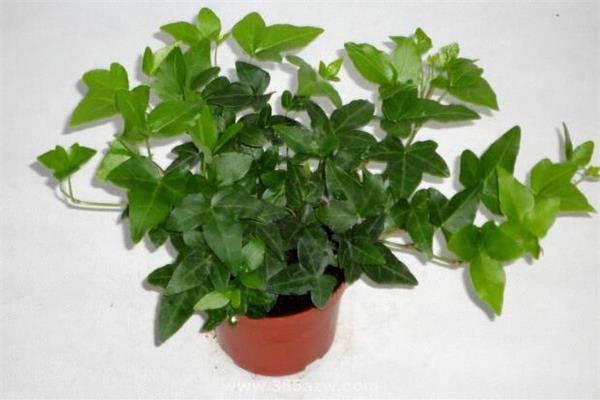
Ivy can be propagated by cuttings, division, and layering. Except in winter, it can be done in all other seasons, and greenhouse cultivation is not limited by season and can be propagated all year round. Cutting method: the suitable periods are April to May and September to October. Cut off semi-mature branches with aerial roots as cuttings, which need to have one to several nodes. After inserting, shade, keep warm, and increase air humidity, and roots will form in 3 to 4 weeks. Branches creeping on the ground can take root at the nodes and penetrate into the soil, so ivy can be propagated by both division and layering.
Fertilization Methods for Ivy Cultivation
During the spring and autumn growing seasons, apply a dilute liquid fertilizer once every 2 to 3 weeks. Variegated varieties are most averse to excessive nitrogen fertilizer, lest the patterns and patches on the leaves fade to green. In winter, stop fertilizing.
Ivy likes fertilizer, mainly nitrogen fertilizer. But if there is too much nitrogen fertilizer, it tends to grow excessively, which is not conducive to a beautiful plant shape. When phosphorus and potassium fertilizer are insufficient, the markings on ivy leaves easily fade. Young plants can be given a topdressing every 15 days during the growing season of a fully decomposed 10-times liquid fertilizer mixed with an equal amount of 500-times potassium dihydrogen phosphate solution.
Mature plants should be given a mixed liquid fertilizer once every 30 days. If mature plants are not fertilized routinely, when yellowing of leaf color is found, spray 1000-times urea solution on the leaves 1-2 times. When applying fully decomposed liquid fertilizer, use a fine-nozzle watering can and pour slowly along the edge of the pot. Do not splash the fertilizer liquid onto the leaves, otherwise the leaves are easily burned.
Ivy Cultivation Methods
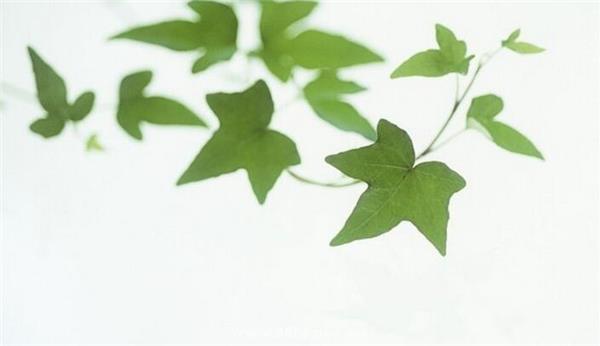
Ivy is a shade-loving plant, but it does not reject light. In the south, the easier-to-grow cutting method is used as the main propagation method.
1. Temperature: Ivy prefers warm [conditions]. It is neither cold-tolerant nor heat-tolerant. Therefore, its most suitable temperatures are still spring and autumn, when it grows most vigorously in these two seasons. It is recommended to generally keep the temperature between 20°C and 25°C. Generally ensure the wintering temperature is above 10°C.
2. Light: Although it is a shade-loving plant, it is rather unusual in that it also quite likes light on its leaves. So people who like growing flowers and plants generally grow it under semi-light conditions. Indoors, it is recommended to place it in a spot with relatively sufficient light. In summer, provide appropriate shading. In spring and autumn, it is best to recommend morning and evening light, and shade it during other periods.
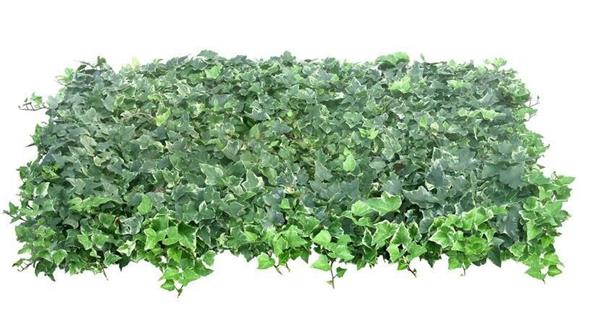
3. Watering: Watering for humidity is the key to keeping ivy evergreen. First, make sure the soil for cultivation is neither too wet nor too dry. It is recommended to keep the soil neither dry nor wet. Water when the soil is dry.
4. Fertilizing: Ivy is not very demanding about fertilizer. It is generally recommended to provide some fertilizer for nutrients in the early growth stage. In summer and winter, fertilizing is not recommended. After flowering, appropriate fertilizer can be provided for the nutrients needed for flowering the next year.
The above are recommendations for ivy cultivation methods. I hope everyone will like today's article.