What are the cultivation methods and precautions for spider plants?
What are the cultivation methods and precautions for spider plants? Let's take a look together next.
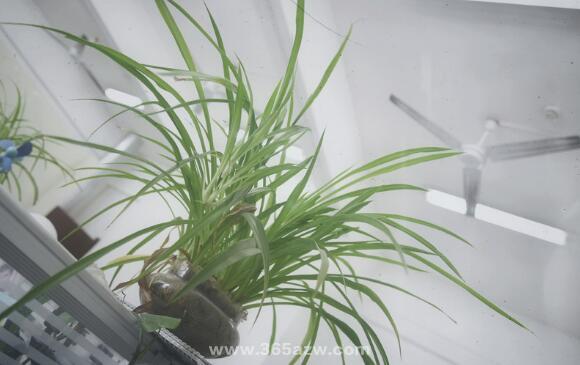
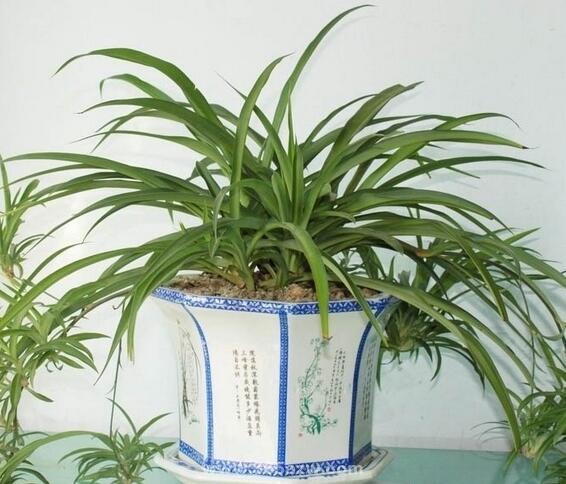
Spider plant (scientific name: Chlorophytum comosum (Thunb.) Baker.), also known as pendulous pot grass, hanging orchid, fishing orchid, orchid grass, folded crane orchid, and in Western Europe also called spider grass or airplane grass, is native to South Africa. It is a perennial evergreen herbaceous plant of the monocotyledon class, Liliaceae family, Chlorophytum genus, with horizontal or slanting rhizomes and many fleshy roots. The leaves grow in clusters, are linear, and slender, resembling orchids.
Planting conditions
To achieve a higher maturity rate for spider plants, the surrounding environment is of course indispensable. So what are the requirements for its environment?
1 Soil: Because of its strong adaptability, it can grow in all kinds of soil
2 Light: Spider plants prefer to stay in semi-shade, so they can be cultivated indoors in bright conditions all year round. Note that in summer, do not expose them to sunlight, to avoid poor growth due to too much light.
3 Fertilizing: Apply fertilizer once or twice in each growing season. But when the temperature is below 4 degrees, do not fertilize
4 Pruning: Just frequently cut off yellow leaves. In May, part of the old leaves can be cut off to ensure more new leaves grow
5 Water: Spider plants like a moist environment. So just keep the potting soil moist
Spider plants can develop dry, withered leaf tips. Generally speaking, there are several reasons for this situation:
1) The leaves of the spider plant have long been touching walls and other obstacles.
2) There is water accumulation.
3) It is fertilizer damage
Watering methods for growing spider plants
Spider plants like a moist environment and should be kept at relatively high air humidity. During the growing period, the potting soil needs to be kept moist. However, because their fleshy roots store a large amount of water, they also have a strong drought resistance, and will not dry out and die if not watered for several days. In summer, watering should be sufficient, and every evening water should also be sprayed on the branches and leaves to keep the air moist. In early October, move them indoors and place them in a sunny spot. Every 5 to 7 days at noon when the temperature is relatively high, spray and wash the branches and leaves with clean water close to room temperature. But the potting soil should preferably be on the dry side.
Propagation methods for growing spider plants
Spider plants are extremely easy to propagate. Generally, division is mostly used. From spring to autumn, small plantlets on the flower stems can be cut off at any time and planted separately. In early spring, the root clumps of old plants can also be separated and planted separately.
When propagating by division, except in winter when the temperature is too low and unsuitable for division, it can be done in other seasons. Potted plants that have been grown for 2 to 3 years can be divided during repotting in spring. Before division, watering should be stopped to allow the potting soil to dry appropriately, which makes it easier to take the plant out of the pot; after taking the plant out of the pot, remove the old growing medium, divide it into several plants, and pot them separately.
When propagating using small seedlings with roots at the tip of the flower stem, the small plant clusters with roots at the tip of the flower stem should be removed. Break them apart into small individual plants, and then pot them. But planting should not be too deep, as too deep is not conducive to tillering and slows plant development.
The above is an introduction to the cultivation methods and precautions for spider plants. I hope it is helpful to you.