Detailed Guide to Mimosa Pudica Cultivation Methods and Precautions
The leaves of mimosa pudica fold up immediately at a light touch. Today this article recommends how to grow mimosa pudica for everyone.
Introduction to Mimosa Pudica
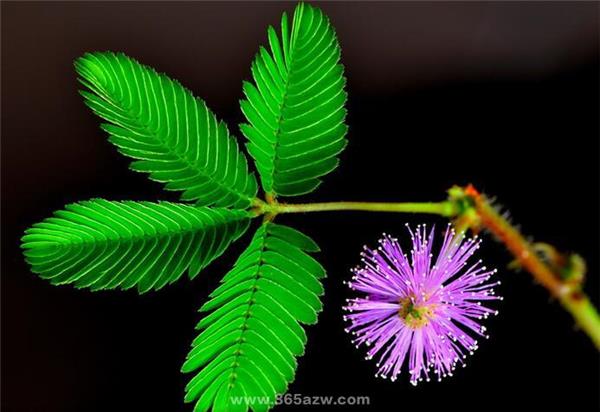
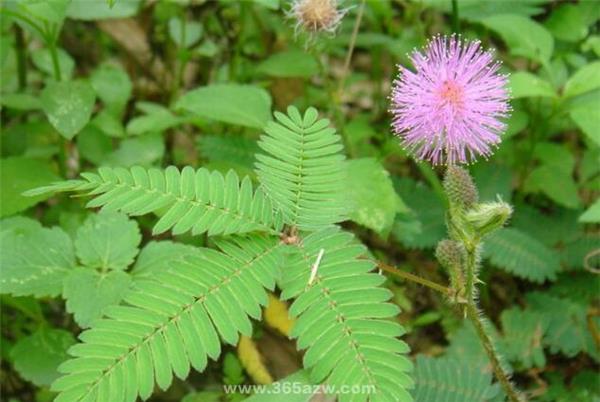
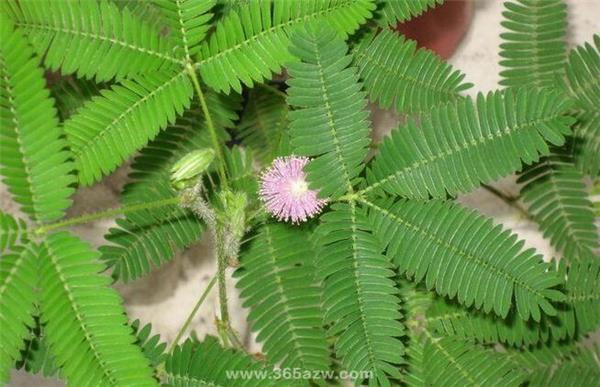
Mimosa pudica (scientific name: Mimosa pudica Linn.): a perennial herb or subshrub of the Fabaceae family. Because its leaves respond to heat and light and close immediately when touched by external force, it is named mimosa pudica. Its shape resembles a pom-pom. After flowering it forms pods, and the fruit is flat and round. The leaves are pinnate compound leaves, alternate, arranged in a palmate pattern. It usually blooms after midsummer, with oblong capitula, 2-3 borne in the leaf axils. The flowers are white or pink, the calyx is bell-shaped with 8 tiny calyx teeth, the corolla is four-lobed, there are four stamens, and the ovary is hairless. The pods are flat, each pod segment contains 1 seed, and the segments fall off when ripe.
The flowers, leaves and pods of mimosa pudica all have good ornamental value, and it is relatively easy to keep alive, suitable as a potted flower on balconies and indoors (people eating it or excessive contact with mimosa pudica can also cause hair loss). It can also be planted in courtyards and other places. Mimosa pudica differs from ordinary plants: when touched by people, its petioles droop and its leaflets close, so people interpret this as shyness, which is why it is called the sensitive plant, hehu cao, mimosa pudica, zhixiu cao and pa chou cao (Cantonese). It is native to the tropical regions of South America, likes warmth and moisture, and has ordinary requirements for soil.

Mimosa Pudica Cultivation Methods
Mimosa pudica can be cultivated in ordinary soil. It does not need much fertilizer during the growing period; applying diluted liquid fertilizer 2-3 times is enough. Fertilizer should not be too much, just enough for green leaves and healthy growth. Do not let it grow leggy, because mimosa pudica is mainly a novelty foliage plant, and a small size is best. The cultivation technique of mimosa pudica is simple and management is extensive. It is not strict about climate, sunlight or soil, but fertile, loose sandy loam is best, and it likes a warm and humid environment.
Planting Methods
Generally propagated by sowing, sown from late March to early April. Scatter the seeds evenly on fine soil, cover with about 1.5 cm of soil, and at a temperature of about 18°C, seedlings can emerge in about 10 days (generally they grow once in the soil and do not need special effort in dedicated management). Seedlings grow relatively slowly; they can be planted out when they reach 7-8 cm.
Field management. For field planting, the plant spacing is 25-30 cm; loosen the soil, hoe weeds and water in time. For indoor potting, water once every 2 to 3 days in summer. Fertilize once a month; if you do not want the plant shape to grow too large, then reduce the amount of fertilizer, or even do not fertilize at all.
Is Mimosa Pudica Toxic
The whole plant of mimosa pudica is slightly toxic. Mimosa pudica contains a substance called mimosine. If one frequently comes into contact with mimosa pudica, it can cause hair to turn yellow or even fall out. Mimosa pudica does not harm the human body during the day, but at night, when mimosa pudica cannot carry out photosynthesis, it releases toxic substances. Therefore, it is recommended that mimosa pudica is best not placed indoors; it can be placed on a balcony to avoid harm to the body.
For mimosa pudica, an indoor environment is not conducive to its growth. Mimosa pudica needs strong light, and indoor light conditions cannot meet what mimosa pudica needs for growth. Frequently touching mimosa pudica is not only harmful to the human body, but also easily causes mimosa pudica to drop its leaves. So, for the health of yourself and your family, and for the healthy growth of mimosa pudica, it is still most suitable to keep mimosa pudica outdoors.
Can a Family with a Pregnant Woman Keep Mimosa Pudica
A family with a pregnant woman had best not keep mimosa pudica. Although mimosa pudica does not have a strong smell, it contains an alkaloid, and long-term contact with it can cause human hair to fall out. If mimosa pudica is kept at home, it can cause hair loss in pregnant women, and in severe cases may lead to miscarriage. Keeping some flowers and plants indoors is always somewhat unfavorable for pregnant women; not to mention pollen allergies, it will more or less also have an effect on the fetus.
The above is the relevant introduction on how to grow mimosa pudica. I hope everyone will like today's article.