What are the cultivation methods and uses of ivy?
More Ivy picture gallery, ivy cultivation methods
More What are the uses of ivy, introduction to the cultural value of ivy
Selected Complete guide to hydroponic plant species suitable for indoor cultivation
Choice ━═☆Plant Zone: For more home furnishing information, visit Meilele Decoration Network!
Ivy, also called English ivy, is a climbing-leaf plant commonly seen in the south. Because it stays green all year round, people use it for vertical greening. Growing ivy is actually very simple; you need to pay attention to six key points: temperature, light, watering, fertilizing, soil and pruning. This issue provides an introduction.
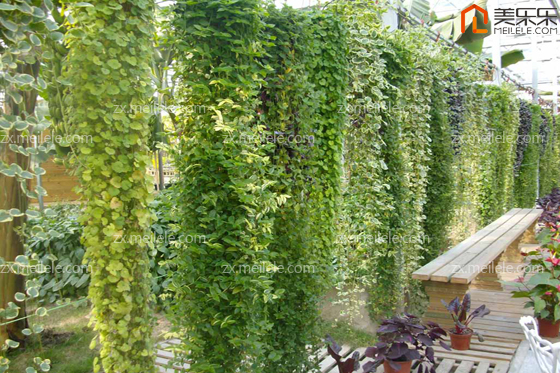
The morphology of ivy:
Ivy is an evergreen climbing shrub, evergreen all year round, with aerial roots. The leaves are simple leaves; the leaves on sterile branches usually have lobes or serrated lobes, but those on flowering branches are often not divided; the leaf stalks are slender, with no stipules. It is a beautiful climbing plant and can be used for vertical greening of trellises or walls.
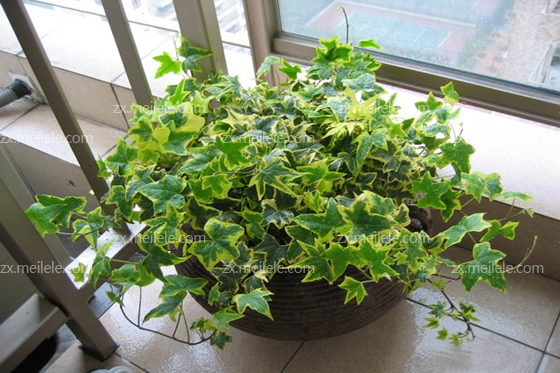
The uses of ivy:
An inconspicuous ivy can constantly help you absorb harmful substances in the air. In a room of about 10 sq m, it can eliminate 70% of benzene, 50% of formaldehyde and 24% of trichloroethylene, as well as the nicotine released by smoking. It brings great benefits to our health.
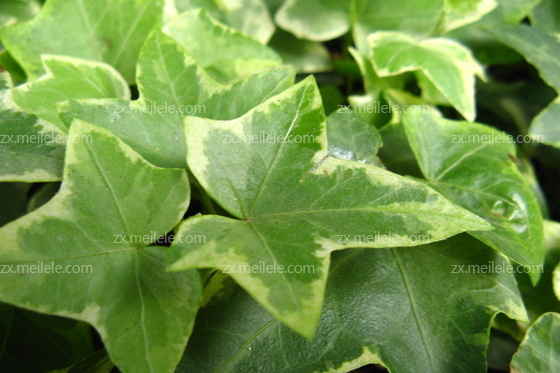
Suitable planting spaces for ivy:
Ivy does not have very strict requirements for environment or space. Apart from the kitchen, which has a relatively high temperature and is not suitable for planting, other spaces such as the living room, study, dining room, bedroom and toilet can all be used for planting. The toilet is the most suitable, because ivy is a shade-loving vine plant, and the toilet is damp all year round, which can match its growth characteristics.
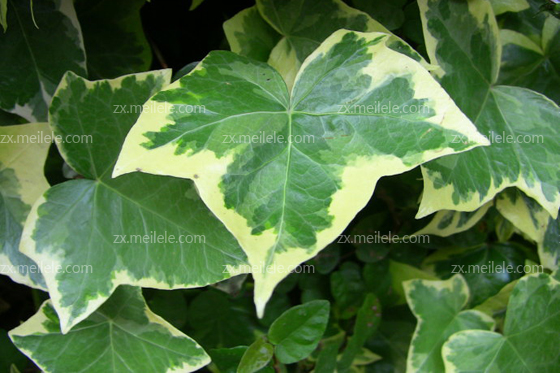
Ivy planting methods:
Temperature: Ivy is an evergreen plant all year round. When growing it, keep the indoor temperature at 15°C-28°C, and it can grow well. It fears heat and is not cold-resistant. So in summer, pay attention to ventilation and cooling, and in winter the room temperature should preferably stay above 10°C.
Light: Light should be moderate. Ivy likes light and is also fairly shade-tolerant. In spring and autumn, it is best to recommend morning and evening light, then shade it during other periods. But be careful to prevent direct strong light, otherwise it easily causes sunscald.
Watering: Watering should be moderate. Ivy does not particularly like water; as long as the soil is kept moist, it can grow very well. During the growing season, water when the soil feels wet, but do not let the potting soil become excessively moist, otherwise it easily causes root rot and leaf drop.
Fertilizing: When planting ivy, mastering the fertilizing season is key. Spring and autumn are the peak growing seasons. For the potting soil, it is best to choose a culture soil mixed with leaf mold or peat soil plus 1/4 river sand and a small amount of bone meal. Fertilize once every 3 weeks, and never apply too much nitrogen fertilizer when fertilizing.
Soil: Ivy is not strict about soil requirements. It likes moist, loose and fertile soil, and is not salt-alkali tolerant. It can adapt well to ordinary sandy soil planting.
Pruning: Ivy grows very fast. During the peak growing season, it can be divided into branches, and a frame can be set up to train the shape, or it can be grown as a hanging potted plant. For plants that have grown for many years, pruning should be strengthened, thinning out overly dense, thin and weak branches and dead branches, to prevent too many branches and vines and cause the shape to become disordered.
(Note: This article is an original article from Meilele Decoration Network. Reproduction is prohibited without permission. Malicious reproduction will be pursued legally. If you like it, share it more.)
[You may be interested in]
☑ Succulent Sempervivum arachnoideum ☑ Sunflower flower language ☑ Four-piece duvet cover set ☑ Uses of pothos ☑ Rose pictures
☑ Forget-me-not flower language ☑ How to grow water lilies ☑ Money tree flowering ☑ Tatami mattress ☑ Epiphyllum information