What are the benefits and uses of Fatsia japonica? This article gives you a detailed introduction
Fatsia japonica has extremely high ornamental value and can grow very well without elaborate care. What should you pay attention to when growing Fatsia japonica? Let us take a look together below.
An introduction to Fatsia japonica
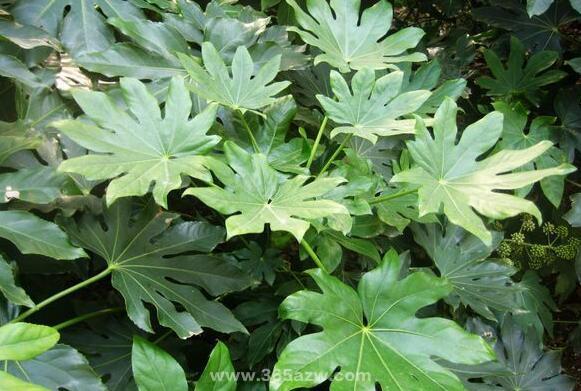
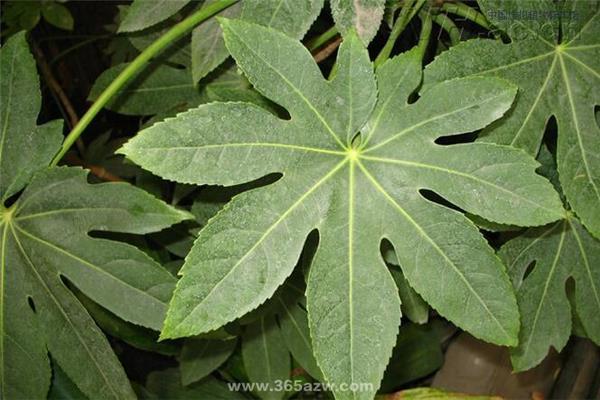
Fatsia japonica, as the name suggests, refers to its palmate leaves, which are split into about 8 lobes, and it is named for appearing to have 8 corners. Its foliage is glossy and verdant all year round, and the leaves look like little green palms. It is shade-tolerant by nature, and in gardens it is often planted beside rockeries or next to large trees; it can also be used as a foliage plant indoors, for display in halls and meeting rooms.
The flowering period of Fatsia japonica is generally between summer and autumn, and some can continue until late autumn and early winter. The white flowers form terminal conical cymes, blooming one after another in a very beautiful display, and after flowering it produces black berries containing seeds. Fatsia japonica is a strongly shade-loving plant, verdant all year round, and can be kept indoors for viewing all year long.
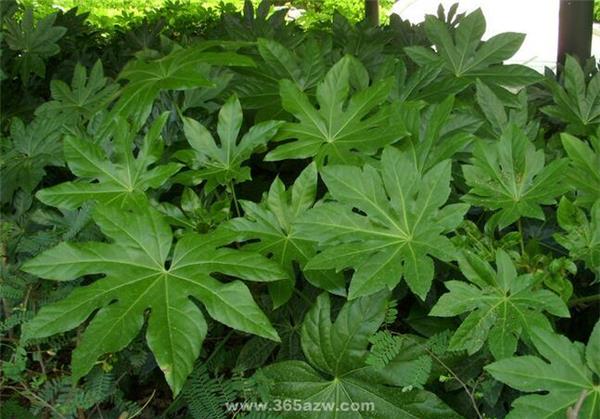
Fatsia japonica is native to Japan and Taiwan, China, and other places, so it likes a warm and humid environment, is strongly shade-tolerant, and is also fairly cold-tolerant, making it suitable for placement in a shady living room or bedroom. Its ornamental value is extremely high, and it can grow very well without elaborate care, very verdant and dense. It is suitable for planting in courtyards, beside doors, by windows, in wall corners and in the shady spots of buildings; it can also be used as an accent beside dripping streams, and can also be planted in mass groups along lawn edges and in woodland. In addition, it can also be potted for indoor viewing.
How to grow Fatsia japonica
1. Propagation methods: Fatsia japonica is mainly propagated by sowing, cuttings, division and other methods. For sowing, harvest the seeds in late April, pile them until ripe, wash them with water, and sow them as soon as they are collected, but the germination rate is relatively low. Cuttings are taken in March-April, using sandy soil as the medium; choose 2-3 year old branches, cut the base into 15cm lengths, insert 2/3 into the soil, press firm, water thoroughly, keep the soil moist, build a shade frame, and strengthen management; the survival rate is relatively high. Cuttings taken in June-July root quickly, but management is difficult. Division is carried out together with repotting in spring: tip the plant out of the pot, trim the rotten root system, cut the original plant into several sections, plant them into suitable pots, and place them in a ventilated and shady spot for care; after 2-3 weeks they can be returned to normal management. Division propagation should be planted as soon as it is divided to increase the survival rate.
2. Temperature and light: The optimal growing temperature for Fatsia japonica is 18-25°C. When the temperature reaches above 35°C, if ventilation is poor, the leaf edges of Fatsia japonica will scorch and wither. The overwintering temperature for Fatsia japonica is preferably 7-8°C, and must not be lower than 3°C, so as to avoid freezing damage to the plant. Potted Fatsia japonica is shade-tolerant by nature, and it is best placed in a humid, well-ventilated semi-shady spot inside a shed, avoiding direct sunlight; especially in summer, attention should be paid to proper shading, so as to avoid yellowing of the leaf surface of Fatsia japonica or even scorching its leaves.
3. Soil: Fatsia japonica is native to the mountain forests near the coast of warm regions of Japan. For potted Fatsia japonica, a growing medium mixed from humus soil, peat soil, a small amount of fine sand and base fertilizer can be used, and it is generally planted in 12-20cm pots. Fatsia japonica can grow luxuriantly in well-drained, fertile, slightly acidic loam, and it can also adapt to neutral soil.
4. Watering: During the new leaf growth period of Fatsia japonica, the amount of watering can be appropriately increased, keeping the soil moist at all times. Its plant has large leaves, so the amount of water evaporation is also large; especially in the hot summer season, the potting soil is best kept on the moist side, with sufficient watering in the morning and evening. When the air is too dry, water should also be sprayed on the plant's leaves and around it to keep the air humid, so as to prevent the leaves from yellowing or falling off. During the rest of the growing time, watering should follow the principle of watering when dry and withholding when wet; in winter, the frequency of watering should be reduced to improve its cold resistance.
5. Fertilizing: Summer and autumn are the peak growing seasons for Fatsia japonica, so it is best to give Fatsia japonica a sufficient fertilizer application every half month. For fertilizing, diluted decomposed cake fertilizer water or human waste can be used. When fertilizing, the potting soil is best kept slightly dry, so as to help the plant fully absorb nutrients and grow well.
6. Repotting: When cultivating Fatsia japonica, it is advisable to repot every year, usually in March-April each year. When repotting, first place a layer of base fertilizer at the bottom of the pot, and you can also prune appropriately together with repotting, removing excess or poorly growing roots, so as to maintain the graceful plant shape of Fatsia japonica. If you do not want to keep seeds when cultivating Fatsia japonica, you can immediately cut off the flower stalks after flowering to reduce their consumption of nutrients.
7. Pest and disease control: Common diseases of Fatsia japonica include sooty mold, leaf spot and chlorosis. During care, water and fertilizer management and ventilation and light transmission should be strengthened, especially in winter. If sooty mold occurs, promptly wipe away the sooty deposit with a clean cotton cloth and spray a fungicide for control; if leaf spot occurs in summer, it can be controlled with agents such as thiophanate-methyl or carbendazim; chlorosis can be controlled by spraying ferrous sulfate water on the leaves. The main pests are aphids, scale insects and red spider mites. If they occur, scale insects can be controlled with sujiesha, aphids with chanya, and red spider mites with dicofol.
And what effect does cultivating this plant have on the home environment?
1. It can absorb harmful gases such as carbon dioxide from the air and purify the air. In the houses modern people live in, many people often keep doors and windows tightly closed and seldom ventilate the air at home with the outside air, to expel harmful gases exhaled by the human body and so on from the house. And when these harmful gases accumulate indoors to a certain amount, the indoor air will also become more and more turbid. Moreover, urban air quality today is getting worse and worse. If Fatsia japonica is grown at home, it can absorb part of the carbon dioxide and other harmful gases exhaled by the human body, purify the air, and make the owner's life more comfortable.
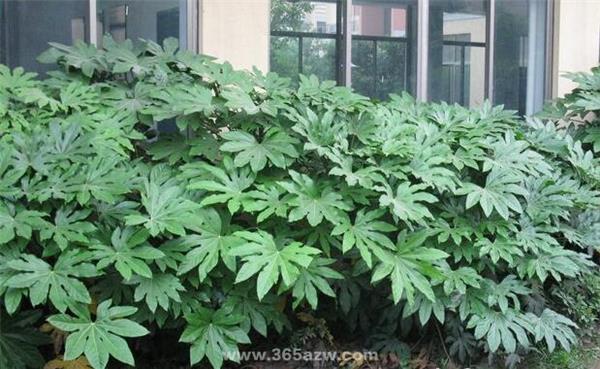
2. Greening the indoor environment. Fatsia japonica is evergreen all year round and is a very good indoor decorative plant, with extremely high ornamental value, and the flowers it produces are also very elegant. Growing a Fatsia japonica indoors to green up the indoor environment is a very good choice. In terms of cultivation, it also requires no great effort from the owner; simply growing it in the courtyard, beside the door, by the window, in a wall corner and in the shady spots of buildings is enough, and the owner can also admire its lush green appearance at any time.
The above is an introduction to the relevant content about Fatsia japonica, and I hope it is helpful to you.
And what effect does cultivating this plant have on the home environment?
1. It can absorb harmful gases such as carbon dioxide from the air and purify the air. In the houses modern people live in, many people often keep doors and windows tightly closed and seldom ventilate the air at home with the outside air, to expel harmful gases exhaled by the human body and so on from the house. And when these harmful gases accumulate indoors to a certain amount, the indoor air will also become more and more turbid. Moreover, urban air quality today is getting worse and worse. If Fatsia japonica is grown at home, it can absorb part of the carbon dioxide and other harmful gases exhaled by the human body, purify the air, and make the owner's life more comfortable.
2. Greening the indoor environment. Fatsia japonica is evergreen all year round and is a very good indoor decorative plant, with extremely high ornamental value, and the flowers it produces are also very elegant. Growing a Fatsia japonica indoors to green up the indoor environment is a very good choice. In terms of cultivation, it also requires no great effort from the owner; simply growing it in the courtyard, beside the door, by the window, in a wall corner and in the shady spots of buildings is enough, and the owner can also admire its lush green appearance at any time.
The above is an introduction to the relevant content about Fatsia japonica, and I hope it is helpful to you.