How to Grow Haworthia cooperi var. truncata 'Ice Lantern'? Detailed Guide to Propagation Methods
Haworthia cooperi var. truncata 'Ice Lantern' is a succulent plant whose fleshy leaves are crystal clear and shaped like an ice lantern, which is why it is called 'Ice Lantern' (Bingdeng Yulu). It is a top-grade variety among Haworthia cooperi, known as a living sculpture. Below, the editor of Decoration Network introduces the cultivation methods for Haworthia cooperi var. truncata 'Ice Lantern'!
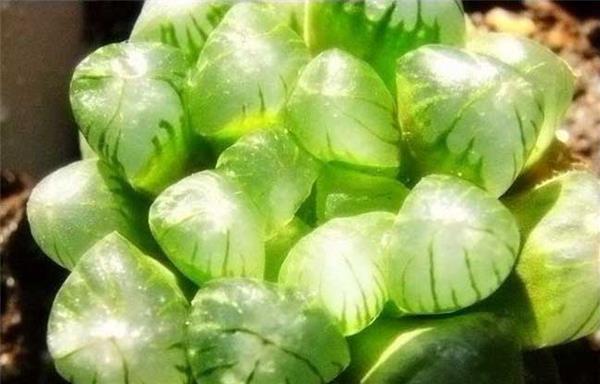
Cultivation Methods for Haworthia cooperi var. truncata 'Ice Lantern'
1. Light: Haworthia cooperi var. truncata 'Ice Lantern' naturally prefers a cool and ventilated environment. Generally, it is not suitable to place it directly under blazing sunlight; instead, place it in a semi-shaded environment with fairly good temperature and humidity.
2. Watering: Haworthia cooperi var. truncata 'Ice Lantern' is relatively drought-tolerant. Follow the principle of "don't water until dry, water thoroughly when you do." When watering, pay attention to properly controlling the amount, and place the pot in an environment with good drainage to avoid waterlogging.
3. Humidity: Haworthia cooperi var. truncata 'Ice Lantern' needs a certain level of humidity for its leaf lobes to look their best. If the surrounding environment is relatively dry, you can use a spray bottle to mist the surface of the plant to maintain humidity. If that alone is not effective, you can cover the plant with a plant cover, but be sure to open the cover every day to let the plant breathe.
4. Fertilizer: Haworthia cooperi var. truncata 'Ice Lantern' generally does not need much fertilizer. Newly planted specimens are not suitable for fertilizing. For plants that have been grown for several months or one to two years, you can apply a small amount of fertilizer during the growing seasons of spring and autumn to support their growth.
5. Repotting: Because the base of Haworthia cooperi var. truncata 'Ice Lantern' secretes an acidic substance that corrodes the soil, it basically must be repotted once a year. The usual repotting time is spring or autumn, or whenever you notice the plant has stopped growing during its growing season, in which case it should be repotted promptly.
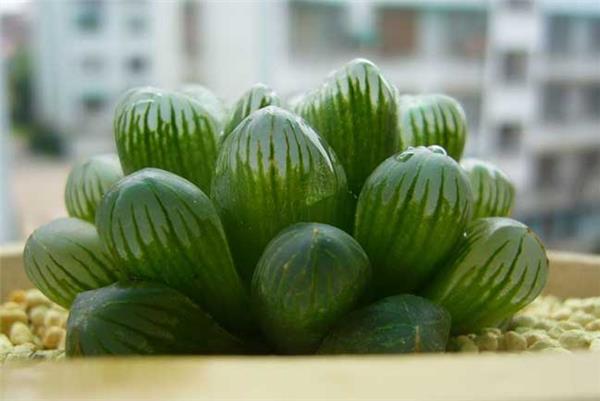
Precautions for Growing Haworthia cooperi var. truncata 'Ice Lantern'
1. During high summer temperatures, Haworthia cooperi var. truncata 'Ice Lantern' enters a dormant or semi-dormant state, growing slowly or completely stalling. You can place it in a ventilated, cool and dry spot for care, so that a stuffy, humid environment does not "steam" the plant to death. Avoid blazing sunlight, do not water too much, and stop fertilizing. Wait until the weather cools in autumn before resuming normal care.
2. In winter, if the nighttime minimum temperature is around 8°C and the daytime temperature is above 15°C, the plant can continue to grow and should be watered normally. If you restrict watering and let the plant go dormant, it can withstand low temperatures of 3°C to 5°C, or even short-term lows of 0°C. If kept long-term below 5°C, the plant will not die, but frost damage marks will remain on the leaf surface. Therefore, the overwintering temperature for Haworthia cooperi is best maintained above 5°C.
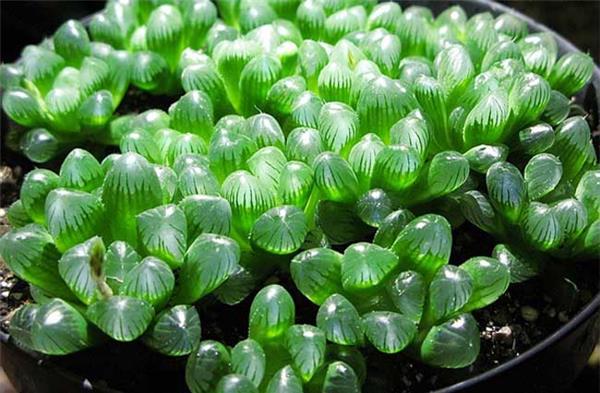
Propagation Methods for Haworthia cooperi var. truncata 'Ice Lantern'
Haworthia cooperi can be propagated by division combined with repotting. You can also dig up offsets from beside the mother plant during the growing season. Both rooted and unrooted offsets can survive; plant rooted ones directly, while unrooted offsets should be dried for 1 to 2 days until the wound heals before planting. Newly planted specimens should not be watered too much to avoid rot; resume normal care once new roots have grown. You can also take leaf cuttings during the growing season using plump, healthy fleshy leaves. After inserting, keep the potting soil slightly moist; they root easily at the base and produce small buds, which can be transplanted separately once they are slightly larger.
Sowing is also one of the propagation methods for Haworthia cooperi, but it requires artificial pollination. Seeds can be sown immediately after harvesting. The sowing medium can be a mix of 3 parts vermiculite and 2 parts leaf mold or peat moss. Before sowing, it is best to sterilize the soil at high temperature to eliminate pathogens and insect eggs. After sowing, cover with a glass pane; seedlings emerge in about 20 days. After emergence, remove the glass pane, ensure ventilation, do not let the soil become overly dry, and transplant the seedlings when they become too crowded. Among seedling-grown plants, some variant specimens may appear. You can select young plants with compact form, thick fleshy leaves, high "window" transparency and prominent vein patterns to keep as stock plants. If you find seedlings with a leaf color different from the others, select those out too; they might grow into a precious variegated specimen.