How to Grow a Bromeliad? Detailed Guide to Growing Methods
Bromeliads originate from the jungles of Mexico to southern Brazil and northern Argentina. The bromeliad is a highly ornamental plant grown for both its flowers and foliage, and it is especially well suited to indoor cultivation, making a highly refined choice as a home garden ornamental. Many people do not know how to grow bromeliads, so this article introduces the growing methods and precautions for bromeliads.
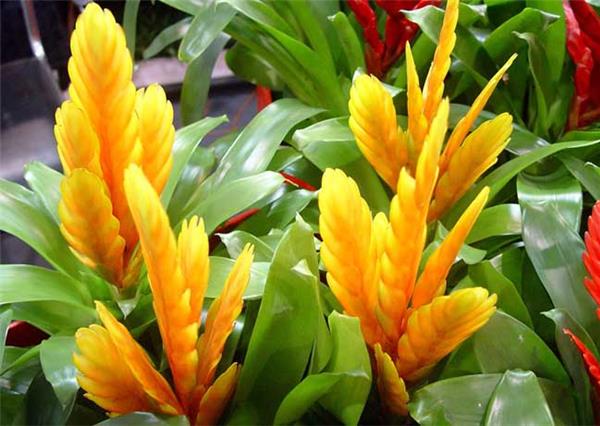
Bromeliad Propagation Methods
The bromeliad has become one of the most important ornamental flowers for indoor use, and quite a few enthusiasts enjoy growing them. The propagation methods for bromeliads can be divided into three types: cutting propagation, division propagation, and seed propagation.
1. Division propagation: Small offsets continuously grow from the leaf axils at the base of the ornamental bromeliad. When they have grown 5 to 6 leaves, they can be cut off for cutting propagation, and they will produce roots in about 1 month.
2. Cutting propagation: This can be done along with repotting in spring by cutting off the small tubers growing from the tuber portion of the mother plant for cuttings, or by using the rooted young shoots that sprout from the roots of an old bromeliad plant for division. In both cases, keep them shaded, moist, and warm. Use a soil mix of half leaf mold and half plain sandy soil. When the roots grow to 2-3 cm, they can be planted out.
3. Seed propagation: At 25°C to 30°C, sow seeds obtained after artificial supplementary pollination following flowering. Seedlings will emerge in about 4 weeks, and in about 3 to 4 years they will grow into a flowering bromeliad plant.
Bromeliad Growing Methods
1. Light: The bromeliad habitually prefers semi-shade. Avoid harsh sun exposure and place it in a semi-shaded spot, a bright window, or indoors. The bromeliad's native state is as an epiphyte beneath trees in tropical rainforests, so its demand for sunlight is not especially high. When it is exposed to sunlight for too long, some of its leaves will turn yellow, and the tips of the flowers may dry out, along with other such problems. If grown outdoors, provide appropriate shading in spring, summer, and autumn, and in summer in particular 70% shading is needed. Direct sunlight will make the leaf temperature higher than the air temperature. If the leaf temperature is too high, burning and scorched leaves will occur, the flower bracts will fade, and leaf growth will slow down.
2. Temperature: The most suitable growing temperature for bromeliads is 20°C to 30°C. The maximum temperature should not exceed 35°C, and the minimum temperature is 14°C. Below 10°C, there is a constant risk of cold damage. In winter, it is best not to place it under a radiator, because in that case it dries out very severely and also gets scorched by the heat. After all, a person cannot stand next to a radiator being baked all the time either, as it easily causes internal heat.
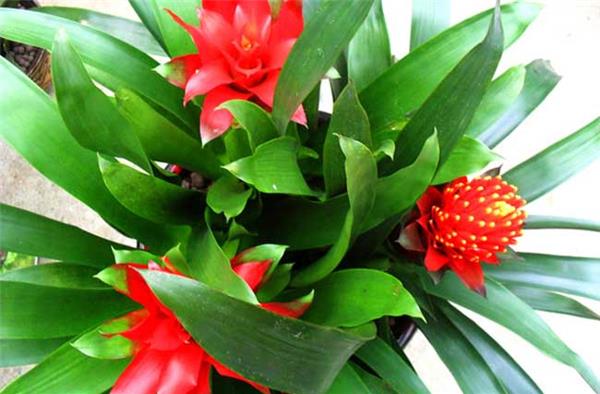
3. Water: For bromeliads, water the potting soil when the surface is slightly dry, that is, when the top 1-2 cm of soil has dried, then water a second time. Do not let it become too wet, as excessive moisture easily rots the roots. Plants in the bromeliad family have a leaf cup at the base of the leaves, and the leaf cup has a water reservoir. Make sure there is always water in the reservoir and that it does not run dry. The water in the leaf cup should be replaced after a period of time, for example about ten days, to prevent the water from becoming foul. Normally, you can also spray misty water on the surface, leaves, and flowers. The most suitable relative air humidity is 70% to 80%, and it should not be lower than 50%, because maintaining relatively high air humidity in the growing environment is the key to successful anthurium cultivation. Therefore, foliar spraying should be done frequently throughout the year.
4. Soil: For potted anthuriums, choose a substrate with good drainage. For large-scale production, use a mixed substrate of peat, perlite, and sand, in the ratio: 1 cubic meter of peat : 4 to 5 kg of perlite : 0.15 cubic meters of sand. Keep the pH between 5.5 and 6.5. If a small amount of decomposed chicken manure, cake fertilizer powder, or bone meal and other base fertilizer can be placed at the bottom of the pot, growth will be even better.
5. Fertilizing: During the growing season from April to September each year, apply liquid fertilizer once every two weeks. Fermented organic fertilizer can be used, or a solution of 0.1% urea plus 0.2% monopotassium phosphate can be sprayed on both the front and back of the leaves. You can also pour some very dilute liquid fertilizer into the leaf cup, where it will be absorbed by the scale hairs at the base. The ratio of nitrogen, phosphorus, and potassium is 10 to 15 to 20.
Growing Precautions
1. From late spring to autumn is the growing period for bromeliads. The amount of watering can be appropriately increased, and some clean water can also be poured into the leaf cup. Replace the water once every half month to prevent it from deteriorating and smelling foul.
2. Spray the leaves with water frequently. In winter, it is better to keep the pot somewhat dry, but not excessively so.
3. From May to September, apply nitrogen fertilizer once a week. Before flowering, appropriately increase the application of phosphorus and potassium fertilizers to promote larger flowers and more vivid colors.
4. When flowering, do not pour water into the cup. Keep it in a place away from sunlight to extend the flowering period.
5. After flowering, the plant enters dormancy, and the flower stalk must be cut off to reduce nutrient consumption.
6. Do not pour water into the cup in winter.
The above is the relevant introduction to the growing methods and precautions for bromeliads. Bromeliads are very suitable for indoor decoration. They like at least 3 hours of ample sunlight exposure per day, but they also tolerate semi-shade. In summer they prefer cool, ventilated conditions, and they can also tolerate a slightly dry climate.