What is the best propagation method for keeping asparagus fern at home?
Asparagus fern is a highly ornamental plant that can be placed in the living room or study, purifying the air while also adding a literary atmosphere. There are many friends who love asparagus fern. Although asparagus fern is not bamboo, its stems have nodes like bamboo and its posture is very beautiful. Many friends who grow asparagus fern do not know how to propagate it. Today, the editor will introduce the propagation methods of asparagus fern!
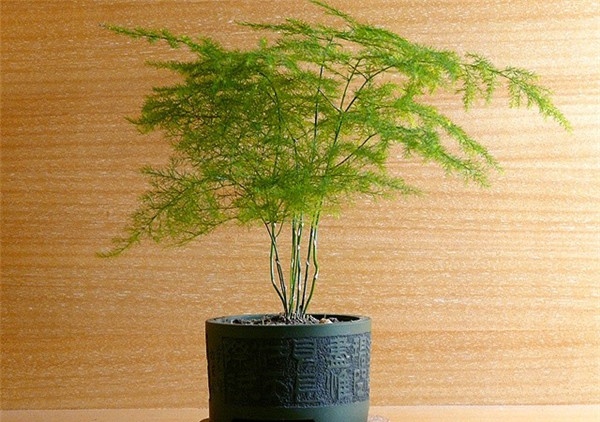
Growing conditions for asparagus fern
1. Asparagus fern likes a warm, humid, semi-shaded and ventilated environment. In winter it is not tolerant of severe cold, nor of drought. It cannot be watered too much, or the roots will rot. In summer, direct sunlight should be avoided.
2. For soil, loose, fertile, well-drained sandy soil rich in humus is best for cultivation.
3. It is advisable to keep the room temperature between 12-18°C. When it exceeds 20°C, ventilate to dissipate heat. The optimum growth temperature is 15-25°C, and the overwintering temperature is 5°C.
Seed propagation of asparagus fern
Sowing is the main method of propagating asparagus fern. When the fruit skin of asparagus fern seeds turns black and soft, they are mature. At this time, they should be gradually picked according to the degree of maturity, the flesh rubbed off, rinsed clean with clear water, dried until half-dry, and then stored for later use.
Seed propagation of asparagus fern is generally carried out in early April. In the autumn of the same year, they can become commercial seedlings or be displayed indoors. The sowing substrate is generally fine sand, and the container is a clay pot or wooden box. Place the seeds on the pot soil at a spacing of 2-3 cm, with 2-3 seeds per hole. After sowing, cover with fine sand 5 mm thick, and add glass or plastic film. Keep the temperature at 20-25°C, and spray water frequently to keep the pot soil moist. About 30 days after sowing, germination and emergence begin. When the seedlings are 4-5 cm tall, transplant them for cultivation. When they are 8-10 cm tall, they can be planted in pots.
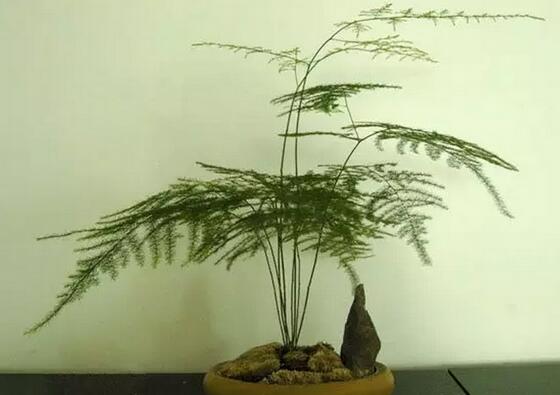
Division propagation of asparagus fern
Household potted asparagus fern can also be propagated by division. Asparagus fern has a strong clumping habit. Plants 4-5 years old can continuously send up root suckers from the root crown, continuously expanding the clump. In spring, when repotting, the potted plant can be divided into several clumps and planted separately in pots, thus obtaining new plants.
Home cultivation of asparagus fern
1. Pot soil: For the pot soil for cultivating asparagus fern, fertile sandy loam is suitable. It requires warmth and moisture, richness in humus, and good drainage. Generally, a ratio of 4 parts garden soil, 2 parts leaf mold, 2 parts compost soil and 1 part sand can be used, and the soil should be changed and fertilizer added regularly. If excessive fertilization causes "root burn", the pot should be turned out to remove the fertilizer, and the soil ball should be flushed with clear water, then replaced with new soil for cultivation.
2. Watering: Watering is the key point in cultivating and growing asparagus fern. Too much watering and overly wet pot soil easily cause root rot, while too little watering causes leaf tips to scorch and turn yellow. Therefore, in the process of watering, it should be determined according to the weather, growth condition and the dryness or wetness of the pot soil, following the principle of not watering when not dry, and watering thoroughly when watering. In hot and dry weather, water can be sprayed on the leaf surface to increase humidity and lower temperature. In winter, water less.
3. Fertilizing: Asparagus fern does not like heavy fertilizer, but it cannot lack fertilizer either. Limited by the pot soil of container cultivation, asparagus fern must be supplemented with nutrients in time to meet its growth requirements. In the process of fertilizing asparagus fern, apply frequently and in small amounts, and do not apply concentrated fertilizer, otherwise it will cause yellow leaves. Generally, applying a thin liquid fertilizer once a month after decomposition is sufficient. After the plant grows and takes shape, fertilization can be appropriately controlled and reduced. During the growing season, apply 1-2 times a month of thin fertilizer containing ammonia and phosphorus to promote lush branches and leaves; other liquid fertilizers can also be used. It should be noted that too much fertilizer should not be applied during the flowering period. In May-June and September-October, topdressing with liquid fertilizer twice respectively is sufficient.
4. Light: Asparagus fern cannot be exposed to the scorching sun. In hot seasons, it should be placed in a cool and ventilated place. At the same time, during the flowering period, asparagus fern is afraid of both wind and rain, so attention should be paid to good ventilation. In good weather, it can be appropriately placed outdoors to receive sunlight. In winter, the temperature for potted asparagus fern should be kept above 5°C to avoid freezing.
5. Placement: Asparagus fern loves a clean and air-circulating environment. If stimulated by harmful gases such as smoke, dust, coal gas and pesticides, the leaves will turn yellow, curl and even die. Therefore, asparagus fern should be placed in a clean and well-ventilated environment, away from decorative materials such as marble that release mercury gas.
6. Plant pruning
① Pruning for missing cladodes: When the growth position of small cladodes on the main branch is not ideal or they are missing for some reason, short pruning can be carried out at an appropriate position on the main branch to force the dormant buds there to sprout. Generally, the height of the cut is the height at which cladodes sprout, and the position of the thorn on the branch is the position at which cladodes sprout. The greater the thickness of the branch, the higher the germination rate of dormant buds.
② Renewal pruning of the whole plant: If the branches and leaves of the whole plant grow poorly due to strong sunlight scorching or overly dry pot soil, lack of fertilizer, or some unknown reason, the whole plant can be renewed. During renewal pruning, all cladodes can be cut off, but attention should be paid to the positions of the recurved thorns on the branches, because they determine whether the distribution of the retained branches is uniform. Pruning in the growing season generally makes it easy to sprout new branches. After pruning, watering should also be appropriately reduced. The pot soil must absolutely not be too wet, otherwise the pruning will fail.