How to grow potted gardenias? Master 7 key points for brilliant blooms
The white gardenia, though unadorned and without embellishment, gives a pure and quiet feeling that has made many friends fall in love with gardenias ever since. So, how do you grow potted gardenias? Placing a beautiful, fragrant gardenia in your home to delight the senses and cultivate the spirit is also a fine choice.
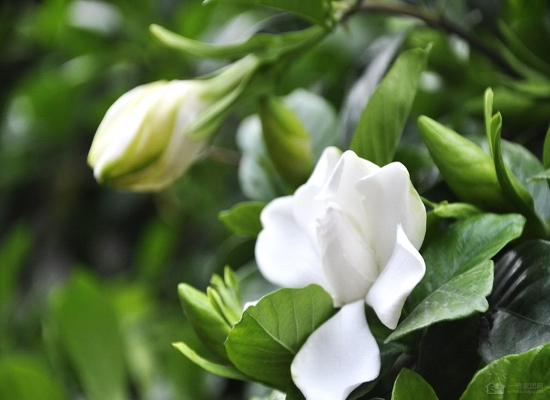
Gardenias like a sunny, well-lit environment, and with proper shading they can still grow normally. In a shaded environment, the leaves are a deep green, but flowering is poor, so shading is not recommended. Gardenias like a relatively humid environment and tolerate heat as well as a little cold (minimum -3°C). They like fertile soil; soil that is too poor will cause the plant to age prematurely. Gardenia branches have strong sprouting ability and tolerate pruning; timely pruning helps branching and plant renewal. If the environment in your home can meet the above points, keeping a gardenia alive is no problem. However, potted gardenias still require mastering the following 7 key points.
1. Choose suitable potting soil
Gardenias like acidic soil, with a suitable pH of 5 to 6; prepare suitable soil before planting. If the soil's acidity and alkalinity are not suitable, later care will be very troublesome.
For growing medium, usually choose leaf mold and peat soil plus half garden soil; do not use coal cinder, or directly buy special soil for clivia, which is convenient and practical.
2. Fertilize reasonably
Gardenias like fertilizer, but fertilization must be reasonable:
When planting, add decomposed cake fertilizer to the soil as a base fertilizer.
During the growing season, use cake fertilizer and ferrous sulfate fermented into a liquid fertilizer, watering once a week. A complete-nutrition organic liquid fertilizer can also be used.
During the bud stage, apply a top dressing 1~2 times, watering with a potassium dihydrogen phosphate aqueous solution, which can make the flowers larger and the fragrance richer.
When summer temperatures are above 35°C and autumn temperatures are above 15°C, stop fertilizing.
3. Water scientifically
Gardenias like a moist, humid environment. During the growing period from April to September, keep the potting soil moist, watering so that it dries and then gets wet; in the evening you can mist to wet the leaves and maintain humidity. If the plant grows too vigorously, do not water at night; water after the sun comes up in the morning.
In northern alkaline-water areas, when watering, let tap water sit for a day before using it. Every 3~5 days, water with a little citric acid aqueous solution to keep the leaves emerald green.
4. Give plenty of sunlight
Gardenia growth needs plenty of sunlight; if kept in semi-shade for a long time, the flowering branches become weak, thin and long. During care, except for shading needed in July/August and at noon, as well as winter dormancy, at other times simply keep it in the sun.
5. A good winter dormancy
Although gardenias are cold-tolerant, potted gardenias will have their root system damaged after going through a harsh winter, and recover slowly in spring. But if placed indoors with heating, where the temperature is higher and light is insufficient, the plant's growth slows and it blooms later the next year. The best method is to place the pot in a 5°C environment to let it go dormant, or wrap the flowerpot with insulating material and place it outdoors in a sunny, wind-sheltered spot to overwinter.
6. Prune appropriately
When the main stem of the gardenia grows to 20 cm, pinch off the growing tip, leaving 3~4 branches to encourage branching. After flowering each year, prune lightly and cut off weak and diseased branches. But in spring, gardenias must not have their branch tips cut back, otherwise they will find it hard to bloom that year.
7. Repot and change the soil at the right time
Gardenias have vigorous vitality; a small seedling can grow from a few cm to several dozen cm, so you should repot according to the size of the plant. When the plant's branch length is 2~3 times the diameter of the flowerpot rim, it needs repotting. When repotting, promptly prune old roots, replace half the soil, water thoroughly, and place in semi-shade for a week; after new buds grow, move it into the sun.
Plant care always emphasizes a "balance": going beyond is as bad as falling short. Therefore, growing gardenias also requires grasping the requirements for fertilizer, water, temperature, humidity and soil; neither too much nor too little is most suitable.